
72 Wh claimed, no independent measurement found
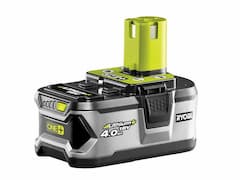
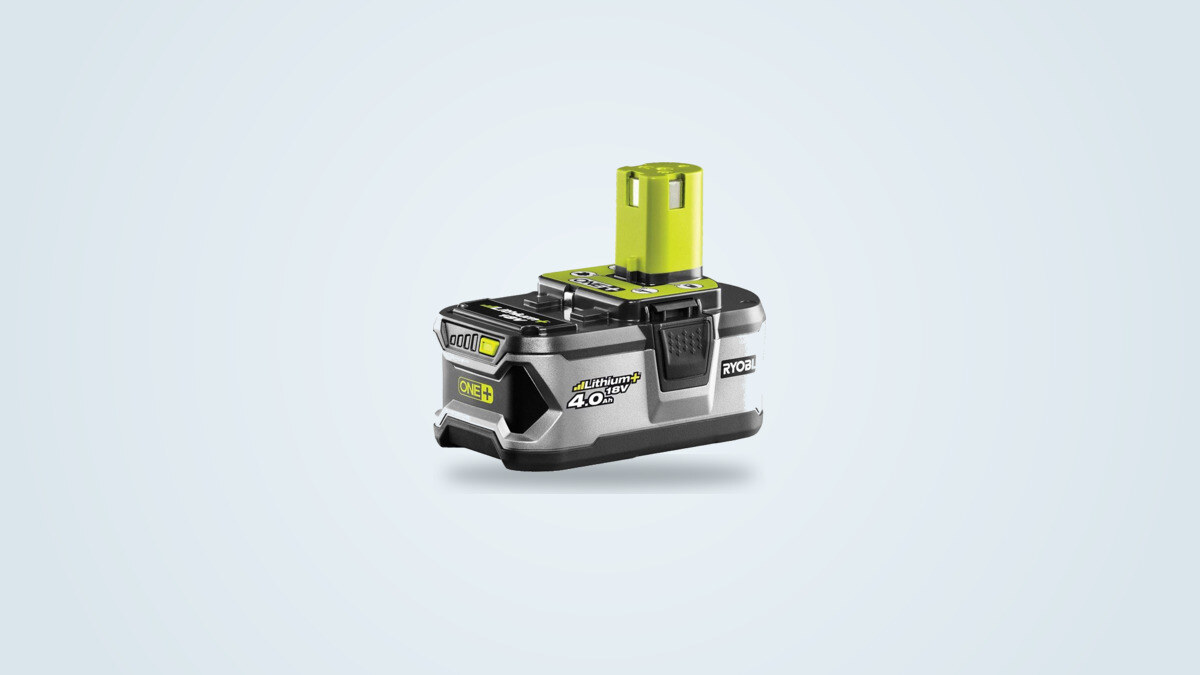
The RB18L40 is rated at 4 Ah at 18 V, or 72 nominal Wh, with a weight of 780 grams. The manufacturer highlights its IntelliCell technology, which manages the charge and discharge of each cell individually rather than the pack as a whole, with a claimed performance gain of around 10 % over conventional management.
No independent measurement of capacity or actually delivered energy, with a described protocol, was found for this specific model. The manufacturer communicates usage equivalences (up to 225 holes drilled, 1240 screws driven or 88 metres cut depending on the tool), figures that should be treated as commercial orders of magnitude rather than a laboratory measurement.
RB18L40 versus the RB1840X generation: a generation change, not a simple renaming
Ryobi splits its 4 Ah range into several references that should not be confused with one another: the RB18L40 ("L" series), still sold by many retailers, and the RB1840X ("Lithium Plus", a more compact format) as well as the RB1840T ("High Energy", 21700 cells, with a manufacturer claim of up to three times the runtime and reduced heat build-up compared with older generations). These three references share the same nominal rating of 4 Ah and 72 Wh, but their electronics and cells differ.
Across current sales channels, this succession of generations produces a price inversion worth knowing before buying: the newer RB1840X is now found at a lower price than the older RB18L40. A buyer who compares only the spec sheets without checking real prices therefore risks paying more for the older generation. Choosing the RB18L40 is then fully justified only if a charger or an existing pack from the same series is already owned, or if its price seen occasionally drops back below that of the RB1840X.
More than 200 compatible tools: the real buying argument
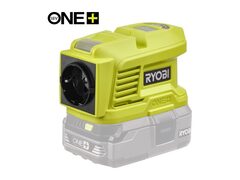
The 18V One+ system has not changed its mount since launch, and that is what gives this battery its real strength: a recent pack powers a drill bought ten years ago just as well as a tool that has just come out. The range now covers more than 200 compatible references, from everyday DIY (drills, drivers, saws) to garden work (mowers, hedge trimmers, blowers), through to more unexpected tools such as an inflator, a jobsite radio or a handheld vacuum.
This is by far the main argument for this model. It carries even more weight because the battery remains backward-compatible with older Lithium-Ion One+ chargers, avoiding a full accessory rebuy for anyone who already owns the ecosystem.
A pack left flat for several months can refuse to restart
This is the most concrete limitation of this model, and it is not specific to Ryobi: a lithium-ion pack left flat for a long time drops below the threshold the protection electronics will accept, and the charger then refuses to start charging. This behaviour comes up at regular intervals, sometimes after a few years of normal use, sometimes after a simple long period of storage without use.
It is sometimes recoverable with a suitable charger, often not. Good practice remains to store packs at around half charge and top them up roughly every six months rather than letting them fully discharge over a long period: that is what makes the biggest difference to their actual lifespan.
An after-sales service repeatedly reported as slow
On French-language DIY forums, the complaint that comes up most often about the brand is not about this specific battery but about Ryobi's after-sales service as a whole: turnaround times of one to two months quoted for repairs, spare parts sometimes unavailable. This point concerns the brand more than this specific product, but it deserves to be known before a purchase intended for professional or intensive use, where an unavailable part has a real cost.
Price seen and availability
The price seen for the RB18L40 alone sits around 90 €, noticeably higher than some comparison sites suggest. The model remains actively sold by many third-party retailers, but is no longer the version Ryobi promotes directly, now pushing the RB1840X and RB1840T instead. No product recall was found for this model in the safety databases consulted.
Absent from the Japanese market, for a brand structure reason
A point rarely mentioned: the RB18L40 does not exist on the Japanese market, and this is not simply a matter of distribution. In Japan, Ryobi's power tool division belongs to Kyocera Industrial Tools following an acquisition, and that entity sells under an entirely different naming scheme (references such as B-1850LA), with no connection to the international One+ system run by Techtronic Industries, of which this battery is part. The two ranges are neither compatible nor interchangeable, despite both carrying the Ryobi name.
Against the Einhell Power X-Change 4.0 Ah battery
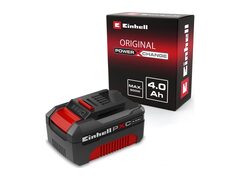
The most natural comparison is with the other major consumer ecosystem, Einhell Power X-Change, in its equivalent 4.0 Ah format.
| Criterion | Ryobi RB18L40 | Einhell PXC 4.0 Ah |
|---|---|---|
| Capacity | 4 Ah / 72 Wh (claimed) | 4 Ah / 72 Wh (96.7 % of the claimed value measured in amp-hours) |
| Ecosystem | More than 200 tools | More than 300 machines |
| Charge indicator | 4 LEDs | 3 segments |
| Price seen | ≈ 90 € | ≈ 37 € |
The price gap seen between the two is clear, and it should not be read as a simple advantage for Einhell: the two ecosystems are not chosen on this criterion alone, but on the full set of machines already owned or planned within them. On the strictly measurable axis, the Einhell battery's capacity is better supported by evidence than the Ryobi's, but the Ryobi keeps the advantage of a still wider ecosystem in terms of number of tools.
Who it suits, and who it does not
It suits anyone who already owns Ryobi One+ tools or a charger and is looking for an extra pack in the range's most common format, without starting over on the ecosystem.
It does not suit anyone starting from scratch in the One+ ecosystem without first comparing the price seen for the RB1840X, newer and sometimes cheaper at the time of purchase, nor anyone who needs a guarantee of independently measured capacity, a figure that simply does not exist for this model to date.