Renogy DCC50S: our full review

A 50A DC-DC charger and a built-in MPPT solar controller in the same unit: the Renogy DCC50S recharges the leisure battery from the alternator and the sun, but stays quiet on several points of its product page.

Our rating
4.2/5
Safety and protections: 4.2 out of 5 (weighting 15%)Safety4.2Build and endurance: 2.8 out of 5 (weighting 10%)Build2.8Actual charging current: 4.6 out of 5 (weighting 35%)Charging4.6Battery compatibility: 4.6 out of 5 (weighting 25%)Compatibility4.6Control and programming: 3.6 out of 5 (weighting 15%)Control3.6

How is this rating calculated?

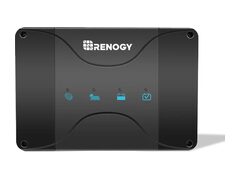
Renogy DCC50S DC-DC charger with its alternator and solar inputs

The essentials

The Renogy DCC50S combines a 50A DC-DC charger and a built-in MPPT solar controller (up to 660W) in a single unit, a two-in-one solution that simplifies installation on a van combining alternator and solar panels. With a stated 94% efficiency, it works with lead-acid and lithium LiFePO4 through configurable charge profiles, and a comprehensive list of protections (overvoltage, undervoltage, overload, overheating, reverse polarity, short circuit) secures the installation. Its voltage-sensitive relay (VSR) isolates the starting battery, a different and less complete form of isolation than galvanic separation. The limits are real: Bluetooth stays optional through a separately sold BT-2 module, unlike rivals that build it in natively, and the product page states neither an IP rating, an operating temperature range, weight, nor a warranty duration. On a smart alternator, a dedicated ignition wire also has to be connected to trigger charging. For a van seriously combining alternator and solar, the DCC50S remains a complete, proven solution, provided you accept these gaps on the product page.

Strengths

  • Dual alternator AND solar input (built-in MPPT up to 660W), a genuine 2-in-1 solution
  • 50A charge current, stated 94% efficiency
  • Compatible with lead-acid and lithium LiFePO4 through configurable charge profiles
  • Comprehensive, explicit list of protections (overvoltage, undervoltage, overload, overheating, reverse polarity, short circuit)
  • Voltage-sensitive relay (VSR) isolating the starting battery from the house battery

Limitations

  • Bluetooth is optional (separately sold BT-2 module), unlike rivals that build it in natively
  • No IP rating, operating temperature range, weight, or dimensions are stated on the product page
  • No manufacturer warranty duration is stated
  • Voltage-sensitive relay (VSR) isolation stays different from full galvanic isolation, not to be confused with it
  • On a smart alternator, a dedicated ignition wire has to be connected to trigger charging, a more complex install
Renogy DCC50S: see the full details and price →

Two charging sources in a single unit

On a van combining alternator and solar panels, fitting two separate devices multiplies the wiring. The Renogy DCC50S answers this need with a DC-DC charger and an MPPT solar controller brought together in a single unit.

50 A
Charge current
660 W
Max MPPT solar input
94 %
Stated efficiency

50A from the alternator, up to 660W of solar

While driving, the unit draws energy from the starting battery and feeds it to the house battery at a current of up to 50A, higher than most competing DC-DC chargers in this price range. When parked, the built-in MPPT controller optimizes charging from solar panels (up to 50V and 660W input), and both sources can be combined at the same time. These figures remain manufacturer data, with no independent measurement to confirm them over time.

Lead-acid and lithium LiFePO4 through configurable profiles

The DCC50S is compatible with flooded, Gel and AGM lead-acid batteries as well as lithium LiFePO4, thanks to charge profiles configurable at installation. A stated 94% charging efficiency rounds out this wide compatibility, covering nearly every house battery setup found in a van or camper.

Optional Bluetooth, ignition wire required on a smart alternator

An RJ45 communication port lets you add an optional Bluetooth module (BT-2), sold separately, to monitor charging in real time via the Renogy DC Home app. Unlike rivals that build Bluetooth in natively, this function represents an extra cost and accessory. On a vehicle with a smart alternator, an ignition wire (IGN) has to be connected to trigger charging, an installation step worth planning for.

Comprehensive protections, but a quiet product page on everything else

The DCC50S explicitly lists six protections: overvoltage, undervoltage, overload, overheating, reverse polarity and short circuit. Its voltage-sensitive relay (VSR) isolates the starting battery from the house battery, a different and less complete form of isolation than galvanic separation.

Worth knowing: the product page states neither an IP rating, an operating temperature range, weight, dimensions, nor a manufacturer warranty duration.

Against the Victron Orion-Tr Smart and the Renogy DCC30S

How does the DCC50S compare with other on-board charging solutions?

Technical comparison: Renogy DCC50S against other alternator chargers (observed prices, indicative only)
CriterionRenogy DCC50SRenogy DCC30SVictron Orion-Tr Smart Isolated
Current50A30A30A
Solar MPPT inputYes (built-in)Yes (built-in)No
Battery isolationVoltage-sensitive relay (VSR)Voltage-sensitive relay (VSR)Galvanic, 200V
BluetoothOptionalOptionalBuilt-in
Observed price£199.99Not stated£179.19

The DCC30S shares the same design at 30A for more modest installations. The Victron Orion-Tr Smart Isolated, at a near-identical price, offers full galvanic isolation and native Bluetooth, but with no built-in solar input: a separate MPPT controller has to be added for combined alternator-and-solar use. For a van combining both sources in a single unit, the DCC50S remains the most compact solution.

Who the Renogy DCC50S is for

This charger suits anyone who wants to combine alternator and solar panels in a single device, for a van or camper with demanding current needs. For full galvanic isolation and native Bluetooth, with no need for built-in solar, the Victron Orion-Tr Smart Isolated remains the reference.
The rating in detail

Our rating
4.2/5
Current actually delivered not measured
Cold-weather performance not measured
Capacity and versatility not measured
Safety and protections 4.2
Build and endurance 2.8
Measurement accuracy not measured
Connectivity and app not measured
Compatibility and installation not measured
Actual charging current 4.6
Battery compatibility 4.6
Control and programming 3.6
Renogy DCC50S: see the full details and price →

The product and its alternatives

Renogy DCC50S

Renogy DCC50S

£199.99 (9)

Recharge your auxiliary battery while driving AND from the sun: the Renogy DCC50S combines a 50A DC-DC charger and an MPPT solar controller in a single unit, made for vans.

View product
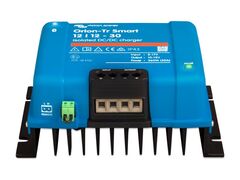
Victron Energy Orion-Tr Smart 12/12-30 Isolated

Victron Energy Orion-Tr Smart 12/12-30 Isolated

See price (17)

Boost your leisure lithium battery from the alternator while keeping both circuits electrically apart: the van-life reference, with Bluetooth built in.

View product

Frequently asked questions

Yes. It is a dual-input charger: it recharges the house battery from the alternator while driving (up to 50A) and from solar panels when parked thanks to its built-in MPPT controller. Both sources can be used together.

Yes. It is compatible with lead-acid (flooded, Gel, AGM) and lithium LiFePO4 batteries, through configurable charge profiles.

No, you need to add the optional BT-2 Bluetooth module, sold separately, to monitor charging via the Renogy DC Home app.

Yes, but on a vehicle with a smart alternator, you must connect the ignition wire (IGN) to trigger charging, because the alternator voltage varies and does not always suffice to activate the charger automatically.

Its solar input accepts up to 50V and 660W, with a built-in MPPT controller. Combined with the alternator input, it delivers a total charge current of up to 50A to the house battery.