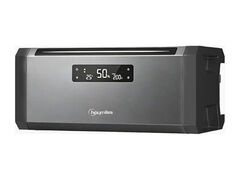

A modest base capacity, but one of the highest expansion ceilings around
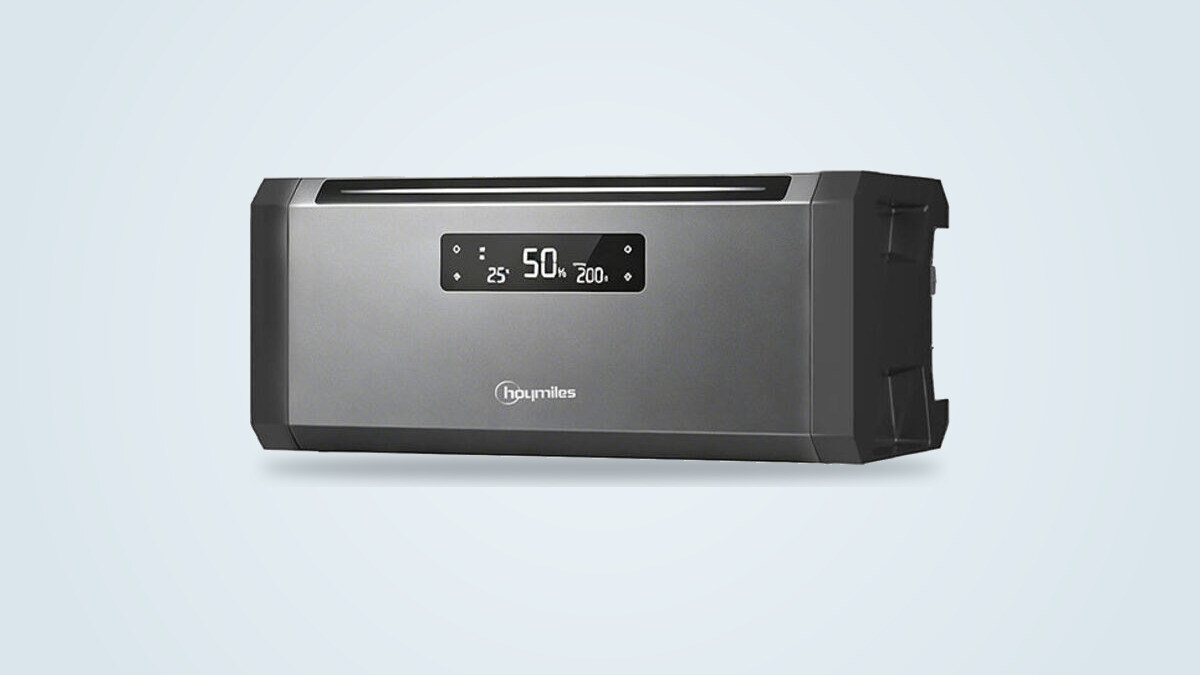
The HiBattery 1920 AC starts from a 1.92 kWh LiFePO4 base capacity, a figure shared by several direct rivals in the same segment. What sets it apart is its expansion ceiling: up to five extra modules can be added to the base unit, each contributing another 1.92 kWh, for a maximum of 11.52 kWh. The notable part is how that expansion works: each module plugs into a standard wall socket, with no wiring to run between units, which is a real simplification compared with rivals that need a physical interconnection between blocks.
One thing is still missing from the spec sheet, though: the share of that capacity actually available once the BMS protection reserve is deducted. Many recent LiFePO4 batteries already state a capacity net of that reserve, but Hoymiles doesn't spell this out for this model, so there's no way to confirm whether the advertised 1.92 kWh per unit is fully usable or slightly optimistic.
The real round-trip efficiency: 86% in AC
On efficiency, Hoymiles quotes two different figures, and they don't measure the same thing. The first, 96.5%, is a bidirectional DC/AC conversion efficiency: it describes the loss on a single conversion, in either direction. The second, 86%, is the AC round-trip cycle efficiency, in other words what the user actually gets back after a full charge-then-discharge cycle. That second figure matters most in practice, because it bakes in the two successive conversions that AC coupling requires: incoming energy is converted from AC to DC to charge the battery, then back from DC to AC to be delivered. Each conversion has a cost, and both add up over a full cycle.
This mechanism also explains why an AC-coupled battery like this one is mechanically bound to show a lower round-trip efficiency than a comparable DC-coupled battery, which stores the direct current from the panels without going through that double conversion. That isn't a design flaw specific to the HiBattery 1920 AC: it's the price of its universal compatibility with an inverter you already own, which is precisely the whole point of this architecture.
The central promise: plugging in behind any inverter
The principle behind AC coupling is to wire the storage unit in after the existing inverter rather than before it. In practice, the power the panels produce first passes through the solar inverter that's already installed, which converts it to AC exactly as it would without the HiBattery in the picture. The unit then keeps an eye on the home's consumption through a dedicated electricity meter: whenever solar energy would otherwise go unused, it diverts it into storage instead of letting it flow back to the grid.
There's a real merit to this approach: immediate self-consumption always comes first, and the battery only ever picks up the genuine surplus. It also has a direct knock-on effect on compatibility: since the HiBattery never talks directly to the panels or their inverter, its advertised compatibility doesn't depend on that inverter's brand. Hoymiles claims it works with virtually any solar inverter on the market, a far more open stance than an all-in-one system that only accepts its own panels or, at best, a handful of partner brands.
The real catch: no built-in MPPT, zero use without an existing inverter
This is the direct trade-off of that architecture, and the single most important limitation to know before buying: the HiBattery 1920 AC has no MPPT tracker and no inverter of its own. On the spec sheet, those fields are simply blank. This isn't an oversight or a software-locked feature: the enclosure has physically no input for solar panels, and no ability to convert direct current into alternating current by itself.
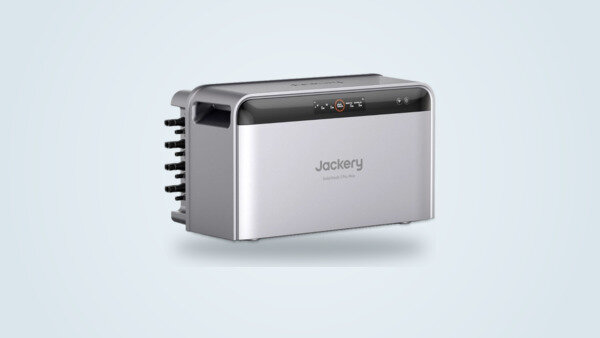
In practice, that means one simple thing: without a compatible solar inverter already installed, the HiBattery 1920 AC is entirely useless. Unlike an all-in-one system such as a Jackery HomePower or a Growatt NOAH, which carry their own MPPT and can start a balcony setup from nothing, this unit is only built to complete a setup that already works. For anyone starting from scratch, it simply isn't the right product, whatever the appeal of its expansion ceiling or its warranty elsewhere.
For anyone who already owns a working balcony inverter, though, that absence isn't a shortcoming: it's exactly what avoids paying twice for an MPPT and inverter already present in the existing setup.
Control: AI-EMS, Time of Use, and the meter it's missing
The HiBattery 1920 AC is controlled from an app that finds the unit within minutes of it being plugged in. Its most capable mode, called AI-EMS, adjusts charging and discharging based on dynamic electricity tariffs and weather forecasts, aiming to maximise savings without manual input. A companion mode, Time of Use, lets you schedule your own charge and discharge windows, handy for locking recharging to fixed off-peak hours.
There is, however, a condition attached to this fine-grained control: to automatically detect the available solar surplus, the unit needs a compatible electricity meter, a Shelly 3EM or a Hoymiles smart meter, sold separately. Without that accessory, charge power is set manually in the app and stays fixed, which works but loses most of the point of dynamic control. That extra accessory cost needs to be factored into the real budget for the setup, on top of the unit's own price.
The backup output: 1000 W in under 0.02 seconds
A dedicated backup output delivers up to 1000 W, with an automatic switch claimed at under 0.02 seconds during a grid outage. That's fast enough to stay imperceptible to most electronics, which cope badly with any interruption longer than a few dozen milliseconds. Enough to keep a router, some lighting or a small appliance running until the power comes back, without pretending to replace a dedicated home UPS for more critical loads.
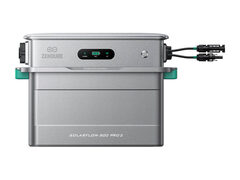
On this specific point, the HiBattery 1920 AC matches the SolarFlow 800 Pro 2 and trails the Stream Ultra, which is rated at 1200 W. The gap isn't huge, and in all three cases the backup function is meant to tide over a few essential devices, not to keep an entire home powered.
Safety and build: a well-stocked architecture, a young product line
Safety rests on a dual-microcontroller architecture and 48 claimed layers of electrical protection, backed up by an internal fire extinguisher and a pressure relief valve built into the enclosure. The whole thing sits inside an IP66-rated shell, rated to run from -20 °C to 55 °C, suited to an exposed outdoor spot facing weather and temperature swings. No safety fault or recall has been identified for this model to date.
On endurance, Hoymiles claims 6000 cycles and a 10 year warranty, a span among the longest in the balcony battery segment. The brand itself is no newcomer: it's the world's largest micro-inverter maker, a market where it has built its reputation over many years. Its storage line is a different story, though, on sale only since September 2025, which means it doesn't yet have the multi-year track record that longer-established storage products on the market can claim.
Installation and compliance: the simplest setup in the segment
Physical installation comes down to two plugs: the unit itself, and the electricity meter if one is used. No work on the existing solar inverter, no solar wiring to touch, no extra MPPT input to hook up. On this specific point, it's one of the simplest installations in the segment, since the bulk of the electrical work was already done when the original inverter went in.
On the regulatory side, the question is worth framing differently from that of an all-in-one system: since the HiBattery 1920 AC changes neither the power nor the grid injection point of the existing setup, it simply stores a surplus already produced under whatever arrangement already covers the inverter in place. That reading is still worth confirming case by case with the local grid operator before buying, though: the rules that apply to adding storage to an existing setup can vary from one country to another, and change over time.
Against the direct competition
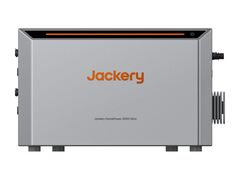
Among expandable balcony batteries, three direct references help place the HiBattery 1920 AC: the Zendure SolarFlow 800 Pro 2 and the EcoFlow Stream Ultra, both fitted with their own MPPT and inverter, and the Jackery HomePower 2000 Ultra, an all-in-one system with a more limited expansion ceiling.
| Criterion | HiBattery 1920 AC | SolarFlow 800 Pro 2 | Stream Ultra | HomePower 2000 Ultra |
|---|---|---|---|---|
| Base capacity | 1920 Wh | 1920 Wh | 1920 Wh | 2048 Wh |
| Expandable up to | 11.52 kWh | 11.52 kWh | 11.52 kWh | 8 kWh |
| Built-in MPPT | None | 4 | 4 | 2 |
| Built-in inverter | None | 800 W | 800 W | 800 W |
| Backup output | 1000 W | 1000 W | 1200 W | Not disclosed |
How this table reads depends entirely on the buyer's starting point. For anyone with no setup yet, the SolarFlow 800 Pro 2, the Stream Ultra or the HomePower 2000 Ultra hold a decisive edge: they carry everything needed to get started, including converting the panels' energy. For anyone who already owns a working balcony inverter, that edge disappears completely, since it would mean paying twice for a function the existing setup already handles. In that specific case, the HiBattery 1920 AC becomes the most sensible of the four, matching the expansion ceiling of the two best and offering a backup output that holds its own against the SolarFlow 800 Pro 2.
Who it's for, and who should look elsewhere
The HiBattery 1920 AC is built for a specific kind of buyer: someone who already has a working balcony solar setup, with an inverter in good order, whatever the brand, and who simply wants to stop wasting the surplus energy that isn't used on the spot. For that buyer, the limitations listed above carry far less weight: the lack of a built-in MPPT isn't a shortcoming at all, it's exactly what avoids duplicating hardware already in place, and the cost of a compatible electricity meter is modest next to that of a full inverter.
For anyone starting from scratch, on the other hand, or looking for a system that can stand on its own without depending on another device, an all-in-one system such as the SolarFlow 800 Pro 2, the Stream Ultra or the HomePower 2000 Ultra remains the more sensible choice. The HiBattery 1920 AC isn't a bad product in absolute terms: it simply isn't built for everyone, and it makes peace with that rather well for the buyers it's actually built for.