
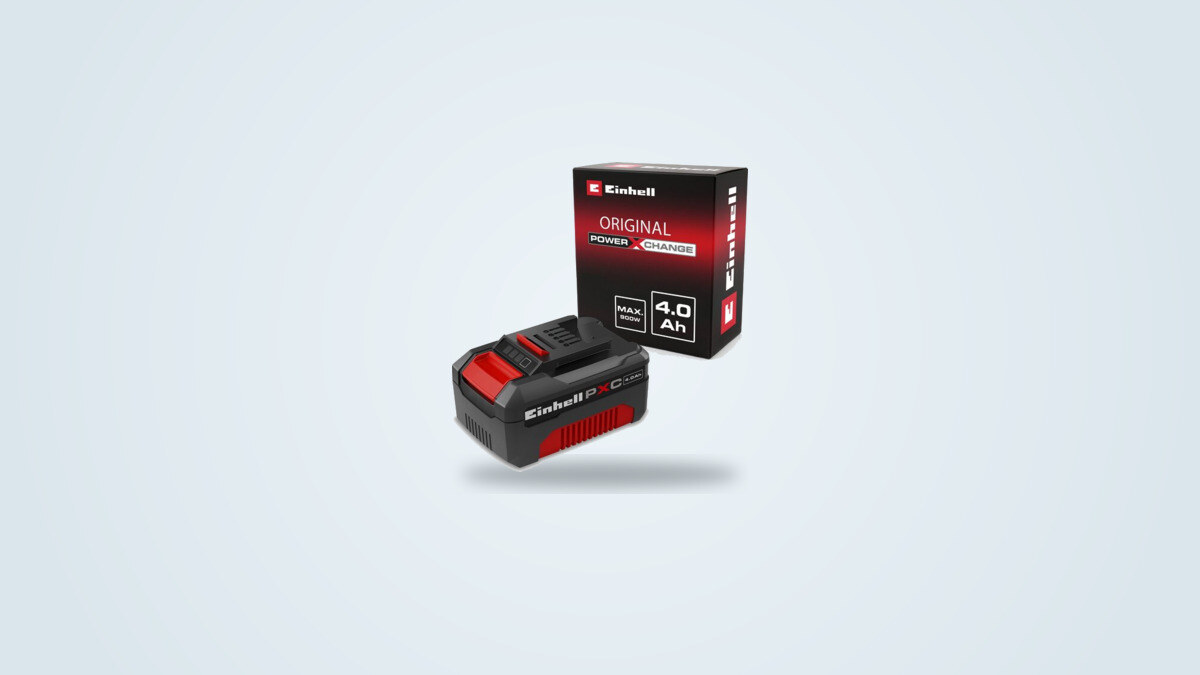
Einhell Power X-Change 18V 4.0 Ah: our full review

The Power X-Change 4.0 Ah battery holds its rated amp-hour capacity better than expected, with an important nuance when it comes to actually recoverable watt-hours. A signal of premature failure after two to three years, recurring in both France and Germany, deserves to be known before buying.

Our rating
3.8/5
Actual delivered capacity: 4.0 out of 5 (weighting 25%)Capacity4.0Compatibility and ecosystem breadth: 4.3 out of 5 (weighting 20%)Compatibility4.3Reliability and long-term endurance: 3.2 out of 5 (weighting 25%)Reliability3.2Charge time and tool runtime: 3.9 out of 5 (weighting 15%)Charging3.9Build and interface: 3.8 out of 5 (weighting 15%)Build3.8

How is this rating calculated?

Einhell Power X-Change 18V 4.0 Ah battery on a plain background

The essentials

The Power X-Change 4.0 Ah battery does better than its own spec sheet claims on one specific point: on a variant close to this range, the delivered capacity reaches 96.7 % of the rated value in amp-hours, a very good result. In actually recoverable energy (watt-hours, which account for voltage sag under load), the figure drops back to 81.0 %, below the 90 % usually claimed: the two units tell different stories, and it is better to keep them separate than to settle on a single percentage. The Power X-Change ecosystem remains one of the widest on the market, with more than 300 compatible machines. The point that weighs most on the rating lies elsewhere: a signal of premature failure after two to three years of use comes up at regular intervals, in both France and Germany, a pattern of quality spread rather than a systematic flaw, but real and worth taking seriously for a purchase meant to last.

Strengths

  • Amp-hour capacity measured at 96.7 % of the rated value on a variant close to this range, a very good result
  • Power X-Change ecosystem among the widest on the market: more than 300 compatible machines, from DIY to garden work
  • Rubberised impact-resistant housing, recessed handle for effortless removal
  • 3-segment charge indicator, enough for a quick check before use
  • Sold alone at a modest price seen (around 37 €), consistent with a deliberate range strategy rather than a hidden catch

Limitations

  • Signal of premature failure after two to three years of use, recurring in both France and Germany
  • In actually recoverable energy (Wh), the figure falls back to 81.0 % of the rated value, below the 90 % usually claimed
  • The measured capacity concerns a variant close to this range (Multi-Ah Plus), not this exact standalone model: treat it as a good indicator, not direct proof
  • No charger ever supplied with this reference sold alone, an extra cost to anticipate for anyone starting out in the ecosystem
  • Perceived quality lags behind higher-positioned brands such as Bosch Pro or Makita, repeatedly in French-language comparisons
Einhell PXC 18V 4.0 Ah Battery: see the full details and price →

96.7 % in amp-hours, 81.0 % in real energy: two figures, not one

On a variant close to this range (Multi-Ah Plus, set to 4 Ah mode, not the standalone reference 4511396 itself), a constant-current discharge at 15 A, voltage tracked through to full cutoff, gives: 3,869 mAh delivered out of 4,000 mAh rated, or 96.7 % in amp-hours, and 58.40 Wh delivered out of 72 Wh rated, or 81.0 % in actually recoverable energy.

96.7 %
Delivered capacity, in Ah
81.0 %
Delivered energy, in Wh

The gap between the two figures has a simple explanation: voltage falls progressively during discharge (19.93 V at full charge, 17.33 V just before cutoff on this measurement), and the energy actually available depends on that voltage at every instant, not just on cumulative current. This is why a single "usable capacity" percentage is not enough to describe a battery accurately: depending on whether amp-hours or watt-hours are being discussed, the same product shows a result above or below 90 %.

A comparison between six 4 Ah packs, leading on safety and durability

A comparison covering six 4 Ah batteries from different brands, using the German school grading scale, places the Power X-Change in first position with an overall score of 1.9 ("gut", meaning good), with safety, durability and charging time all rated good to very good. This result points in the same direction as the capacity figures above: this battery stands out more for its robustness and stability than for an exceptional raw capacity, consistent with a coherent positioning rather than an isolated marketing move.

More than 300 compatible machines, one of the widest ecosystems on the market

The bet Einhell placed with Power X-Change more than ten years ago still holds: a single battery now powers more than 300 machines in the Einhell range, from everyday DIY to garden work, through to lighting and power inverters. Twin-Pack technology even allows two 18 V batteries to be combined to power certain more demanding 36 V tools, without leaving the ecosystem.

A signal of premature failure after two to three years, worth taking seriously

The most important point to know before buying is not about capacity but about lifespan. A share of Power X-Change packs, across all capacities, stop working correctly after two to three years of use: reduced runtime, longer charging times, outright refusal to charge. This signal comes up at regular intervals, in both France and Germany, never confined to a single forum or platform.

A useful methodological point here: satisfaction at the time of purchase and durability over time are two different questions. A recent buyer, who has not yet had the chance to see their battery age, cannot speak to this specific point. Reports of premature failure almost always concern packs owned for several years, which explains why they do not show up in an assessment covering only the first few weeks of use.

This pattern looks more like a spread in build quality than a systematic flaw: some packs also exceed five years of use with no reported incident. But the scale and regularity of the signal justify mentioning it clearly, rather than relying solely on the manufacturer's own communication about the absence of memory effect and self-discharge.

Sturdy housing, no charger included: a deliberate range strategy

The housing has an impact-resistant rubberised coating and a recessed handle that makes removing it from the tool easier. The 3-segment charge indicator remains basic next to the detailed LCD displays of other product categories, but is enough for a quick check before heading out to a job.

This reference is sold without a charger, a common practice for this type of battery sold on its own rather than a hidden catch: Einhell also offers starter kits pairing a battery with a charger, generally better value for anyone starting out in the ecosystem than the two bought separately.

Price seen and availability

The price seen for this reference alone sits around 37 €, consistent with an entry-level position in the Power X-Change ecosystem. The range now coexists with newer variants ("Plus", rated IP57, and "Multi-Ah", which covers several capacities in a single pack): these newer references should not be confused with this standard 4.0 Ah battery when comparing prices. No product recall was found for this model in the safety databases consulted.

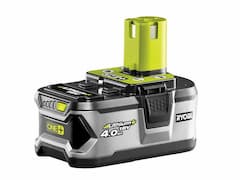
Against the Ryobi RB18L40 battery

The most natural comparison is with the other major consumer ecosystem, Ryobi One+, in its equivalent 4 Ah format.

Technical comparison: Einhell PXC 4.0 Ah against the Ryobi RB18L40
CriterionEinhell PXC 4.0 AhRyobi RB18L40
Capacity4 Ah / 72 Wh (96.7 % in Ah, 81.0 % in Wh measured)4 Ah / 72 Wh (claimed, no independent figure found)
EcosystemMore than 300 machinesMore than 200 tools
Charge indicator3 segments4 LEDs
Price seen≈ 37 €≈ 90 €

On price seen alone, the gap clearly favours the Einhell. On capacity, the Einhell shows a figure that has actually been measured, which the Ryobi lacks, even though it concerns a close variant rather than the exact standalone reference. The Ryobi keeps the advantage of a slightly wider ecosystem in terms of number of tools, and its known failure signal (charging refusal after long inactivity) appears less severe than the 2 to 3 year failure signal identified here for the Einhell. The choice remains mainly a question of the ecosystem already owned, not a simple price-against-price trade-off.

Who it suits, and who it does not

It suits anyone who already owns Power X-Change machines and is looking for a 4 Ah format with a good price-to-runtime balance, or anyone discovering the ecosystem who wants to benefit from its very wide compatibility without paying a premium.

It does not suit anyone who needs an unreserved guarantee of longevity beyond two or three years: the premature failure signal identified above, while not systematic, deserves to be taken into account for professional use or a purchase meant to last.
The rating in detail

Our rating
3.8/5
Actual delivered capacity 4.0
Compatibility and ecosystem breadth 4.3
Reliability and long-term endurance 3.2
Charge time and tool runtime 3.9
Build and interface 3.8
Einhell PXC 18V 4.0 Ah Battery: see the full details and price →

The product and its alternatives

Einhell PXC 18V 4.0 Ah Battery

Einhell PXC 18V 4.0 Ah Battery

See price (41)

The original 4 Ah pack that powers a drill, a lawnmower or a 230 V inverter alike, across a range of more than 300 machines.

View product
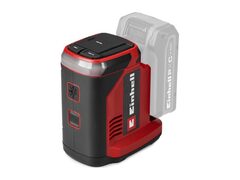
Einhell PXC 150W Power Inverter

Einhell PXC 150W Power Inverter

See price (6)

A 230 V socket, a 60 watt USB-C Power Delivery port and a dimmable LED lamp, all running off a Power X-Change battery you already own.

View product
Ryobi Battery RB18L40 18V One+

Ryobi Battery RB18L40 18V One+

See price (8)

Compatible with every tool in the Ryobi One+ range, this genuine RB18L40 battery offers a 4Ah capacity at 18V for constant, reliable power.

View product

Frequently asked questions

In amp-hours, the capacity measured on a variant close to this range reaches 96.7 % of the rated value, a very good result. In actually recoverable energy (watt-hours), the figure drops back to 81.0 %, because voltage falls progressively during discharge. The two figures tell different stories: it is better to keep them separate than to settle on just one.

A signal of premature failure after two to three years of use comes up at regular intervals, in both France and Germany. The pattern looks more like a spread in build quality (some packs also exceed five years with no incident) than a systematic flaw, but the signal is real and deserves to be known before a purchase meant to last.

No, this reference is sold on its own, a common practice for this type of battery sold individually. If you are starting out in the Power X-Change ecosystem, a starter kit pairing a battery with a charger generally costs less than buying the two separately.

With the whole of Einhell's Power X-Change range, meaning more than 300 machines: DIY tools, garden equipment, lighting and accessories such as power inverters. Be careful not to confuse this standard reference with the newer "Plus" or "Multi-Ah" variants in the range.

The choice mainly depends on the tool ecosystem already owned, since the two batteries are not interchangeable. On the data available, the Einhell is noticeably cheaper and shows an actually measured capacity, while the Ryobi covers a slightly higher number of tools and its known failure signal appears less severe.