
What the claimed 900Wh are really worth
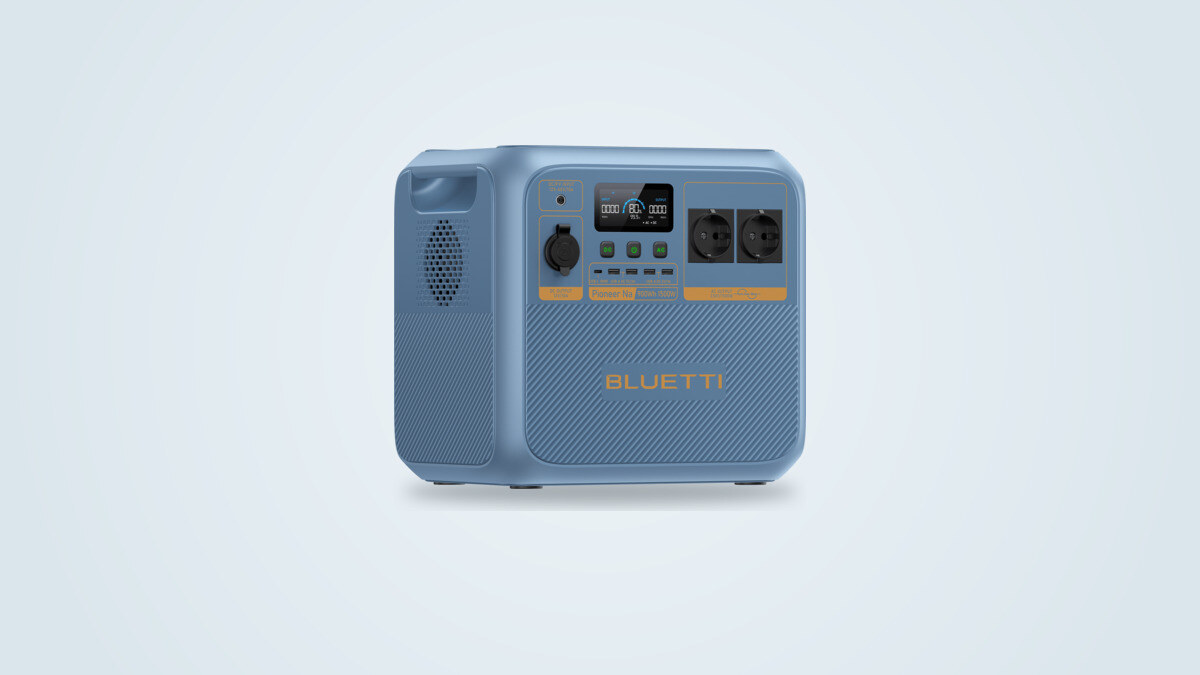
The Bluetti Pioneer Na is rated at 900Wh of usable capacity, a figure built on a sodium-ion (Na-ion) battery rather than the LiFePO4 chemistry usual in this category. The "Na" in the name is not a market code: it is the chemical symbol for sodium (Natrium), the material replacing lithium in this battery. As with any inverter-based station, the energy actually available at the output depends on the load drawn and the path the current takes.
On the AC output, delivered energy ranges from roughly 88% of the claimed 900Wh under a light load (around 440W) to roughly 94% under a heavier load (around 920W), or between 790 and roughly 850Wh actually available. A separate reading on the direct DC output (via the 12V port) comes out at 814Wh, or roughly 90%. Overall efficiency, from the wall socket through to energy actually delivered (charge and discharge combined), works out to roughly 73 to 74%.
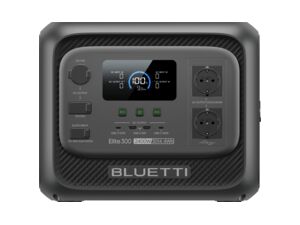
Another figure worth weighing against this one: energy density. At 16kg for 900Wh, the Pioneer Na works out to roughly 56Wh per kilogram carried, well behind the Bluetti Elite 300 (LiFePO4 chemistry), which reaches roughly 115Wh/kg. That is the direct consequence of a sodium-ion chemistry that is less energy-dense than lithium: for the same capacity, a sodium battery is heavier and bulkier.
Sodium-ion, a different chemistry: what actually changes
Sodium (chemical symbol Na, Natrium) replaces lithium here as the active electrode material, a choice rarely seen outside the automotive industry: the Pioneer Na is marketed as the first mass-market portable power station to adopt it. The appeal of sodium lies in its abundance (found in seawater and rock salt, unlike lithium, whose extraction remains concentrated in a handful of deposits) and in better thermal stability, which lowers the risk of thermal runaway compared with some lithium chemistries.
In practice, two consequences stand out. First, cold-weather resistance, covered in detail in the next section. Second, the claimed endurance: Bluetti rates the pack for more than 4000 cycles before dropping to 70% of original capacity, and targets a ten-year lifespan. The trade-off is well known and measurable: sodium is chemically less energy-dense than lithium, which shows up directly in the modest capacity (900Wh) and weight (16kg) already noted for this size of unit.
The cold-weather promise, and the conditions it doesn't advertise
The Pioneer Na's headline argument is its temperature range: charging possible from -15 °C and guaranteed discharge down to -25 °C, where most conventional lithium stations already struggle below 0 °C. That promise is real. But the manufacturer's technical documentation lists several conditions that don't appear in the main marketing pitch.
Below -10 °C, charging caps at 60% state of charge: the battery cannot be fully topped up in severe cold, only completed once temperatures turn milder. At -25 °C, usable discharge capacity also drops to roughly 80% of rated, or roughly 720Wh rather than 900Wh. Available power drops by a comparable margin at the lowest temperatures, on the order of a third less than the rated 1500W.
None of this undermines the case for the Pioneer Na in severe cold: it simply qualifies it. The unit keeps working where a conventional lithium battery would simply shut down, but not at full capacity or full power in the most extreme cases.
Charging: the real condition behind the 35 minutes
On mains power alone (up to 1400W in Turbo mode), a full charge takes 63 to 68 minutes. In Standard mode (roughly 500W), expect roughly 2h20 to 2h36, and in Silent mode (roughly 200W), roughly 7 hours. All three figures share the same end point (0 to 100%) and remain comparable with each other.
On solar alone, the input accepts up to 500W (12 to 60V, 10A maximum), for a full charge rated at roughly 2h20, handled by a single MPPT tracker. The unit's very low standby draw, covered further down, does not noticeably slow this charging speed.
Power: the promise kept, and slightly exceeded
The Pioneer Na is rated at 1500W continuous output, with a Power Lifting mode pushing the peak to 2250W. That mode is switched on from the BLUETTI app: it is not available by default out of the box. Once enabled, Power Lifting mode produced a 2328W peak, slightly above the 2250W rating, before settling around 2200W under sustained simultaneous use of several appliances. The unit therefore keeps its power promise, and even slightly exceeds it at peak.
Under continuous load, nothing points to thermal throttling or performance drop over time at normal temperatures: the rated 1500W stays available without the hidden conditions some other models impose. The only genuine limit shows up at the lowest temperatures, already covered above: available power drops by roughly a third as the unit approaches -25 °C.
Noise and standby draw: two reassuring points
The Pioneer Na's noise level runs from roughly 16dB at rest to 50dB under fast charging or full output power, never described as intrusive even under full load. That is a noticeably more contained noise profile than other stations in the catalogue, where the fan is often the main point of friction.
On the consumption side, the unit draws roughly 1.5W in standby, with no charging or output active. Leaving the AC inverter switched on permanently, even with nothing plugged in, raises that draw to roughly 9W, enough to empty the battery in under a week, roughly four to five days, if the inverter is left on between uses. Switching the inverter off whenever no mains appliance is plugged in remains the simplest habit for preserving standby runtime.
Ports and control: Bluetooth only, no Wi-Fi
On the European market, the Pioneer Na's port selection includes two 230V pure sine wave mains sockets, one 100W USB-C port, four 15W USB-A ports each, and a regulated 12V marine-style cigarette-lighter output (120W). Control runs through a built-in LCD screen and the BLUETTI mobile app, but Bluetooth only: there is no Wi-Fi, so no remote monitoring or control beyond the unit's own range, unlike several other Bluetti ranges.
This limited connectivity has a concrete consequence: no way to check charge status from another room or remotely from a phone off the local network. For home backup use where checking the state of charge without being right next to the unit matters, that is a real limit against better-connected rivals.
Build, resilience and reliability after eleven months on sale
Bluetti rates the Pioneer Na for more than 4000 charge cycles before dropping to 70% of original capacity, and targets a ten-year lifespan for this chemistry. The contractual warranty runs to 3 years. No product recall or safety incident is on record for this model to date, but the Pioneer Na has only been on sale since October 2025: that short track record isn't enough yet to confirm the claimed longevity over its intended lifetime.
Two points temper an otherwise fairly solid build. A one-metre drop has already loosened several exterior mounting clips, which cuts against the rugged image pushed for outdoor and winter use. And, as already noted above, condensation in snowy conditions can trigger an automatic safety shutdown lasting roughly 24 hours. Neither counts as a structural safety flaw, but both are worth factoring in for genuinely exposed outdoor use.
Against LiFePO4 rivals in the same class
The Pioneer Na has no direct sodium-ion equivalent in the catalogue, so the comparison necessarily runs against LiFePO4 stations. The table below sets it against two references already covered, one much larger, one much smaller.
| Criterion | Pioneer Na | Elite 300 | EB3A |
|---|---|---|---|
| Chemistry | Sodium-ion | LiFePO4 | LiFePO4 |
| Capacity | 900Wh | 3014Wh | 268Wh |
| Energy density | ~56Wh/kg | ~115Wh/kg | ~58Wh/kg |
| Cold resistance (discharge) | Down to -25 °C | Not stated | Not stated |
| Rated cycles | 4000+ to 70% | 6000 to 80% | 2500 to 80% |
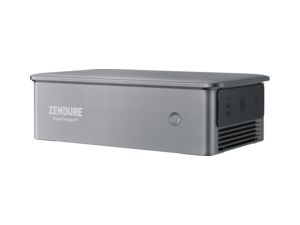
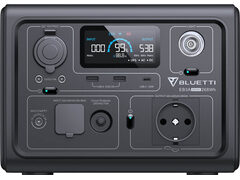
Against the Elite 300, the energy density gap owes as much to size as to chemistry: a much larger unit spreads the weight of secondary components (casing, management electronics) more efficiently. Against the EB3A, a small entry-level LiFePO4 unit, the gap narrows sharply: the Pioneer Na's density isn't really behind a small lithium station, mostly behind larger formats. The Zendure Ace 1500, already compared on the product page, targets a different use case: a modular hub with no built-in battery, built for gradual expansion rather than cold-weather resistance.
Who the Pioneer Na suits, and who it doesn't
The Pioneer Na is best suited to anyone regularly facing genuinely severe cold: winter camper vans, outdoor worksites, unheated cabins or second homes, mountain activities. It is the only product in the catalogue built specifically for this use case, with discharge that keeps working down to -25 °C where most rivals simply stop below 0 °C.
It suits general use less well, where capacity and cost per Wh matter more than cold resistance: a LiFePO4 station of equivalent capacity, cheaper per Wh and more energy-dense, will do that job better. It is also not the right fit for anyone who needs remote monitoring (the lack of Wi-Fi limits control to close-range Bluetooth), or anyone planning future capacity expansion: the battery isn't removable and the range isn't expandable.