
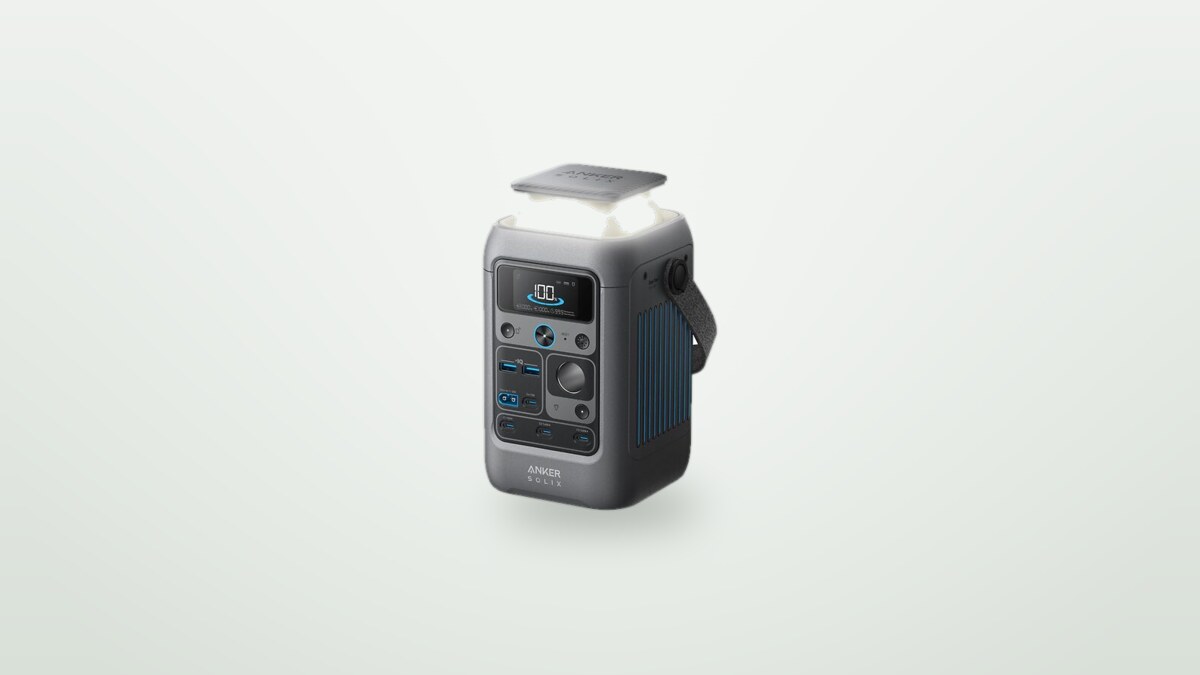
What the advertised 288 Wh are really worth
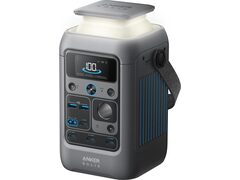
The C300X DC carries a 288 Wh (90000 mAh) LiFePO4 battery, a chemistry recognised for safety and longevity rather than maximum energy density. With a documented protocol (a full multi-port discharge), the capacity actually delivered comes out at 272.9 Wh, about 95 % of the advertised figure. That is a very good score: the 5 % gap matches the normal losses from measurement and battery management (BMS), not an underdelivery dressed up as optimistic marketing, a flaw that is nonetheless common for this type of product.
This faithfulness to the advertised figure is partly explained by the product's own architecture: without an inverter, there is one less electronic conversion stage between the cell and the connected device, so fewer opportunities to lose energy along the way. That is the throughline of this whole review.
The real gain from the 100 % USB-C/DC architecture
This is the most interesting, and best documented, angle on this product. The C300X DC has a sibling model that is electrically and battery-wise identical, the Anker Solix C300, which simply adds a 230 V AC outlet and the inverter needed to run it. On that AC sibling, it takes 351 Wh drawn at the wall to refill the pack, and only 240 Wh come back out through the 230 V socket: efficiency from the wall to the socket comes to 69 %. On that same unit, efficiency climbs to 85 % at best on the continuous outputs (USB-C, 12 V), which do not need the inverter to work.
The physical mechanism is simple: every electronic conversion stage dissipates some energy as heat. A direct USB-C or 12 V output only needs a single conversion stage from the cell. A 230 V output first has to convert the battery's direct current into alternating current through an inverter, an extra step that costs a lot in efficiency. By giving up the AC outlet, the C300X DC does not just save weight: it only offers continuous outputs to begin with, so it sits in that higher range without ever paying the inverter's toll, which its own roughly 95 % recovered capacity, covered above, confirms.
Four USB-C ports, but not four times 140 W
The product page, and some of the marketing around this model, present it as "four 140 W USB-C ports," which suggests each of the four ports can deliver that power. That is not the case. Of the four USB-C ports, two are bidirectional and genuinely reach 140 W (these are also the ones used to recharge the unit itself quickly), a third caps at 100 W, and the fourth at 15 W. Add to that a USB-A port (12 W) and a 12 V output at around 120 W.
| Port | Max power | Bidirectional (charges the battery) |
|---|---|---|
| USB-C #1 | 140 W | Yes |
| USB-C #2 | 140 W | Yes |
| USB-C #3 | 100 W | No |
| USB-C #4 | 15 W | No |
| USB-A | 12 W | No |
| 12 V output | 120 W | No |
In practice, that is still generous connectivity: a laptop on one 140 W port, a phone on the other 140 W port, a tablet on the 100 W port, and a small accessory on the 15 W port, four devices powered at once as advertised. The nuance is only about the power available per port, not about how many devices can be plugged in at the same time.
Charging speed: 2h21 on one port, 1h30 on two
On this point, Anker's own claims hold up. A full recharge over a single 140 W USB-C port clocks in at 2h21. Anker Japan officially states about 2.3 h under the same conditions, and the two figures line up. Combining the two bidirectional ports (280 W in theory), Anker Japan states about 1h30 for a full charge; 270 W is genuinely reached in practice with two chargers running at once, along with an 80 % charge in about 1 h.
The 12 V output measured stable at around 13.2 V, with an operating temperature range stated by the manufacturer of -20 °C to 40 °C.
What the missing AC outlet really costs
This is the trade-off for that efficiency gain, and it is the most commonly raised concern: without a 230 V AC outlet, any device that takes neither USB-C nor 12 V stays out of reach. Concretely, that rules out a small oven, a classic electric kettle, an old (non-USB-C) laptop charger, or any standard household appliance. The choice is deliberate and consistent with the product's nomad-oriented positioning, but it deserves to be made clear before buying: this station is not a universal replacement for a generator or a classic inverter-based power station.
Another claim worth correcting: the term "UPS" (uninterruptible power supply, automatic switch-over during an outage) is sometimes used incorrectly for this model. That cannot apply here: by definition, a UPS switch-over exists to maintain an uninterrupted 230 V supply, and this unit specifically has no AC output at all. This mix-up appears to stem from generic marketing language used across the Anker Solix "X" line, which also includes models with an AC outlet, rather than from an actual feature of this specific reference.
Real-world runtime by use case
Charging a MacBook Pro M1 from 27 % to 80 % used only about 15 % of the station's own charge state, consistent with high efficiency on direct USB-C output. On a 12 V compressor fridge drawing 30 W, 24 hours of continuous use drew down 77 % of the total charge, projecting a total runtime of around 31 hours on this specific appliance, just over one full day.
| Appliance | Consumption | Result measured |
|---|---|---|
| MacBook Pro M1 | 27 % → 80 % charge | ~15 % of the station's charge used |
| 12 V fridge | 30 W continuous | 77 % used in 24 h (~31 h total runtime) |
This last figure is a concrete illustration of the capacity limit already mentioned: 288 Wh covers a cool night on a small camping fridge, but not a full weekend without a top-up charge. For that kind of multi-day use, solar recharging (100 W max, with an MPPT controller) or a higher-capacity unit remains necessary.
C300 DC or C300X DC: two names for the same product
A point worth noting when buying, with no impact on the technical specs: Anker sells this product under two different names depending on the market, and even depending on its own official channels. The Japanese market uses exclusively "SOLIX C300 DC" (reference A1726), while the official European German-language site uses "SOLIX C300X DC" (reference A1728) for a page with otherwise identical content. This inconsistency comes from Anker itself, not from confusion created by third-party retailers.
All the measured or manufacturer specs found under these two references, capacity, weight, dimensions, port configuration, launch price, are strictly identical. It is therefore genuinely the same product under two commercial names, not two different versions. If you come across other reviews or comparisons online mentioning "C300 DC" without the X, it is very likely this same reference.
Against the direct competition
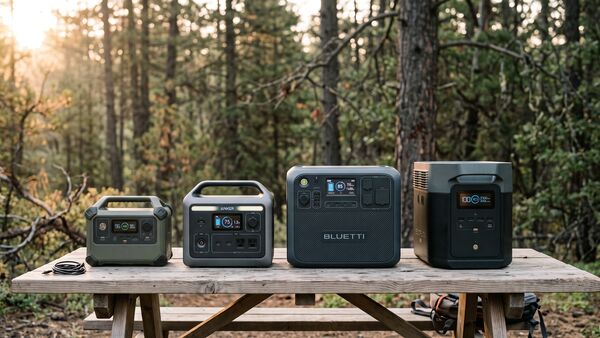
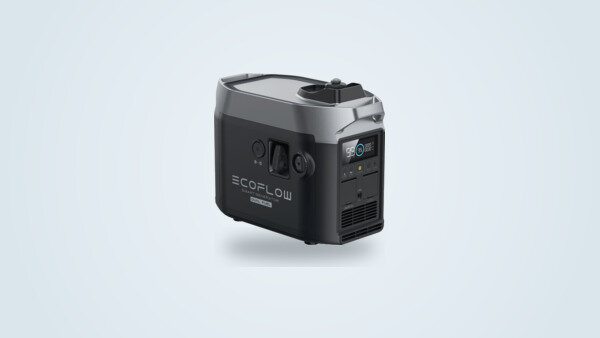
In the segment of compact, mostly USB-C-and-DC power stations, three models come up most often for comparison: the EcoFlow TRAIL 200 DC (smaller and cheaper), the Anker Solix C300 with an AC outlet (same battery platform, with an inverter), and the EcoFlow RIVER 2 (general-purpose, with an AC outlet).
| Criterion | Anker Solix C300X DC | EcoFlow TRAIL 200 DC | Anker Solix C300 (AC) | EcoFlow RIVER 2 |
|---|---|---|---|---|
| Capacity | 288 Wh | 192 Wh | 288 Wh | 256 Wh |
| 230 V AC outlet | No (100 % USB-C/DC) | No (DC only) | Yes (300 W) | Yes (300 W) |
| USB-C | 4 ports (2×140 W + 100 W + 15 W) | 140 W + 100 W | 140 W | 100 W |
| Weight | 2.8 kg | ~2.3 kg | ~2.9 kg | ~3.3 kg |
| Price observed | ≈ 199 € | ≈ 149 € | ≈ 230 € | ≈ 249 € |
The C300X DC positions itself as the most generous in USB-C connectivity in this comparison, at a mid-range price. The TRAIL 200 DC shares the same 100 % DC philosophy for less money, but with less capacity and fewer ports. The C300 with an AC outlet offers 230 V versatility for the same battery capacity, at the cost of the lower efficiency shown earlier in this review. The choice therefore comes down to one simple question: whether or not you need a standard AC outlet.
Reliability: what is known, what is not
The LiFePO4 chemistry used is recognised for its longevity and thermal safety, a choice consistent with the rest of the Anker Solix lineup. Beyond that structural point, it is worth being honest about the limits of the research available: no independent test lab with a complete protocol (calibrated charge/discharge bench, decibel metre, accelerated cycling) has been located for this specific product. The 25 dB noise level put forward by Anker has never been measured by a third party, and the feeling on this point remains mixed in Japan, with some reports mentioning audible fan noise and others calling the unit silent.
No independent teardown has been found either, which rules out confirming the exact brand of the cells or the battery management circuit. These are not negative signals, just blind spots that should not be filled in with guesswork: as of now, nothing points to a specific reliability flaw with this reference, but nothing confirms the absence of one independently either, beyond the 4000 cycles stated by the manufacturer.
Who the C300X DC is for
This product suits a nomadic use case centreed on portable electronics especially well: remote work in a van or outdoors, recharging smartphones, tablets, laptops, and small photo or video gear, where the efficiency gain translates directly into longer real-world runtime at equal capacity. Its light weight (2.8 kg) and built-in emergency light also make it a good light-duty backup choice at home, enough to get through one evening of a power cut without pulling out a much heavier station.
On the other hand, it does not suit anyone who needs to power, even occasionally, a classic 230 V household appliance, or anyone looking for several days of runtime without a recharge on a power-hungry load like a fridge or a space heater. In those cases, the AC-outlet version in the same lineup, or a higher-capacity unit, remains the better fit.