
A Regulation Already in Force, Rolling Out in Stages
Regulation (EU) 2023/1542 of the European Parliament and of the Council entered into force on 17 August 2023 and has applied since 18 February 2024, replacing the former 2006 directive on batteries and accumulators. It defines five battery categories: portable batteries (power banks, household cells, most consumer device batteries), LMT batteries (e-bikes, e-scooters and electric mopeds), electric vehicle batteries, industrial batteries, and SLI batteries (starting, lighting, ignition, the classic combustion-car battery).
The text rolls out in successive waves rather than all at once. Two parts are already covered on this blog: the standardised battery labelling, in force since 18 August 2026, and the user-replaceable battery requirement, due on 18 February 2027. This article covers three other parts of the same regulation, less well known but just as concrete for our readers: the digital battery passport, the carbon footprint declaration, and the due diligence duty on critical raw materials.
The Digital Battery Passport: a Mandatory QR Code From 2027
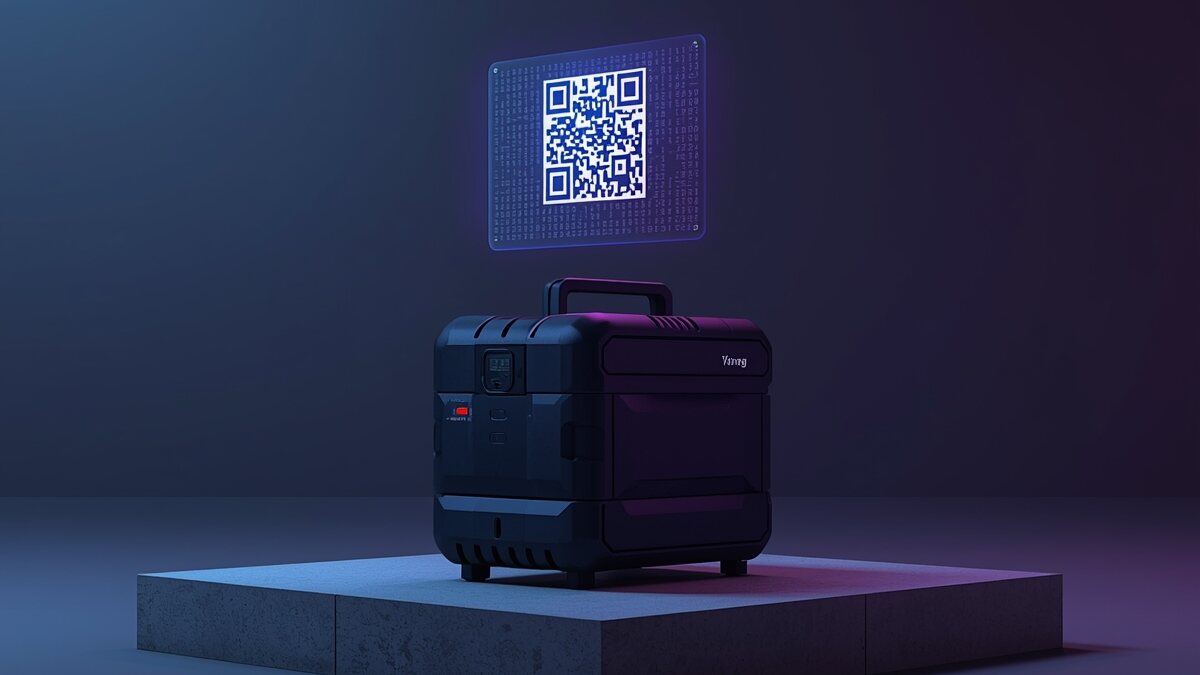
From 18 February 2027, every electric vehicle battery, LMT battery, industrial battery above 2 kWh and home storage battery placed on the EU market will need a digital battery passport, accessible via a QR code fixed on the battery. The duty to create and maintain this passport falls on the economic operator placing the finished battery on the market (usually the manufacturer), rather than on suppliers of individual cells or components.
The passport gives access to information that varies by battery category: identification and technical characteristics, manufacturer and responsible economic operator details, performance and durability data (capacity, guaranteed cycle count, operating temperature), and information useful for repair, reuse and recycling. The European technical registry meant to host this data has been operational since 20 July 2026.
Is Your Power Station Affected? The 2 kWh Threshold
This is the most practical question for our readers: a battery is classed as portable if it is sealed, weighs less than 5 kg, and is neither specifically designed for industrial use nor an SLI or LMT battery. An industrial battery sits outside that definition, and once it stores more than 2 kWh, it falls within the scope of the digital passport and the carbon footprint declaration. A home power station can land on either side of that line depending on its capacity and weight, and the text itself remains imperfect on how to settle borderline cases.
| Model | Capacity | Position relative to the threshold |
|---|---|---|
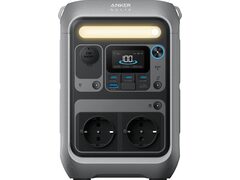
| Anker Solix C300 | 288 Wh | Well below, a classic portable battery |
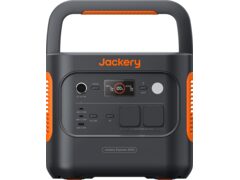
| Jackery Explorer 2000 V2 | 2,042 Wh | Just above, a case to check individually |
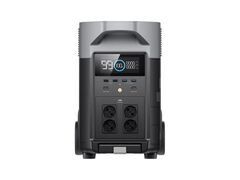
| EcoFlow Delta Pro | 3,600 Wh | Well above, likely affected |
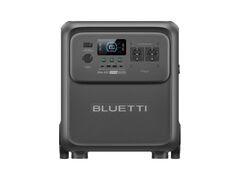
| Bluetti Elite 400 | 3,840 Wh | Well above, likely affected |
In practice, the final classification is the manufacturer's call, stated in its CE declaration of conformity. For a power station whose capacity approaches or exceeds 2 kWh, the safest move is to check the manufacturer's documentation for its category under the battery regulation, rather than relying only on the watt-hour figure printed on the box.
The Carbon Footprint Declaration: a Performance Label Still Under Construction
The same categories covered by the passport (electric vehicle, LMT, and industrial batteries above 2 kWh) will also need a carbon footprint declaration, drawn up model by model and manufacturing plant by manufacturing plant. Eventually, this declaration will translate into a carbon performance class shown on the label, somewhat like the A to G energy classes already used on household appliances.
This is, so far, the least advanced of the three parts: the European Commission still has to adopt the delegated act that will fix the calculation and verification method, and the timeline has already slipped against the original intentions. At the time of writing, no battery sold in the EU yet displays this carbon performance class: it is a future obligation, not yet a reality on product datasheets.
Due Diligence on Critical Raw Materials
The regulation also places a due diligence duty on manufacturers and importers regarding the origin of the cobalt, lithium, nickel and natural graphite used in their batteries: they must identify and limit the social and environmental risks tied to extracting and processing these materials (child labour, human rights abuses, local pollution), and document this check across their supply chain. An exemption is built in for small and medium enterprises, for whom this obligation would otherwise be a disproportionate burden relative to their size.
For a buyer, this part stays largely invisible at the point of purchase: unlike the label or the passport, there is no dedicated marking on the product. It is an obligation of means that holds the manufacturer accountable to regulators, rather than information you can check on the shelf.
Recycled Content Targets for 2031 and 2036
The regulation also sets minimum thresholds for recycled materials in new cells: from 18 August 2031, industrial, SLI and electric vehicle batteries will need at least 16% recycled cobalt and 6% recycled lithium and nickel; from 18 August 2036, those thresholds rise to 26% cobalt, 12% lithium and 15% nickel. These still-distant deadlines are already shaping manufacturers' investment in their own recycling supply chains, a topic we also cover in our feature on the real environmental cost of a lithium battery.
What to Remember
This regulation is not just the label already visible on your batteries. Three less visible strands are moving forward in parallel, at different speeds:
- The digital battery passport becomes mandatory on 18 February 2027 for electric vehicles, LMT batteries, industrial batteries above 2 kWh and home storage batteries, a category that includes many power stations.
- The carbon footprint declaration follows the same category logic, but its calculation method is still to be fixed, the least advanced part so far.
- The due diligence duty on cobalt, lithium, nickel and natural graphite already applies to manufacturers, barring exempt small businesses, even though nothing shows it on the packaging.
For a power station above 2 kWh, the sensible habit is the same one we recommend elsewhere on this blog: check the manufacturer's actual documentation rather than assume that a product sold in Europe already defaults to meeting each of these still-rolling-out requirements.