
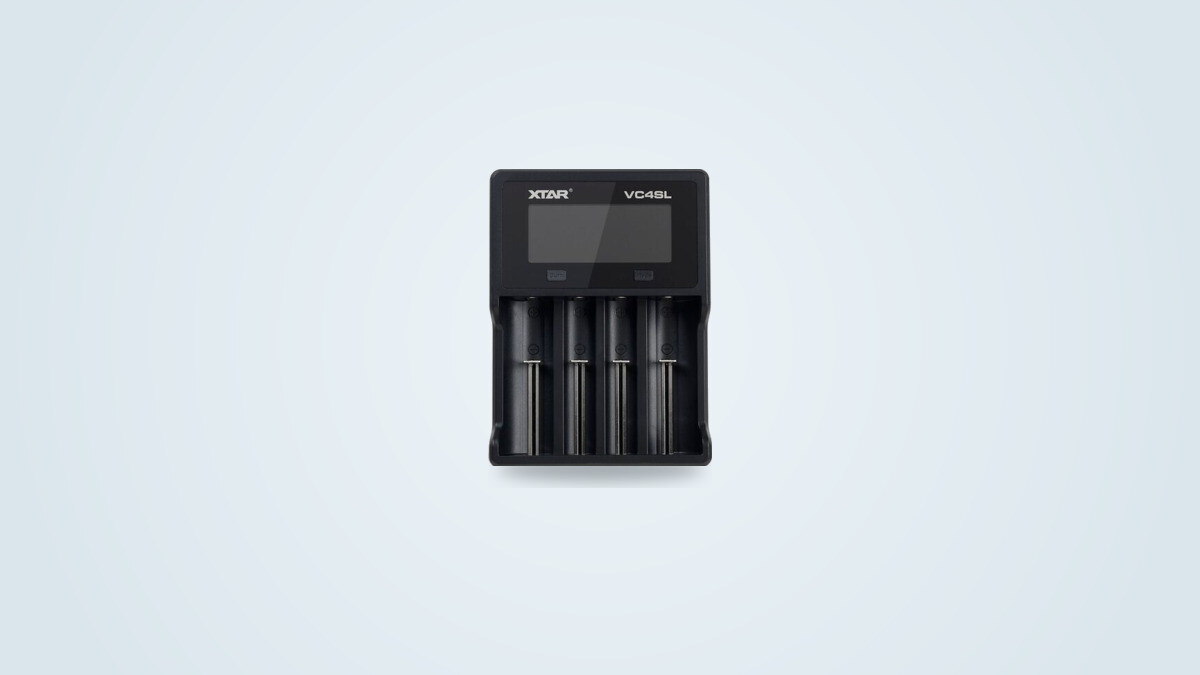
Xtar VC4SL: our full review

A complete LCD screen, USB-C with QC3.0 fast charging, adjustable current from 0.25 to 3A, and compatibility reaching up to 32650: the VC4SL aims for the versatile workbench charger, at the cost of a cable judged a bit light for the price.

Our rating
4.3/5
Safety and protections: 4.0 out of 5 (weighting 20%)Safety4.0Build and endurance: 3.7 out of 5 (weighting 15%)Build3.7Format and chemistry compatibility: 4.5 out of 5 (weighting 25%)Compatibility4.5Charging precision: 4.5 out of 5 (weighting 25%)Precision4.5Display and control: 4.3 out of 5 (weighting 15%)Display4.3

How is this rating calculated?

Xtar VC4SL four-bay battery charger with LCD screen

The essentials

The VC4SL brings together the ingredients of a good workbench charger: four independent bays, compatibility reaching up to 32650 for Li-ion and covering NiMH/NiCd too, adjustable current from 0.25 to 3A, and an LCD screen showing voltage, current, capacity, and internal resistance for each cell. USB-C power with QC3.0 is a real practical plus over chargers still limited to standard mains input. The caveats come down to hardware details: a slightly bulkier footprint than average, a cable judged modestly finished for the price, and no manufacturer warranty length stated. For anyone wanting a versatile, readable charger without investing in a high-end analyzer, it does the job seriously.

Strengths

  • Very broad compatibility, from 10440 to 32650 in Li-ion, plus NiMH/NiCd in AA and AAA sizes
  • LCD screen showing voltage, current, capacity charged, and internal resistance for each cell
  • USB-C power with QC3.0 fast charging, usable on mains, a powerbank, or a car outlet
  • Adjustable charging current from 0.25A to 3A depending on the cell and number of bays occupied
  • Real capacity testing and storage mode functions for long-term preservation

Limitations

  • Slightly bulkier footprint than the average four-bay charger
  • Included USB-C cable judged modestly finished relative to the unit's price
  • No manufacturer warranty length is stated on the product page
  • LiFePO4 chemistry isn't explicitly listed among supported chemistries, unlike some rivals
  • No independent measurement confirms the exact accuracy of the displayed internal resistance
Xtar VC4SL Charger: see the full details and price →

A complete workbench charger over USB-C

The Xtar VC4SL is a smart four-bay charger built for rechargeable cell users, particularly flashlight, vaping, or camera gear enthusiasts. It automatically detects each inserted cell's chemistry to apply the right charging profile.

4
Independent bays
3 A
Max adjustable current
32650
Largest supported Li-ion format

From 10440 to 32650, among the widest in this segment

On the Li-ion 3.6/3.7V side, the VC4SL accepts 10440, 14500, 16340, 18350, 18650, 20700, 21700, 26650, and up to 32650 formats, including protected 18650 and 21700 cells. On the NiMH/NiCd 1.2V side, it takes AA, AAA, and other cylindrical formats. LiFePO4 chemistry isn't explicitly listed, though, unlike the Nitecore UMS4.

Adjustable current from 0.25A to 3A

You can set the charging current for each bay, from 0.25A to 3A, to protect a small cell or quickly recharge a large 21700. A single occupied bay reaches up to 3A, two bays get 2A each, and all four get 0.5A or 1A.

The VC4SL goes further than a simple charger: a dedicated function measures a cell's real capacity, and a storage mode brings cells back to an ideal preservation voltage, alongside a discharge function.

LCD screen with internal resistance, a valuable data point

The LCD screen shows in real time the voltage, current, capacity charged, and internal resistance of each cell, useful data for spotting a tired cell before it causes trouble in a device.

A generous footprint, a cable that falls short

USB-C power with QC3.0 lets you plug the VC4SL into a wall adapter, a power bank, or a car outlet, a real flexibility plus.

Worth noting: the footprint stays slightly bulkier than the average four-bay charger, and the included cable is judged modestly finished for the unit's price. No manufacturer warranty length is stated either.

Who the VC4SL is for

This charger suits anyone wanting a versatile, readable model with the flexibility of USB-C, without stepping up to a high-end analyzer charger. It charges 18650 and 21700 cells as easily as everyday AA and AAA batteries.

For anyone specifically needing to charge LiFePO4 cells, the Nitecore UMS4 remains the safer choice, since that chemistry isn't explicitly listed here.
The rating in detail

Our rating
4.3/5
Actual charging current not measured
Battery compatibility not measured
Safety and protections 4.0
Build and endurance 3.7
Cables and connectors not measured
Actually delivered power not measured
Multi-port power sharing not measured
Protocol compatibility not measured
Size and technology not measured
Format and chemistry compatibility 4.5
Charging precision 4.5
Display and control 4.3
Xtar VC4SL Charger: see the full details and price →

The product and its alternatives

Xtar VC4SL Charger

Xtar VC4SL Charger

£29.41 (10)

A four-bay charger with an LCD screen and USB-C: the Xtar VC4SL shows voltage, current, capacity and internal resistance, and charges at up to 3A on one bay.

View product
Nitecore UMS4 Charger

Nitecore UMS4 Charger

£29.38 (20)

The four-bay big brother of the UM2: the Nitecore UMS4 charges four cells at once over USB, up to 3A per bay, with a large and very complete LCD screen.

View product
Klarus K1 Charger

Klarus K1 Charger

See price (6)

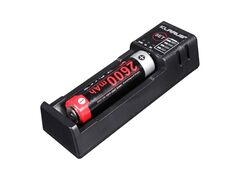
The Klarus K1 charges your Li-ion cells and NiMH or NiCd batteries over USB from a single bay, with a clear LED indicator you can trust.

View product

Frequently asked questions

Lithium-ion 3.6/3.7V cells from 10440 to 32650 (including 18650 and 21700, protected included) and NiMH/NiCd 1.2V batteries in AA, AAA, and cylindrical formats. The charger automatically detects the chemistry of each inserted cell.

Yes. Its LCD screen shows the internal resistance of each cell, and a dedicated function measures real capacity in mAh, useful for assessing the state of older cells.

Through a USB-C port compatible with QC3.0. You can plug it into a USB wall adapter, a power bank, or a car outlet. A single occupied bay can reach up to 3A.

Yes, from 0.25A to 3A depending on the bay and the number of cells charging. Choose a low current to protect a small cell, or a high one to quickly charge a 21700.