
XTAR VC4L: our full review

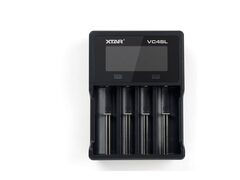
USB-C powered and compatible with protected 21700 cells, the XTAR VC4L shows voltage, current and capacity for each of its 4 bays, but shares its charge current once three or four batteries charge at the same time.

Our rating
3.9/5
Safety and protections: 3.8 out of 5 (weighting 20%)Safety3.8Build and endurance: 3.8 out of 5 (weighting 15%)Build3.8Format and chemistry compatibility: 4.5 out of 5 (weighting 25%)Compatibility4.5Charging precision: 3.2 out of 5 (weighting 25%)Precision3.2Display and control: 4.5 out of 5 (weighting 15%)Display4.5

How is this rating calculated?

XTAR VC4L charger with its LCD screen and USB-C input

The essentials

The XTAR VC4L carries over the VC4's multi-format formula with two genuine additions: a USB-C input that is more convenient than a proprietary connector, and bays long enough to fit protected 21700 cells. Each bay automatically detects the chemistry of the inserted battery and shows its voltage, current and charged capacity on the LCD screen. The main limit lies in current management: bays 1 and 4 can each reach 1A, but as soon as a battery is inserted into bay 2 or 3, all four channels drop to 0.5A, noticeably extending a full charge of 4 batteries. Neither an internal resistance test, nor real capacity measurement, nor a backup USB output are offered, those features being reserved for the VC4SL. No warranty duration is stated on the product page. For occasional use with one or two batteries at a time, the VC4L stays readable and practical; to charge four batteries at once at full speed, other models do better.

Strengths

  • USB-C power input, more convenient than a proprietary connector or a USB-A input
  • Bays long enough to fit protected 21700 cells, which are longer than bare cells
  • Compatible with a very wide range of formats and chemistries (Li-ion, Ni-MH, Ni-Cd)
  • LCD screen showing voltage, current, charged capacity and battery type for each bay
  • Recovery function for very deeply discharged batteries

Limitations

  • Current drops to 0.5A across all four channels as soon as a battery is inserted into bay 2 or 3, noticeably extending a full 4-battery charge
  • No internal resistance test or real capacity measurement, unlike the VC4SL
  • No USB output, cannot be used as a backup power bank
  • The product page does not detail a list of protections (reverse-polarity, anti-spark) beyond the auto-stop at full charge
  • No warranty duration is stated on the product page
XTAR VC4L: see the full details and price →

The VC4's multi-format formula, in USB-C and 21700-protected compatible

The XTAR VC4L carries over the VC4's base formula (4 bays, wide Li-ion and Ni-MH compatibility, LCD screen) while adding two concrete upgrades: a modern USB-C input and bays long enough to house protected 21700 cells, which are bulkier than bare cells.

4
Independent bays
1 A
Max current (bays 1 & 4)
USB-C
Power input

From 10440 to 32650, plus protected 21700 support

The VC4L accepts lithium-ion batteries from 10440 to 32650 (18650, 20700, 21700 included), as well as Ni-MH and Ni-Cd batteries in AA and AAA formats. Its distinguishing feature over the base VC4 is bay length, long enough to fit protected 21700 cells, a longer version than the bare cell that shorter-bay chargers sometimes refuse. Each bay works independently, so a Li-ion cell and a Ni-MH battery can be mixed freely, or a heavily discharged cell with an almost full one.

Automatic detection, but current shared across channels

Each bay automatically detects the chemistry and level of the inserted battery, with nothing to configure. The point worth knowing before buying concerns current management: bays 1 and 4 can each charge at up to 1A, but as soon as a battery occupies bay 2 or 3, all four channels drop to 0.5A. A full charge of 4 batteries then takes noticeably more than two hours, a trade-off XTAR made to keep the device simple and affordable rather than a design suited to charging four batteries at once.

Detailed LCD screen and USB-C input, but no advanced analysis

For each bay, the LCD screen shows the battery's voltage, the current charging rate, the capacity already charged in mAh and the detected type, a real plus over a simple indicator light. USB-C power, compatible with a standard wall charger, a power bank or an equipped car socket, makes everyday use easier. The VC4L does not, however, offer an internal resistance test, real capacity measurement, or any USB output to back up an external device, features reserved for its bigger sibling the VC4SL.

Auto-stop at full charge, with no further detail

Each bay stops automatically once the battery is full, avoiding overcharge. The body stays compact despite the longer bays for protected 21700 cells: 234g for 154 x 115 x 34 mm.

Worth knowing: the product page does not detail a list of protections beyond this auto-stop (reverse-polarity, anti-spark), nor a warranty duration.

Against the VC4SL, the Nitecore UM4 and the MiBoxer C4-12

How does the VC4L compare with other 4-bay USB-C chargers?

Technical comparison: XTAR VC4L against other battery chargers (observed prices, indicative only)
CriterionXTAR VC4LXTAR VC4SLNitecore UM4MiBoxer C4-12
Max current1A (bays 1 & 4), 0.5A otherwiseup to 3A, adjustable1.5A (1 battery), 0.5A (4 batteries)up to 3A per bay
Internal resistance testNoYesNoNo
USB outputNoNoNoNo
Observed price£21.99£29.41≈ £24≈ £28

The VC4SL charges faster thanks to its adjustable current up to 3A and adds an internal resistance test, for a lower price on this market: a serious case against the VC4L. The Nitecore UM4 and the MiBoxer C4-12 remain more affordable rivals, with simultaneous 4-battery charging that also stays limited to a low current. The VC4L keeps the edge on protected 21700 compatibility and one of the more complete screens in its category.

Who the XTAR VC4L is for

This charger suits anyone who mainly charges one or two batteries at a time, including protected 21700 cells, and wants a readable screen over USB-C. To charge 4 batteries quickly or analyse their internal resistance, the XTAR VC4SL is better equipped; for maximum format compatibility without protected 21700 support, the basic XTAR VC4 often costs less.

The rating in detail

Our rating
3.9/5
Actual charging current not measured
Battery compatibility not measured
Safety and protections 3.8
Build and endurance 3.8
Cables and connectors not measured
Actually delivered power not measured
Multi-port power sharing not measured
Protocol compatibility not measured
Size and technology not measured
Format and chemistry compatibility 4.5
Charging precision 3.2
Display and control 4.5
XTAR VC4L: see the full details and price →

The product and its alternatives

XTAR VC4L

XTAR VC4L

See price (17)

The XTAR VC4L charges up to 4 Li-ion or NiMH batteries over USB-C, with an LCD screen showing voltage, current and capacity for each bay.

View product
Xtar VC4SL Charger

Xtar VC4SL Charger

£29.41 (10)

A four-bay charger with an LCD screen and USB-C: the Xtar VC4SL shows voltage, current, capacity and internal resistance, and charges at up to 3A on one bay.

View product
XTAR VC4

XTAR VC4

See price (19)

A charger that tells you everything: the XTAR VC4 charges 4 Li-ion or Ni-MH cells at once and shows voltage, current and capacity on its LCD screen. The reference for cell enthusiasts.

View product

Frequently asked questions

Yes, this is exactly what sets it apart from the basic VC4: its bays are long enough to fit protected 21700 cells, which are longer than bare cells.

No. Bays 1 and 4 reach up to 1A each, but as soon as a battery occupies bay 2 or 3, all four channels drop to 0.5A. A full 4-battery charge then takes noticeably more than two hours.

No. This feature, along with real capacity measurement, stays reserved for the XTAR VC4SL.

Through a USB-C port, compatible with a standard wall charger, a power bank or a car socket fitted with a USB-C port delivering 5V.

Yes. All four bays are independent and each detects the chemistry of the inserted battery, allowing Li-ion and Ni-MH to be freely mixed.