
Renogy Rover 20A: our full review

The Rover 20A is Renogy's entry-level MPPT controller: a built-in LCD screen, automatic 12/24V detection and a price well below Victron units of the same rating. For a small solar installation on a budget, it does the job with seriousness, provided you accept a non-backlit screen and Bluetooth sold as an option.

Our rating
3.9/5
Solar input and MPPT: 4.0 out of 5 (weighting 20%)Solar4.0Control and smart features: 4.0 out of 5 (weighting 15%)Control4.0Build and endurance: 4.0 out of 5 (weighting 10%)Build4.0Battery compatibility: 3.8 out of 5 (weighting 30%)Compatibility3.8Safety and protections: 4.0 out of 5 (weighting 25%)Safety4.0

How is this rating calculated?

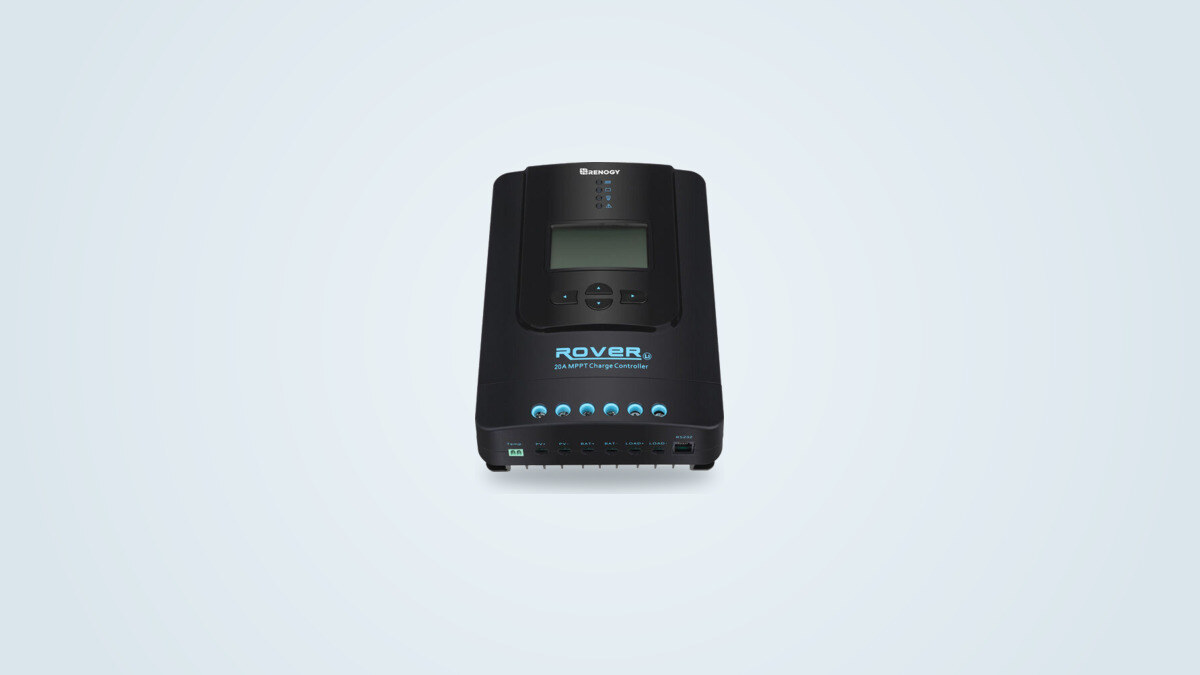
Renogy Rover 20A MPPT solar charge controller with LCD screen on a plain background

The essentials

The Rover 20A stands out from Victron units of the same rating through its built-in LCD screen: voltage, current and solar output can be read directly on the unit, with no smartphone or dongle. Its MPPT technology claims up to 99% tracking efficiency, with a PV input voltage that should be sized with a safety margin below the stated 100V (open-circuit panel voltage rises in cold weather) rather than pushed close to the maximum. Its price, around half that of the SmartSolar 100/20, makes it the most accessible choice for a small 12/24V installation. The real points of caution are a non-backlit screen that is hard to read at night, an IP32 protection rating that limits use to a sheltered enclosure, and a Bluetooth module (BT-1) sold separately for remote monitoring. For a controlled budget on a medium sized installation, the Rover 20A remains a sound choice.

Strengths

  • Built-in LCD screen: voltage, current and solar output readable directly on the unit, with no smartphone
  • Price around half that of the Victron SmartSolar 100/20 of the same rating (20A)
  • Remote temperature sensor included, for dependable charge compensation based on the battery's actual temperature
  • Compatible with all battery technologies (lead-acid, gel, AGM, lithium LiFePO4) via configurable charge profiles
  • Dependable automatic 12V/24V detection from first use, with no manual setting

Limitations

  • Non-backlit screen: hard to read at night or from an awkward angle
  • IP32 protection rating: the unit must be installed sheltered, not directly exposed to the weather
  • Bluetooth not built in: the BT-1 module for remote monitoring through the Renogy app is sold separately
  • PV input voltage to size with a margin below the stated 100V: open-circuit panel voltage rises in cold weather and can approach this limit
  • Die-cast aluminium casing effective for heat dissipation, but feels less premium in hand than the Victron range
Renogy Rover 20A: see the full details and price →

MPPT efficiency and a voltage margin to respect

The Rover 20A claims up to 99% MPPT tracking efficiency and 98% conversion efficiency, figures consistent with MPPT technology compared with a conventional PWM controller. Its maximum PV input voltage is stated at 100V, but a safety margin is recommended when sizing the system: open-circuit panel voltage rises in cold weather and can approach this limit, a point to factor in upstream rather than a flaw in the unit.

20 A
Charge current
99 %
Stated MPPT tracking efficiency
520 W
Recommended PV power (24V)
1.4 kg
Weight

The LCD screen, the real point that sets the Rover apart from the Victron units

Neither Victron's BlueSolar 75/15 nor the SmartSolar 100/20 includes a physical screen: the Rover 20A, on the other hand, has one as standard. Battery voltage, charge current and solar output can be read there directly, with no need to reach for a smartphone. That is a real advantage for a quick daily check. Its limit: the screen is not backlit, which makes it hard to read at night or from an awkward angle. For full remote monitoring, an optional Bluetooth module (BT-1) links the controller to the Renogy DC Home app, at an additional cost.

Battery compatibility and protections

The Rover 20A is compatible with all common battery technologies (sealed lead-acid, gel, AGM, lithium LiFePO4), via configurable charge profiles: 4 stage charging for lead-acid, 2 stage charging with reactivation for lithium. A remote temperature sensor is included to compensate charging based on the battery's actual temperature, a genuine plus compared with simple internal compensation. The controller includes the standard protections for the category: reverse polarity, overcharge, overvoltage, short circuit and reverse current.

Reliability and buyer feedback

The Rover 20A is widely distributed in the small solar installation segment (van, garden shed, site cabin), a format Renogy has offered across several generations. Its die-cast aluminium casing ensures good heat dissipation. Its IP32 protection rating reserves it for a sheltered installation: it is not designed for direct exposure to the weather, unlike controllers with an IP65 rating or higher.

Price and availability

The price observed sits around €50, a noticeably more accessible rate than Victron controllers of the same rating. No product recall was found for this model in the American and European safety databases consulted.
The rating in detail

Our rating
3.9/5
Efficiency not measured
Portability and size not measured
Weather resistance not measured
Output ports not measured
Capacity and expansion not measured
Solar input and MPPT 4.0
Control and smart features 4.0
Installation and compliance not measured
Build and endurance 4.0
Battery compatibility 3.8
Safety and protections 4.0
Renogy Rover 20A: see the full details and price →

The product and its alternatives

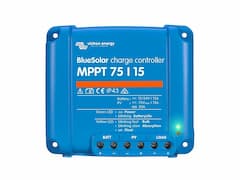
Victron Energy BlueSolar MPPT 75/15

Victron Energy BlueSolar MPPT 75/15

See price (3)

A compact, affordable MPPT charge controller. The ideal choice if you prefer this type of solar controller.

View product
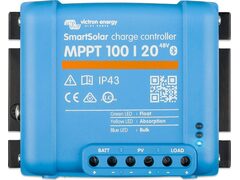
Victron Energy SmartSolar MPPT 100/20

Victron Energy SmartSolar MPPT 100/20

£69.86 (32)

The benchmark solar charge controller: 100V, 20A, built-in Bluetooth and up to 98% efficiency. The Victron SmartSolar MPPT 100/20 gets the most from your panels.

View product

Frequently asked questions

Yes, an LCD screen displays voltage, current and solar output directly. It is not backlit, however, which makes it less readable at night.

It handles up to around 260W of panels on a 12V system and 520W at 24V. The solar input voltage is stated up to 100V, but a safety margin below that threshold is recommended, since open-circuit panel voltage rises in cold weather.

No, Bluetooth is not built in as standard. The Rover 20A has an LCD screen to read information directly, and accepts an optional Bluetooth module (BT-1) for remote monitoring through the Renogy app, sold separately.

Yes. It is compatible with all battery technologies (lead-acid, gel, AGM, lithium LiFePO4) thanks to its configurable charge profiles, with 2 stage charging and reactivation for lithium.

Its IP32 protection rating reserves it for a sheltered location. For direct exposure to the weather, you need to plan for a protective enclosure or choose a controller with an IP65 rating or higher.