
Noco GB20 Boost Sport: our full review

The smallest of the Noco jump starters delivers on its most modest promise: starting a petrol engine up to 4.0 L, without trying to do more. No independent test with published figures exists for this specific model, a rare gap on this site that deserves to be stated plainly rather than glossed over, and its charging cable remains Micro-USB despite what some product listings sometimes show.

Our rating
4.0/5
Current actually delivered: 4.0 out of 5 (weighting 30%)Current4.0Cold-weather performance: 4.0 out of 5 (weighting 25%)Cold4.0Capacity and versatility: 4.1 out of 5 (weighting 20%)Capacity4.1Safety and protections: 4.3 out of 5 (weighting 15%)Safety4.3Build and endurance: 3.8 out of 5 (weighting 10%)Build3.8

How is this rating calculated?

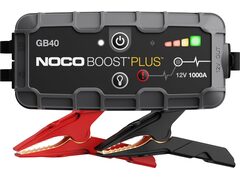
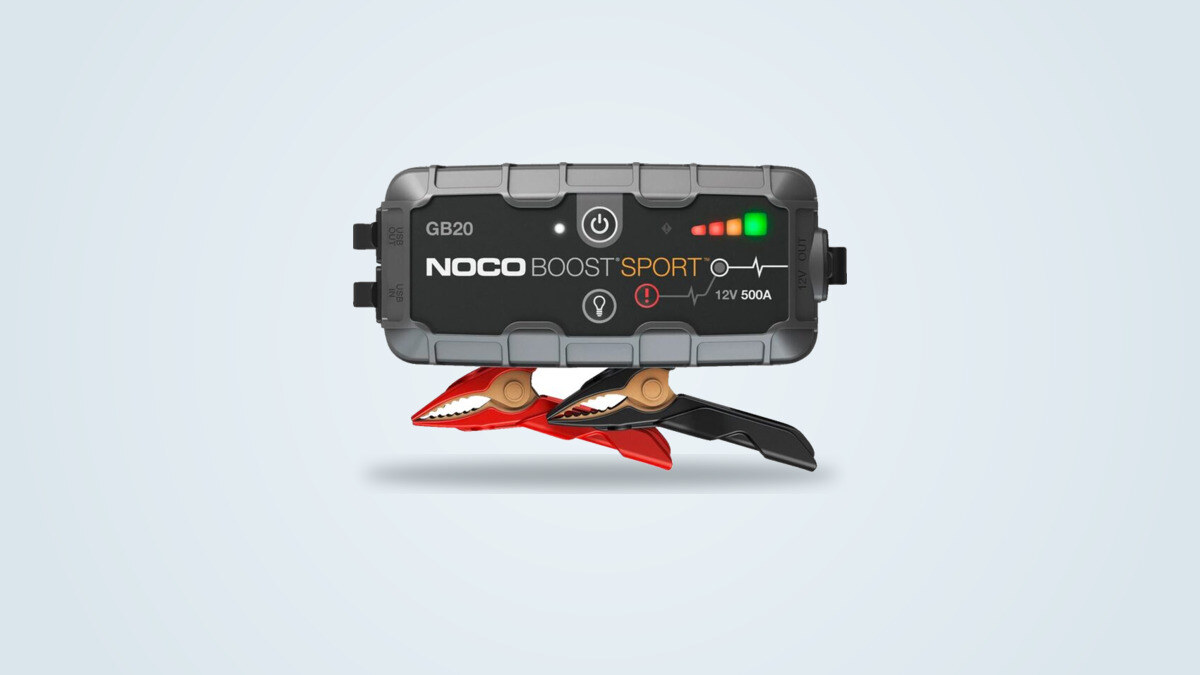
Noco GB20 Boost Sport jump starter with its clamps on a light background

The essentials

The GB20 does not try to cover every use case, and that is exactly what makes it a good product in its niche: a petrol engine up to 4.0 L, a motorcycle, a quad bike or a ride-on mower, nothing more. No independent test with a described protocol has been found for this specific model, an honest gap worth stating plainly rather than filling in with a guess. The charging cable remains Micro-USB, a point some retailer listings blur by confusing it with the more powerful GB50's USB-C. The secondary power bank function stays modest, just about enough to rescue a phone once. For anyone with a city car, a motorcycle or a small leisure vehicle, it is the most honest entry ticket into the brand's UltraSafe safety.

Strengths

  • Does exactly what it claims without overselling: petrol up to 4.0 L, with no data found that contradicts this ceiling
  • Genuinely pocket-sized, under a kilo, fits under a motorcycle seat or in a door pocket
  • UltraSafe protection (spark-proof, reverse-polarity proof), with a manual override function for cases where the unit needs to force the connection
  • The lowest entry price in the Boost range, with no concession on safety
  • IP65 casing and a stated operating range of -20 to +50 °C

Limitations

  • No independent test with a described protocol found for this specific model, unlike the GB50
  • Does not handle any diesel: a ceiling sometimes wrongly confused with the GB40's on third-party retailer listings
  • Micro-USB charging cable, not USB-C: check the listing before buying, the confusion with the GB50 genuinely exists online
  • Modest secondary power bank function, just about enough to bail out a phone
  • Printed manual with characters too small for comfortable reading
Noco GB20 Boost Sport: see the full details and price →

The range's pocket format, designed for motorcycles and small petrol engines

The GB20 opens Noco's Boost range with a clear goal: covering the vehicles that the higher models handle in overkill. Its 500 A peak current restarts a petrol engine up to 4.0 L with a completely flat battery, which takes in almost the entire urban fleet, motorcycles, quad bikes, jet skis and ride-on mowers. The GB20 successfully starts a petrol vehicle with a weak battery, a straightforward result with nothing out of the ordinary.

500 A
Stated peak current
< 1 kg
Weight

The format genuinely fits under a motorcycle seat or in a door pocket, where a GB70 will not go. A jump starter you actually carry with you beats one left in the garage: that is this model's central argument.

No diesel: a ceiling sometimes confused online

Noco only certifies the GB20 for petrol, up to 4.0 L of displacement. No data found contradicts this ceiling, in either direction: it is a limit the manufacturer openly acknowledges rather than a grey area. The point actually worth watching lies elsewhere: several online comparison sites mistakenly confuse this ceiling with the GB40's, which does handle diesel up to 3.0 L. If your vehicle is a diesel, or a petrol engine above four litres, you need to move up to the GB40 or the GB50.

Charging cable: Micro-USB, not USB-C

Worth checking before buying: the GB20's charging input is Micro-USB (5V/2.1A), not USB-C. This is not a trivial detail: the more powerful GB50 does have USB-C, and this difference is sometimes blurred on third-party retailer listings that wrongly describe the GB20 as fitted with a USB-C port. Expect around 3 hours with a 2A charger, 6 hours at 1A, and up to 12 hours at 0.5A.

No independent test with published figures found for this specific model

Unlike the GB50, no German or English-language comparison with a described protocol has been found for the GB20: its internal battery, smaller than that of the models above it, places it below the capacity threshold that several comparisons consulted use for their selection. This is a genuine gap worth flagging honestly rather than filling in with an estimate: it reduces the confidence one can place in the stated endurance figures, without this amounting to a flaw in the product itself.

UltraSafe protection and manual override function

UltraSafe technology (clamps stay inert until the connection is correct, with active blocking in case of reverse polarity) works as expected, with a manual override function for situations where the unit needs to force the connection despite the detection. This is the same protection as on the rest of the range, with no compromise for this entry-level model.

Modest power bank function, room for improvement in the manual

The 24 watt-hour internal battery will bail out a phone, no more: the power bank function stays rather underpowered, just about enough for one smartphone charge. Another point, minor but real: the print on the supplied manual remains too small for comfortable reading, even though the basics of handling the unit stay intuitive.

Observed price and availability

The observed price for the GB20 sits around £72, the lowest in the Boost range. Official distribution of the model on the Japanese market remains uncertain: it does not appear on the official distributor's page that lists the higher models in the range, unlike the GB50.

Against the GB50: the choice comes down to fuel and budget

The reasoning is simple and comes down to one question: is your vehicle a diesel?

Technical comparison: the Noco GB20 against the GB50
CriterionNoco GB20Noco GB50
Peak current500 A1500 A
PetrolUp to 4.0 LUp to 7.0 L
DieselNot certifiedUp to 4.5 L
Charging cableMicro-USBUSB-C
Observed price≈ £72≈ £106

If you only own a small-displacement petrol vehicle, a motorcycle or a leisure vehicle, the GB20 does the job for about £34 less and in a noticeably more portable format. As soon as a diesel enters the garage, it becomes unsuitable and the GB50 takes over, in exchange for a heavier unit and a switch flaw identified on that higher model, with nothing as clear-cut reported on the GB20.

Who it suits, and who it does not

It suits anyone with a petrol city car, a motorcycle, a quad bike or a leisure vehicle, looking for the most honest entry ticket into UltraSafe safety without paying for power they do not need.

It does not suit anyone with a diesel, even a small-displacement one, nor anyone looking for a serious power bank function for anything beyond the occasional phone top-up.
The rating in detail

Our rating
4.0/5
Current actually delivered 4.0
Cold-weather performance 4.0
Capacity and versatility 4.1
Safety and protections 4.3
Build and endurance 3.8
Noco GB20 Boost Sport: see the full details and price →

The product and its alternatives

Noco GB20 Boost Sport

Noco GB20 Boost Sport

See price (53)

The smallest Noco, the one that genuinely fits in a motorcycle's underseat storage: 500 amps, a kilo, and the same UltraSafe protection as its big brothers.

View product
Noco GB50 Boost XL

Noco GB50 Boost XL

See price (59)

The missing link between the GB40 and the GB70: 1500 amps, diesel up to 4.5 litres, thirty jump starts per charge, for barely more than the model below.

View product
Noco GB40 Boost

Noco GB40 Boost

See price (138)

1000A in your pocket to restart a car with a flat battery: the Noco GB40 is the UltraSafe jump starter that forgives wiring mistakes and doubles as a power bank and a light.

View product

Frequently asked questions

No, Noco only certifies it for petrol engines up to 4.0 litres. A diesel needs greater cranking torque: you then need to move up to the GB40 or the GB50 depending on displacement.

No, despite what some third-party retailer listings sometimes show, the GB20 charges over Micro-USB (5V/2.1A). The more powerful GB50 does have a USB-C port: do not mix the two up when ordering a replacement cable.

No comparison with a described protocol has been found for this specific model, its smaller battery placing it below the threshold used by several reference comparisons. This is a genuine gap worth knowing before buying, without it pointing to any particular flaw in the product.

To a limited extent: its 24 watt-hour battery will bail out a phone once, but stays rather underpowered for this secondary use. It is not its main function.

The GB20 is enough for a small-displacement petrol engine, a motorcycle or a leisure vehicle, for about £34 less and in a more compact format. As soon as a diesel comes into play, the GB50 becomes necessary.