
Nitecore UMS4: our full review

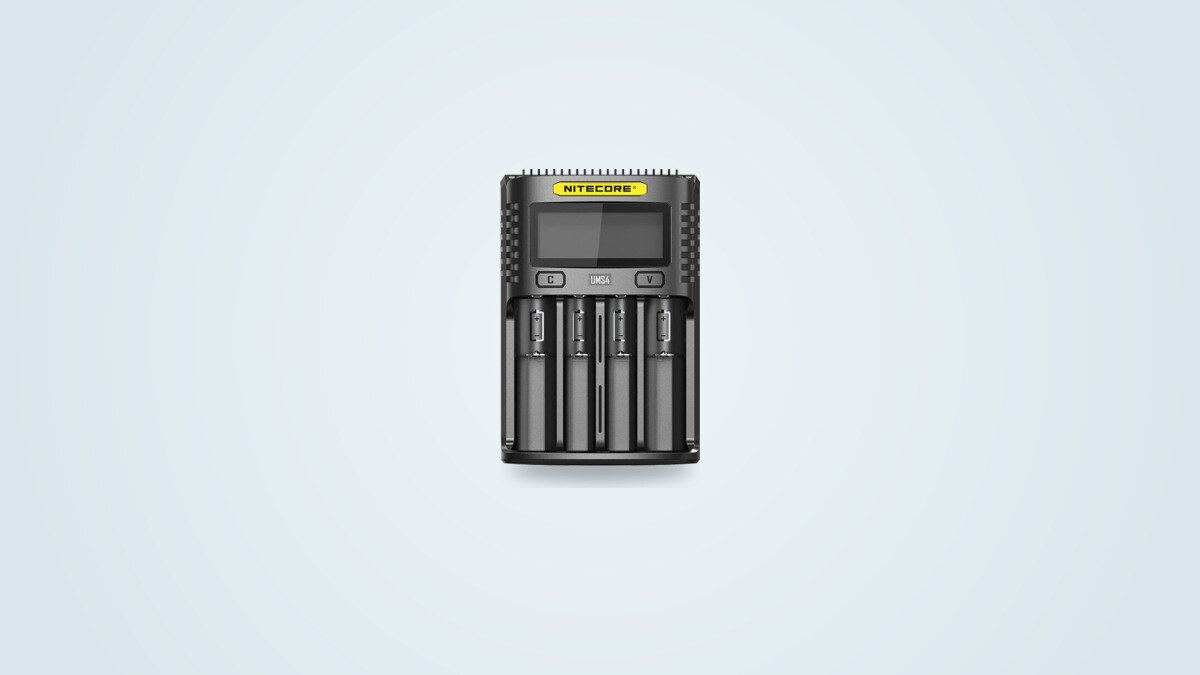
Four independent bays, an LCD screen showing voltage, current, capacity, and health for each cell, and compatibility running from tiny AAA batteries to big 26650 cells: the UMS4 aims wide and largely delivers.

Our rating
4.4/5
Safety and protections: 4.2 out of 5 (weighting 20%)Safety4.2Build and endurance: 4.0 out of 5 (weighting 15%)Build4.0Format and chemistry compatibility: 4.6 out of 5 (weighting 25%)Compatibility4.6Charging precision: 4.4 out of 5 (weighting 25%)Precision4.4Display and control: 4.5 out of 5 (weighting 15%)Display4.5

How is this rating calculated?

Nitecore UMS4 four-bay battery charger with LCD screen

The essentials

The UMS4 checks every box expected of a versatile workbench charger: four genuinely independent bays, compatibility spanning Li-ion, LiFePO4, and NiMH/NiCd from 10440 to 26650, and an LCD screen showing voltage, current, capacity charged, detected type, and health status for each cell. Fast charging up to 3A per bay, though, requires a Quick Charge adapter upstream, with a standard USB power supply staying slower. The one real caveat noted in use: the unit doesn't power itself off cleanly, you need to unplug it to actually shut it down. The one-year manufacturer warranty also runs shorter than some premium rivals offer. For anyone juggling several cells for flashlights or camera gear, it's a solid reference.

Strengths

  • Four genuinely independent bays, each showing its own data on the LCD screen
  • Very broad compatibility: Li-ion, LiFePO4, NiMH, and NiCd, from 10440 to 26650, plus AA and AAA batteries
  • Complete LCD display: voltage, current, capacity charged, detected cell type, and health status per bay
  • Automatic chemistry detection, with no manual setting required
  • Capacity measurement, internal resistance testing, and cell regeneration functions

Limitations

  • The 3A per bay (4A combined) requires a Quick Charge adapter upstream; a standard USB supply limits speed
  • No clean power-off at the end of a charge cycle; the cable must be unplugged to fully shut the unit down
  • One-year manufacturer warranty, shorter than some rivals in the same segment
  • No backup USB output port, unlike some competitors equipped with one
  • No independent measurement confirms the exact accuracy of the displayed internal resistance data
Nitecore UMS4 Charger: see the full details and price →

The four-bay big brother of the UM line

The Nitecore UMS4 is the four-bay version of the UMS line, built for anyone charging a lot of cells: flashlights, vaping gear, cameras, or RC hobby equipment. It plugs in via a simple USB-C cable and automatically detects each inserted cell's chemistry.

4
Independent bays
3 A
Max current per bay
24
Supported battery/cell formats

From 10440 to 26650, Li-ion and NiMH alike

Its compatibility is very broad. It charges Li-ion, IMR, and LiFePO4 cells in the most common formats, from 10440 to 26650, including 18650, 20700, and 21700, as well as rechargeable NiMH batteries in AA and AAA sizes. All four bays are independent: you can charge four cells of different types, sizes, or charge levels at once.

Up to 3A per bay, with a Quick Charge adapter

Speed depends on the power source. Plugged into a Quick Charge adapter, the UMS4 delivers up to 3A on a single bay, and up to 4A combined when several are occupied. With a standard USB supply lacking QC, charging stays noticeably slower.

Worth planning for: to fully benefit from the stated 3A, a Quick Charge wall adapter is needed upstream. A standard 5V USB brick alone won't reach that speed.

An LCD screen that really shows everything

The large LCD screen displays in real time, for each cell, the voltage, charging current, capacity charged, detected cell type, cutoff voltage, and health status, a far richer readout than simple indicator lights. It's one of the most complete displays observed in this segment.

The unit also offers functions to measure real capacity, test internal resistance, and regenerate tired cells.

Complete protections, but no clean shutdown

The UMS4 protects against reverse polarity and short-circuits, and stops charging at the end of each cycle. In real use, though, the unit stays powered as long as it's plugged in: there's no clean shutdown of the screen or electronics without physically unplugging the cable, a practical quirk rather than a safety flaw.

The manufacturer warranty is one year, a standard length but shorter than some rivals in the same segment.

Who the UMS4 is for

This charger suits anyone with several cells of different formats (flashlights, cameras, RC hobby gear) who wants to charge and monitor them precisely without multiplying chargers.

For simpler use limited to household AA/AAA batteries, a more basic charger like the Panasonic Eneloop BQ-CC55 is plenty and costs less.
The rating in detail

Our rating
4.4/5
Actual charging current not measured
Battery compatibility not measured
Safety and protections 4.2
Build and endurance 4.0
Cables and connectors not measured
Actually delivered power not measured
Multi-port power sharing not measured
Protocol compatibility not measured
Size and technology not measured
Format and chemistry compatibility 4.6
Charging precision 4.4
Display and control 4.5
Nitecore UMS4 Charger: see the full details and price →

The product and its alternatives

Nitecore UMS4 Charger

Nitecore UMS4 Charger

£29.38 (20)

The four-bay big brother of the UM2: the Nitecore UMS4 charges four cells at once over USB, up to 3A per bay, with a large and very complete LCD screen.

View product
Xtar VC4SL Charger

Xtar VC4SL Charger

£29.41 (10)

A four-bay charger with an LCD screen and USB-C: the Xtar VC4SL shows voltage, current, capacity and internal resistance, and charges at up to 3A on one bay.

View product
Klarus K1 Charger

Klarus K1 Charger

See price (6)

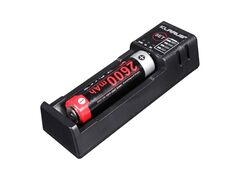
The Klarus K1 charges your Li-ion cells and NiMH or NiCd batteries over USB from a single bay, with a clear LED indicator you can trust.

View product

Frequently asked questions

Li-ion, IMR, and LiFePO4 cells from 10440 to 26650 (18650, 20700, 21700, 26650...) as well as NiMH batteries in AA and AAA sizes. It automatically detects the chemistry of each inserted cell.

Four, in independent bays. You can charge four cells of different types, sizes, or charge levels simultaneously, each tracked separately on the LCD screen.

Plugged into a Quick Charge adapter, it delivers up to 3A on a single bay and up to 4A combined across all four. With a standard USB supply, charging is slower.

Charging stops automatically at the end of each cycle, but the unit stays powered as long as it's plugged in. You need to unplug the cable to fully turn it off.