What the quoted 3200 W is actually worth
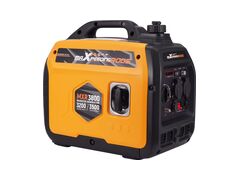
The MXR3800 is an inverter generator: the engine first produces current that is not directly usable, and onboard electronics rebuild it into a clean alternating sine wave, independent of engine speed. That extra step is what makes it safe to plug in a laptop, a router or a fridge with a control board, where a conventional open-frame generator delivers voltage swings those devices handle badly.
The manufacturer quotes 13.9 A continuous and 15.2 A on start-up at 230 V, two figures that match, once multiplied by the voltage, the claimed 3200 W and 3500 W almost exactly. That arithmetic consistency between current and power is not a given on a segment largely filled with marketing copy repeated from one comparison site to the next: it points to a spec sheet built with some care, without proving sustained output under real load.
Weighed against the unit's mass, this continuous power puts the MXR3800 near the top of its class: it matches the continuous output of the Güde ISG 3200-2, an established German reference, for a little over half the weight and roughly half the observed price. That comparison is covered in full further down this review.
Runtime drops fast as load climbs
The 4-litre tank paired with the 145 cc four-stroke OHV engine gives, according to the manufacturer, around 7 hours of runtime at quarter load (800 W) and 4 hours at half load (1600 W), Eco mode engaged. That mode drops engine speed as soon as demand falls, which explains both the fuel saving and part of the quoted noise figure, covered in the next section.
No runtime figure is published near the 3200 W continuous ceiling. Engine physics leaves little doubt about the trend: the closer the drawn load sits to that ceiling, the higher the engine speed stays at all times, and the higher the hourly fuel burn climbs. Pushed near its limits, the MXR3800 therefore empties its tank noticeably faster than the 4 hours quoted at half load, though no precise figure can be given since none is published for that level of draw.
The 4-litre tank is also modest in absolute terms for an engine capable of 3200 W continuous: on a job site or during an extended high-power outage, packing a spare fuel can is less a comfort than a necessity.
The same noise figure, measured under different conditions from one model to the next
The manufacturer quotes 58 dB(A) at 7 metres for the MXR3800, measured in Eco mode with no load. On paper, that sits close to a normal conversation.
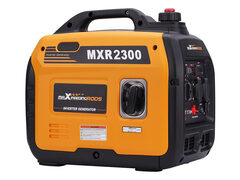
A look across the rest of the brand's catalogue is worth flagging. The maXpeedingrods MXR2300, a considerably less powerful unit (1800 W continuous against 3200 W here, covered in a separate review on this site), quotes the exact same 58 dB at 7 metres, but measured at 25% load, not with no load at all. Two units separated by nearly double the continuous power quoting the identical acoustic figure, each under the most favourable condition available for its own rating, is a caution flag about the brand's noise-reporting method, not proof that either figure is wrong.
No independent measurement with a calibrated meter, a stated protocol and a verified distance was found for the MXR3800 itself. A combustion engine necessarily speeds up as electrical load rises: real noise under a load approaching 3200 W therefore sits well above the quoted no-load figure, by a margin no independent source currently allows anyone to put a number on.
A genuine pure sine wave, a THD figure never independently verified
The MXR3800's inverter electronics deliver a pure sine wave, comparable to mains power, rather than the raw and unstable output of a classic open-frame generator. That is what makes it safe to plug in sensitive electronics without worry for their switch-mode power supplies.
The manufacturer claims, across its whole range of inverter generators, a total harmonic distortion (THD) figure below 3%, a level that would indeed compare well with a good domestic mains supply. No independent measurement specific to the MXR3800 was found to confirm that value: as on almost the entire segment at this price point, it remains manufacturer-only data.
Reliability: a failure pattern that recurs across the range
maXpeedingrods' own official troubleshooting guide for its generators lists, among the most common causes of an engine that will not start or stalls on starting: an empty tank, a blocked fuel line, a dirty air filter, insufficient oil, or a faulty spark plug. That same guide confirms the existence of a low-oil-level switch that cuts the engine automatically, consistent with the alarm quoted on the MXR3800's own spec sheet.
Against the Güde ISG 3200-2: the same power, a very different price
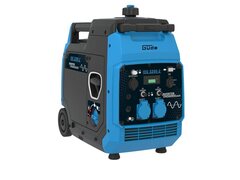
The most telling comparison for placing the MXR3800 does not come from a more or less powerful unit, but from a rival that quotes the exact same power figures: the Güde ISG 3200-2, an established German brand in this segment.
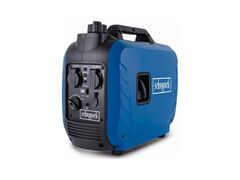
| Criterion | maXpeedingrods MXR3800 | Güde ISG 3200-2 | Zipper ZI-STE2800IV | Scheppach SG2500i |
|---|---|---|---|---|
| Continuous power | 3200 W | 3200 W | 2800 W | 2000 W |
| Peak power | 3500 W | 3500 W | 3200 W | 2200 W |
| Displacement | 145 cc | 212 cc | 212 cc | 79 cc |
| Weight | 21 kg | ≈ 38 kg | ≈ 30 kg | ≈ 21 kg |
| Typical price | ≈ £500 | ≈ £820 | ≈ £765 | ≈ £330 |
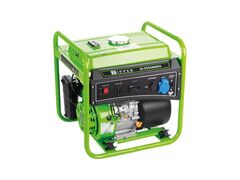
The Güde and the Zipper ZI-STE2800IV counter the MXR3800 with a considerably larger displacement (212 cc against 145 cc), a solid argument for an engine under less strain over time, plus a long-established European service network. The Scheppach SG2500i remains the cheapest option, but with 2000 W continuous, 1200 W short of the MXR3800: it targets a more modest camping use, not a house backup or a power-hungry work site.
The MXR3800 matches the Güde's continuous power for roughly half its price and a weight cut by nearly 45%. What the Güde adds for its much higher price is identifiable: an engine under less strain over time and an established local repair network, two arguments that matter most for daily professional use rather than occasional backup or leisure use.
Parallel capability: a well-designed expansion option
The MXR3800 has parallel connectors, and the dedicated cable ships in the box, with no extra accessory to buy. Two units linked together double the available power, to around 6400 W continuous, while still leaving two 21 kg units to carry separately rather than one much heavier machine that is far harder to fit in a car boot.
That is the usual strategy in motorhomes and on mobile work sites, where unit weight often matters more than the total: two 21 kg units get carried one after the other, a single 40 kg one does not get carried at all without help.
Two-year warranty and technical support: a solid policy on paper, mixed results in practice
maXpeedingrods quotes a two-year manufacturer warranty against manufacturing defects across its whole inverter generator range, alongside free technical support. On paper, that policy sits with the better-guaranteed references in the segment.
In practice, execution is uneven: the recoil starter on one of the brand's generators was left inoperable after only a handful of pulls, with no workable answer from after-sales support despite the warranty, and this is not an isolated case for the brand on this segment. The brand also remains best known for automotive parts (control arms, suspension kits), a segment where quality complaints exist as well, on a line distinct from its generators, whose own issues do not automatically carry over here.
For occasional backup or leisure use, that risk profile remains reasonable given the price. For daily professional use, where downtime has a real cost, the lack of a physical service network weighs more heavily in the balance.
Safety: no confirmed carbon monoxide shutoff
Who it suits, who should look elsewhere
It suits anyone after job-site-level power (3200 W continuous, enough to start a compressor or run a fan heater) in a case that still carries with one hand, for house backup, a mobile work site or a demanding motorhome setup, and who accepts running noise and high-load runtime that no independent source has verified.
It does not suit anyone chasing the quietest reference on the market at reduced load: the Honda EU10i remains the best-documented choice on that specific point, even at a third of the continuous power. Nor does it suit anyone who needs a local repair network for daily professional use, ground where the Güde ISG 3200-2 and its established European service network keep the edge.