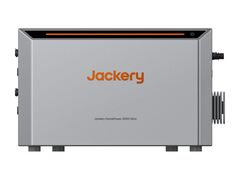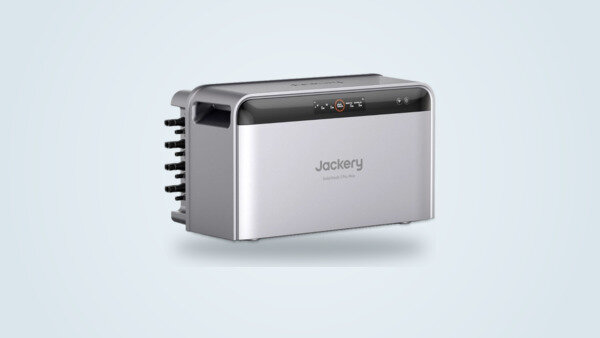

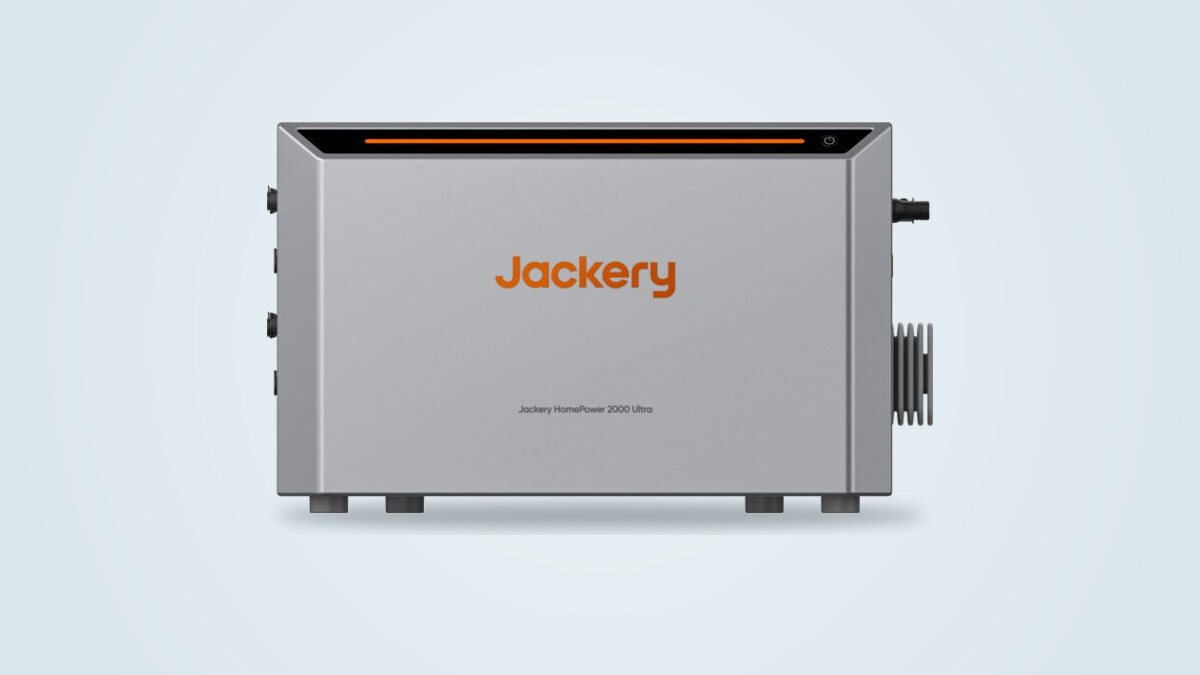
An all-in-one unit, genuinely plug and play
The HomePower 2000 Ultra plugs into a standard mains socket and connects to solar panels via MC4 cables, with no electrician required. The Jackery Home app detects the unit within seconds of power-up, and initial setup is limited to choosing the electricity tariff and the desired operating mode.
The difference from part of the direct competition comes down to the inverter: several units in this price category sell the battery alone and charge for the micro-inverter separately, adding a wiring step and a cost that doesn't always show up in the headline price. The HomePower 2000 Ultra builds its 800 W micro-inverter into the same housing, which simplifies both the purchase and the installation.
In France, a prior declaration to Enedis, the grid operator, remains required before commissioning, even for a fully self-consumed installation with no grid export: the CACSI agreement, free of charge and completed online, must state that a battery is present. The manufacturer provides its own guide for this step, which limits the risk of an administrative hold-up for a first-time buyer.
83.4% round-trip efficiency: a solid figure from a demanding protocol
Under an 800 W charge and discharge from the grid, with solar disconnected, the HomePower 2000 Ultra's round-trip efficiency reaches 83.4%. This figure measures a complete round trip: the energy lost both while charging the battery and while discharging it back into the home, a more demanding protocol than a simple solar-to-mains conversion figure, which only evaluates one direction of energy flow. The two types of figures are not directly comparable.
Temperature climbs to 47 °C under continuous 1500 W charging from the grid, with passive cooling only. This heat build-up sits within the usual range for fan-less power electronics, with no particular warning sign, but it accounts for part of the losses at full charge.
Fine-grained charge and discharge management also shows up as precise regulation: over a 6-hour night-time window with no solar input at all, residual exchange with the grid drops to 14 Wh of import and 32 Wh of export. These figures reflect real precision in how the system manages itself, not to be confused with charging efficiency proper: they show the system trimming its own consumption at the margin, not a conversion efficiency.
800 W of grid injection: a regulatory limit, not a physical one
Once connected to the grid, the HomePower 2000 Ultra caps its injection at 800 W continuous. This limit doesn't come from a hardware constraint in the inverter: it corresponds to the threshold used for simplified registration of balcony solar installations in most European countries, Germany and France included. It's a limit shared across the entire category of plug-and-play units, not something specific to this model.
In France, that same 800 W threshold comes from an Enedis operating convention rather than a dedicated law: above this per-connection-point injection level, the installation falls outside the simplified declaration scheme (the "convention d'autoconsommation sans injection", or CACSI) and needs a standard grid-connection procedure instead. The ministerial order of 9 May 2017, sometimes cited on this point, actually covers electricity buy-back tariff conditions for much larger installations (up to 100 kWc), unrelated to this threshold. A software update dated late November 2025 is said to raise this limit to 1500 W through a time-of-day control mode, with an on-screen warning shown before activation: this development still needs wider confirmation before it becomes a reason to buy.
Disconnected from the grid, the unit switches register: in island mode, it delivers 1500 W continuous and up to 3000 W peak, a power reserve well beyond the injection cap that brings the unit closer to a genuine back-up function, even though it hasn't been put through a simulated outage at full load.
2000 W of solar, 2800 W on the box: what the marketing figure hides
The HomePower 2000 Ultra carries two independent MPPT trackers, each accepting up to 1000 W of panels, for 2000 W of solar power actually usable by the unit on its own. The 2800 W figure that appears on some marketing materials doesn't contradict this: it adds the 2000 W of solar to the 800 W of mains charging, two sources charging the battery at the same time in hybrid mode, not 2800 W of solar alone.
Two independent trackers are enough to handle panels facing different directions, a due-south rail and a due-west one, say, a common setup on a balcony. That's still fewer than the four trackers offered by some direct competitors at a higher price, a real consideration if the installation targets more than two distinct orientations.
The 80% charge in 52 minutes advertised corresponds to a hybrid charge combining grid and solar at the same time, not a mains-only charge: reaching 1638 Wh in 52 minutes implies an average power of around 1890 W, more than mains power alone can supply on this unit. That condition, which requires sunshine available at the same time as grid access, comes up less often than a simple charge from the wall.
Expandable to 8 kWh, if you can find the battery
The 2048 Wh base capacity extends up to 8192 Wh by adding up to three additional batteries of 2048 Wh each, with no complex reconfiguration of the existing installation. This ceiling matches the closest direct competitor on paper, with the advantage of a micro-inverter already built into the main unit.
The catch is availability: the additional battery has frequently been out of stock, as has the main unit itself at certain points since launch. An expansion path that exists on paper but can't always be bought when wanted loses some of its practical appeal, even though nothing suggests this is a permanent limit rather than a temporary supply squeeze.
The price of this additional battery has itself fluctuated considerably since launch, depending on promotional periods: worth checking on the product page at the time of purchase rather than relying on a fixed figure.
The Jackery Home app, the real friction point
The hardware delivers on its promises, the software less so. The Jackery Home app remains underdeveloped on this model: slowdowns, occasional crashes, and a less smooth experience than the quality of the unit itself would suggest. It's the single most frequent mark against the package as a whole.
Compatibility with a third-party smart meter for finer-grained consumption tracking works well for some installations and fails outright for others, before being fixed by a software update: the pattern that emerges is one of instability being progressively addressed rather than a permanent design flaw.
One point in its favour: during an outage of the manufacturer's cloud service on 16 and 17 July 2025, local Bluetooth control kept working, with no interruption to the regulation function. The night-time regulation precision described earlier (14 Wh of import, 32 Wh of export over 6 hours) also shows that the core function, once set up, does what it's asked to do.
The system also includes a bypass function that sends any unstored solar surplus back to the home circuit or the grid. This function cannot be switched off manually, which qualifies the zero-export claim otherwise promoted in the product's marketing. Finally, there is no Home Assistant integration or open API available at this time, a limitation for anyone wanting to control the unit from an existing home-automation system rather than the dedicated app.
Active fire detection and outdoor durability
The unit pairs its LiFePO4 battery with an active fire-detection system with automatic aerosol suppression, a direct response to one of the sensitive points of a product category that stays installed permanently, often outdoors or in a semi-outdoor spot. IP65 certification protects against rain and dust, and a built-in heating system allows charging and discharging from -20 °C to 55 °C, including in cold weather.
This combination (active detection, IP65 sealing, a wide temperature range) goes beyond what you'd find on a simple indoor home battery, in keeping with a balcony installation exposed to the elements year-round.
Build quality and reliability: what's been fixed since launch
A regulation fault affecting homes fitted with a three-phase meter appeared at launch in May 2025: a software fix arrived within the announced timeframe, and correct operation has been confirmed since early July 2025. The manual originally supplied also mistakenly pointed to another product in the range, the Navi 2000, an error since corrected but one that may have complicated onboarding for the very first buyers.
Across a still-small sample of around fifteen detailed reports available to date, a handful of individual hardware faults on arrival exist: an unresolved faulty mains cable, panels not detected on the solar inputs, a unit delivered with dents but replaced quickly. Too small a base to establish a reliable failure rate, but not a negligible share of the sample available.
After-sales support handles several replacements quickly, though with at least one individual case of markedly slower handling: this spread exists, as often happens with hardware still new to the market.
The 10-year warranty and the stated 6000 cycles sit at the high end of this product category, on par with several direct competitors. This cycle figure remains a manufacturer figure, with no independent confirmation to date: best treated as a ballpark rather than an established value. The noise level highlighted by the manufacturer, around 10 dB, has not been independently verified and is not treated here as a reliable figure; the overall impression nonetheless remains one of near-silent operation in everyday use, with only the switching relay audible now and then.
Against the direct competition
| Criterion | HomePower 2000 Ultra | Growatt NOAH 2000 | Zendure SolarFlow 800 Pro 2 | EcoFlow Stream Ultra |
|---|---|---|---|---|
| Base capacity | 2048 Wh | 2048 Wh | 1920 Wh | 1920 Wh |
| Maximum expansion | 8192 Wh | 8192 Wh | 11520 Wh stated | 11520 Wh |
| Solar input | 2000 W (2 trackers) | 1800 W (2 trackers) | 2640 W (4 trackers) | 2000 W (4 trackers) |
| Micro-inverter | 800 W built in | separate, not included | 800 W built in | 800 W built in |
| Warranty | 10 years | 10 years | not specified | 10 years |
| List price | £574.54 | £332.67 | £779 | £699 |
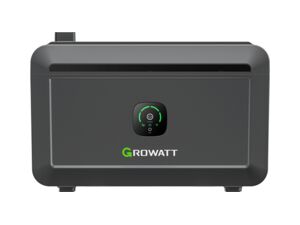
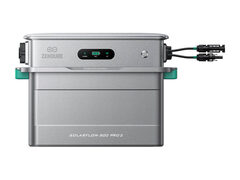
At an identical base capacity, the HomePower 2000 Ultra matches the Growatt NOAH 2000's figures exactly, with one clear advantage: its micro-inverter is already built in, whereas the NOAH 2000 needs one bought separately before it can work at all, an added cost worth weighing against the NOAH 2000's lower list price of £332.67. Against the Zendure SolarFlow 800 Pro 2 and the EcoFlow Stream Ultra, both fitted with four MPPT trackers and more generous expansion ceilings on paper, the Ultra takes a simpler entry-level approach: at £574.54, it undercuts the Zendure's £779 and the EcoFlow's £699, even as it costs more than the Growatt's bare unit.
Who the HomePower 2000 Ultra is for
This unit suits, first of all, a household just starting out in balcony solar storage and looking for the simplest entry point: no electrician, no separate micro-inverter to add, and a list price below two of the three direct references in its category for a base capacity matching the closest of them, even though the Growatt NOAH 2000's own bare-unit price undercuts it before its inverter is factored in. The step-by-step expansion up to 8 kWh also allows starting small and adding capacity later, provided the additional battery can be found in stock at the right time.
It suits less well anyone looking to make use of more than two different panel orientations, where the four trackers on some competitors take the lead, or anyone who places particular weight on a flawless app and open home-automation integration: on those two specific points, this model still lags behind part of its category.