
Energizer Ultimate Lithium AA: our full review

Up to 64% more runtime on a power-hungry device, but barely 5% on a clock: the gain from the Ultimate Lithium AA depends entirely on the device it powers, a point marketing never spells out.

Our rating
4.0/5
Actual delivered capacity: 4.2 out of 5 (weighting 25%)Capacity4.2Long-term endurance: 4.0 out of 5 (weighting 25%)Endurance4.0Extreme-temperature performance: 3.8 out of 5 (weighting 20%)Temperature3.8Versatility across devices: 3.6 out of 5 (weighting 15%)Versatility3.6Build and safety: 4.0 out of 5 (weighting 15%)Build4.0

How is this rating calculated?

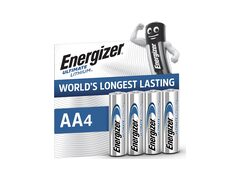
Energizer Ultimate Lithium AA batteries, pack of four

The essentials

The Energizer Ultimate Lithium AA delivers on a real promise, but very unevenly depending on the device it powers. In a motorised toy or a power-hungry audio device, the runtime gain over an alkaline battery exceeds 60%, a clear, immediately noticeable difference. In a low-drain device such as a clock or a clock radio, that same gain drops to under 5%, a nuance the usual marketing pitch never spells out and one that should stop anyone generalising the promise to every use. Its extreme-temperature rating, announced from -40 °C to 60 °C, remains a manufacturer figure, with no independent measurement at those values to back it up; its real edge over other lithium batteries, on the other hand, shows up in a more moderate cold range. One nuance deserves a mention on flash photography, despite being a use the manufacturer promotes: the lithium battery recycles more slowly between flashes than a rechargeable NiMH battery such as an Eneloop, due to higher internal resistance, even though it allows more flashes in total before running out. For high-drain use, outdoors or in severe cold, the Ultimate Lithium AA remains a solid benchmark; for a low-drain device, its premium over a standard alkaline is mainly justified by its long-term shelf life.

Strengths

  • A very clear runtime gain on power-hungry devices (toys, audio equipment), over 60% versus an alkaline
  • Announced shelf life of up to 25 years in storage, a real asset for backup batteries
  • About 35% lighter than an equivalent alkaline battery
  • Leak-resistant, a reassuring point for backup gear stored for a long time
  • Stable voltage right up to the end of charge, without the gradual drop seen on an alkaline

Limitations

  • Almost no runtime gain on low-drain devices (clock, clock radio), under 5% versus an alkaline
  • Slower recycling than a rechargeable NiMH battery on a camera flash, despite a higher total number of flashes
  • Performance at -40 °C remains a manufacturer figure, with no independent measurement at this extreme temperature to confirm it
  • Single-use disposable battery, a recurring cost against a rechargeable solution for frequent use
  • Noticeably pricier than a standard alkaline, best reserved for uses where the real gain is significant
Energizer Ultimate Lithium AA (x4): see the full details and price →

A lithium battery built for power-hungry devices

Camera, GPS, motion detector, motorised toy: the Ultimate Lithium AA targets uses that draw a lot of current, exactly where a standard alkaline battery quickly shows its limits. Its single-use primary lithium chemistry clearly sets it apart from a rechargeable battery like the Eneloop.

+60 %
Gain on power-hungry devices
25 years
Announced shelf life
4
Batteries per pack

A runtime gain that depends entirely on the device

This is the single most important point to understand before buying this battery: its real advantage over a standard alkaline varies enormously depending on the device used. In a motorised toy, the runtime gain exceeds 60%; in a power-hungry audio device, the gap stays roughly the same. In a low-drain device such as a clock or a clock radio, that gain drops to under 5%, a difference barely noticeable in use. The rule is simple: the more current a device draws, the more a lithium battery is worth it over an alkaline; for a low-drain device, the extra cost does not translate into a proportional runtime gain.

A 25-year shelf life claim that cannot be verified over such a timespan

Energizer states a shelf life of up to 25 years in storage, a figure obtained through accelerated-ageing methods rather than direct observation over a quarter of a century, which remains standard practice for this type of claim in the industry. No independent source can confirm this precise figure over the real timeframe, for obvious calendar reasons. What is solidly established is the gap in shelf life against a standard alkaline battery, which is markedly less enduring in long-term storage, making the Ultimate Lithium AA a good choice for backup batteries left sitting in a drawer for years.

A confirmed edge in the cold, without verification at -40 °C

Energizer states operation from -40 °C to 60 °C, a much wider range than a standard alkaline battery. This extreme figure remains a manufacturer claim, with no independent measurement to confirm it at this precise level; under more moderate cold conditions, however, the Ultimate Lithium AA held the best voltage among the lithium batteries compared, a real edge in the cold that does not, on its own, validate the extreme figure printed on the packaging.

A caveat on flash photography, despite being promoted

Flash photography is among the uses the manufacturer recommends, but reality calls for some nuance. In an external flash unit, the Ultimate Lithium AA recycles more slowly between flashes than a rechargeable NiMH battery such as an Eneloop, due to the higher internal resistance inherent to lithium chemistry. In return, it allows a higher total number of flashes before running flat. For occasional use, where the wait between two flashes barely matters, that is not an issue; for burst shooting or intensive professional use, a rechargeable NiMH battery stays more responsive.

A leak-resistant battery, with no safety concerns reported

The Ultimate Lithium AA is designed to resist leaks, a reassuring point for backup gear stored for a long time without supervision. Nothing points to any particular safety issue with this battery. Being single-use, it should be recycled at end of life like any primary lithium battery, through a dedicated collection point.

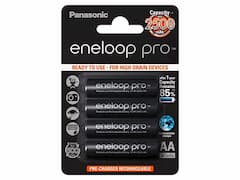
Against the two rechargeable Eneloop batteries

How do you choose between the disposable Ultimate Lithium AA and the rechargeable Eneloop batteries in our line-up?

Technical comparison: Energizer Ultimate Lithium AA against Eneloop AA (observed prices, for guidance only)
CriterionEnergizer Ultimate Lithium AAEneloop AAEneloop Pro AA
TypeDisposable lithiumRechargeable NiMHRechargeable NiMH
Cold performance-40 °C announcedNot statedNot stated
Shelf life25 years (storage)70% / 10 years85% / 1 year
ReusableNoYes, ≈ 1,000 real-world cyclesYes, ≈ 150-170 real-world cycles
Observed price (x4)£9.38≈ £17.54 (prorated x8)£22.15

The Ultimate Lithium AA earns its keep for backup use, outdoors or in severe cold, where its long shelf life and cold-weather performance outweigh the recurring cost of a disposable battery. For everyday use in devices recharged regularly, Eneloop batteries remain cheaper over time and more eco-friendly.
The rating in detail

Our rating
4.0/5
Actual delivered capacity 4.2
Long-term endurance 4.0
Extreme-temperature performance 3.8
Versatility across devices 3.6
Build and safety 4.0
Energizer Ultimate Lithium AA (x4): see the full details and price →

The product and its alternatives

Energizer Ultimate Lithium AA (x4)

Energizer Ultimate Lithium AA (x4)

See price (71)

The longest-lasting AA battery in the world: the Energizer Ultimate Lithium takes on the most power-hungry devices, from deep cold to heat, with 25 years storage.

View product
Panasonic Eneloop AA 1900mAh

Panasonic Eneloop AA 1900mAh

See price (54)

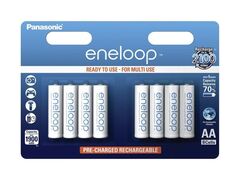
The benchmark AA rechargeable batteries: up to 2100 charge cycles, ready to use and able to keep 70% of their energy after 10 years of storage.

View product
Panasonic Eneloop Pro AA 2500mAh

Panasonic Eneloop Pro AA 2500mAh

See price (13)

The high-capacity version of the Eneloop: 2500 mAh to last longer in power-hungry devices like camera flashes, game controllers or demanding toys.

View product

Frequently asked questions

It depends entirely on the device. In a power-hungry device (toy, audio equipment), the gain exceeds 60%. In a low-drain device (clock, clock radio), it drops to under 5%. So the gain is not universal.

That is the figure announced by Energizer, a manufacturer claim with no independent measurement at this extreme temperature to confirm it. Its edge in the cold over other lithium batteries, on the other hand, does show up under more moderate cold conditions.

Only partly. It recycles more slowly than a rechargeable NiMH battery between flashes, due to higher internal resistance, even though it allows more flashes in total before running out.

No, it is a single-use primary lithium battery, not to be confused with a rechargeable cell. Replace it once it is flat and drop it off at a dedicated collection point.

For backup use, outdoors or in severe cold, where its long shelf life and cold-weather performance matter more than the recurring cost of a disposable battery. For everyday use recharged regularly, an Eneloop remains cheaper to run.