EcoFlow Stream (Microinverter): Our Full Review

With two oversized MPPT inputs and an IP67 rating rare for this format, the EcoFlow Stream microinverter largely lives up to its promises, but its most advanced AI assistant is billed without this being disclosed, and the zero-injection mode can fail even with the recommended smart meter.

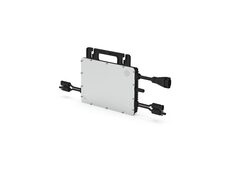
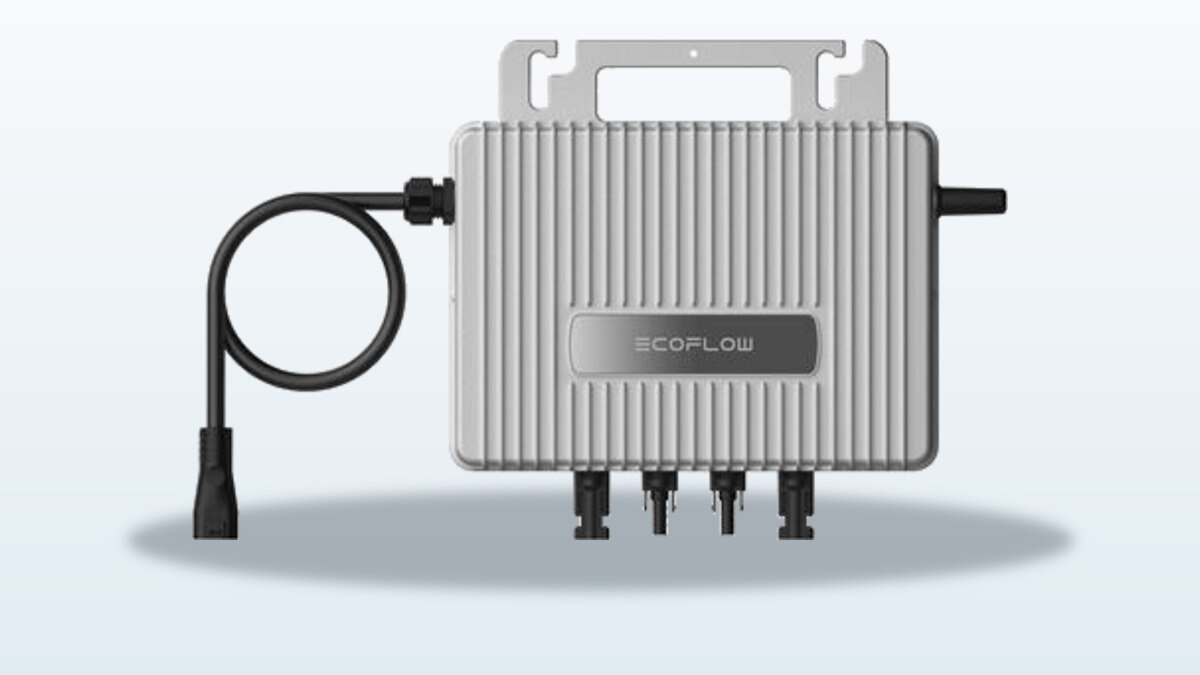
EcoFlow Stream solar microinverter placed on the ground, flat white housing with MC4 connectors

The essentials

The EcoFlow Stream microinverter offers a solid entry point into balcony solar: installation without an electrician in about fifteen minutes, two MPPT inputs oversized to 1200 W for an output capped at 800 W that captures better in low light, an IP67 rating confirmed over the short term, and a clear French regulatory situation for this use case. The actual conversion efficiency, measured between 90 and 96% depending on the power drawn, stays honest without reaching the peaks advertised on the spec sheet. Two reservations are worth knowing before buying: the most advanced functions of the Eco-AI assistant are billed by subscription without this appearing in the product's commercial presentation, and the zero-injection mode can fail even with the recommended smart meter, a point worth checking for anyone relying on it. The advertised 91 € in annual savings remains a simulation, not a measurement. A good choice for starting solar self-consumption without complexity, with these reservations in mind.

Strengths

  • Installation without an electrician in about fifteen minutes, MC4 connectors compatible with 99% of panels on the market
  • Two MPPT inputs oversized to 1200 W for an output capped at 800 W, a genuine technical choice for better capture in low light
  • IP67 rating, resistant to full immersion, above the more common IP65 on this type of device
  • Ten-year manufacturer warranty
  • Clear French regulatory situation for this use case: no Consuel certificate required on a simple outlet, only the Enedis declaration remains mandatory

Limitations

  • The most advanced functions of the Eco-AI assistant are billed by subscription, information absent from the product's commercial presentation
  • The zero-injection mode failed, in at least one reported case, even with the recommended smart meter
  • Actual conversion efficiency measured between 90 and 96% depending on the power drawn, below the peaks advertised on the spec sheet
  • The advertised 91 € in annual savings remain a PVWatts simulation, not a real measurement
  • Product still too recent (launched mid-2025) for reliable feedback over multiple seasons of outdoor exposure
EcoFlow Stream Microinverter: see the full details and price →

Two oversized MPPT inputs, a genuine technical choice

The Stream accepts up to 1200 W of panels split across two independent MPPT inputs (600 W each), for a grid output capped at 800 W. This oversizing on the solar side isn't just a marketing argument: it captures more power early in the morning, late in the day, or in low light, and allows installing two panels facing different directions, east and west for example, without the less exposed one penalizing the whole system.

The 800 W output cap remains an adjustable software setting, not a physical hardware limit, and it can be lowered depending on local regulations.

The actual conversion efficiency

Spec sheets mention peak efficiencies around 95 to 97%, but the actual efficiency stands rather between 90 and 96% depending on the power drawn, averaging around 93 to 94%. That's an honest result, consistent with the rest of the microinverter market, but below the more flattering figures sometimes highlighted.

What the advertised "91 € in annual savings" is really worth

The manufacturer advertises up to 1140 kWh produced per year and around 91 € in annual savings depending on the installation. This figure comes from a simulation based on PVWatts data from NREL, the US national renewable energy laboratory, combined with a reference electricity rate: it isn't a real measurement on a typical household. A noticeably different order of magnitude, around 800 kWh and 127 €, comes out of different calculation assumptions. No French usage feedback with figures over a full year has been found to date to confirm either of these orders of magnitude.

The Eco-AI assistant, an advanced paid feature not disclosed as such

The EcoFlow app offers peak/off-peak hourly scheduling and an assistant called Eco-AI. Its most advanced functions, however, are billed by subscription, at a rate of around 3.90 € a month, information that appears neither in the headline pitch nor in the product's commercial description. This same subscription model is found on other products in the EcoFlow Stream range, without this being systematically highlighted at the point of purchase.

A zero-injection mode that can fail

Anti-injection control, meant to prevent any unwanted feed-back into the grid using a compatible smart meter, doesn't work reliably for everyone: this mode failed, in at least one reported case, even with a Shelly meter or the recommended EcoFlow smart meter. This is a specific technical point to check before buying for anyone relying on this function, particularly under a contract with a no-reinjection obligation.

The IP67 rating, solid over the short term, not yet proven over time

The advertised IP67 rating, clearly above the more common IP65 on this type of device, withstands a full 30-minute immersion followed by immediate restart with no degradation. The product remains, however, too recent, launched mid-2025, to have feedback covering multiple seasons of continuous outdoor exposure. An isolated case of intermittent cutout on one module over several weeks has been reported, with no cause identified and no established link to the seal.

Installation and compliance in France

Installation doesn't require an electrician: mount the bracket, connect the panels via the MC4 connectors, and plug the supplied mains cable into a household outlet, with commissioning through the app taking about fifteen minutes.

For this specific case, a microinverter alone with no battery capped at 800 W, the French regulatory situation is clear: the declaration to Enedis (self-consumption agreement) remains necessary regardless of power output, but no Consuel certificate is required as long as the connection is made through a simple outlet, the Consuel intervention threshold being set at 3 kWp.

Against the Hoymiles HMS-800W, the market reference

Against the Hoymiles HMS-800W, already featured in our comparison, the Stream shows a slightly lower peak efficiency, around 95% versus 97%, and a shorter warranty, ten years versus twelve, for an estimated annual production gap judged modest in everyday use. The Stream stands out, however, for its EcoFlow software ecosystem and the option to add a storage battery, Stream AC, Pro, or Ultra, to grow into a complete system, an option the Hoymiles alone doesn't offer.

The actual price

The listed price is 139 € on promotion, against 209 € outside of promotions, a gap confirmed on both Amazon.fr and the manufacturer's official site. That's a competitive rate for entering balcony solar, before any optional storage battery is added.
The product and its alternatives

EcoFlow Stream Microinverter

EcoFlow Stream Microinverter

£122.55 (12)

The entry-level microinverter of the EcoFlow Stream ecosystem: 800 W output, 2 MPPT, 3 W startup and an IP67 rating rare on this kind of product.

View product
EcoFlow Stream Ultra

EcoFlow Stream Ultra

£799.00 (8)

1920 Wh, 4 MPPT and 2000 W of solar input: the all-in-one hybrid system that stores and feeds back solar power, expandable to 11.52 kWh.

View product
Hoymiles HMS-800W-2T

Hoymiles HMS-800W-2T

See price (17)

The Hoymiles HMS-800W-2T microinverter feeds 800 W into your home from 2 panels, with built-in Wi-Fi and the know-how of the world's biggest microinverter maker.

View product
Zendure SolarFlow 800

Zendure SolarFlow 800

£127.40 (3)

The 800 W hybrid microinverter that turns a balcony kit into a real energy reserve: 96% efficiency, batteries expandable to 11.52 kWh, plug and play.

View product

Frequently asked questions

Yes, it injects solar production directly into the home. Energy not consumed at the time is lost; to store it and use it later, a battery from the Stream ecosystem needs to be added.

Not systematically. This mode failed, in at least one reported case, even with a compatible smart meter, including the one recommended by EcoFlow. Worth checking before buying for anyone relying on this function.

Its basic functions are, but the most advanced functions are billed by subscription, around 3.90 € a month, information absent from the product's commercial presentation.

The actual efficiency stands between 90 and 96% depending on the power drawn, below the 95 to 97% peaks sometimes highlighted on the spec sheet.

No, as long as the connection is made through a simple outlet, the Consuel intervention threshold being set at 3 kWp. The declaration to Enedis remains necessary, however, regardless of power output.

The price actually recorded is 139 € on promotion, against 209 € outside of promotions, confirmed on both Amazon.fr and the manufacturer's official site.