
Zendure SolarFlow 2400 Pro: Our Full Review

With a round-trip efficiency measured at 87 to 90 % across several independent tests, the Zendure SolarFlow 2400 Pro delivers on one of its most important promises, but documented firmware bugs and recurring Wi-Fi drops tarnish a dual DC and AC solar input that has not yet been verified at full combined power.

Our rating
3.8/5
Efficiency: 4.2 out of 5 (weighting 25%)Efficiency4.2Capacity and expansion: 4.0 out of 5 (weighting 20%)Capacity4.0Solar input and MPPT: 4.0 out of 5 (weighting 20%)Solar4.0Control and smart features: 3.2 out of 5 (weighting 15%)Control3.2Installation and compliance: 3.4 out of 5 (weighting 10%)Installation3.4Build and endurance: 3.6 out of 5 (weighting 10%)Build3.6

How is this rating calculated?

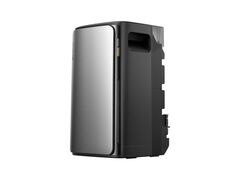
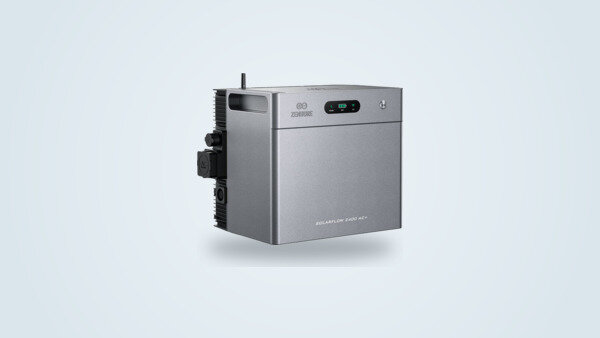
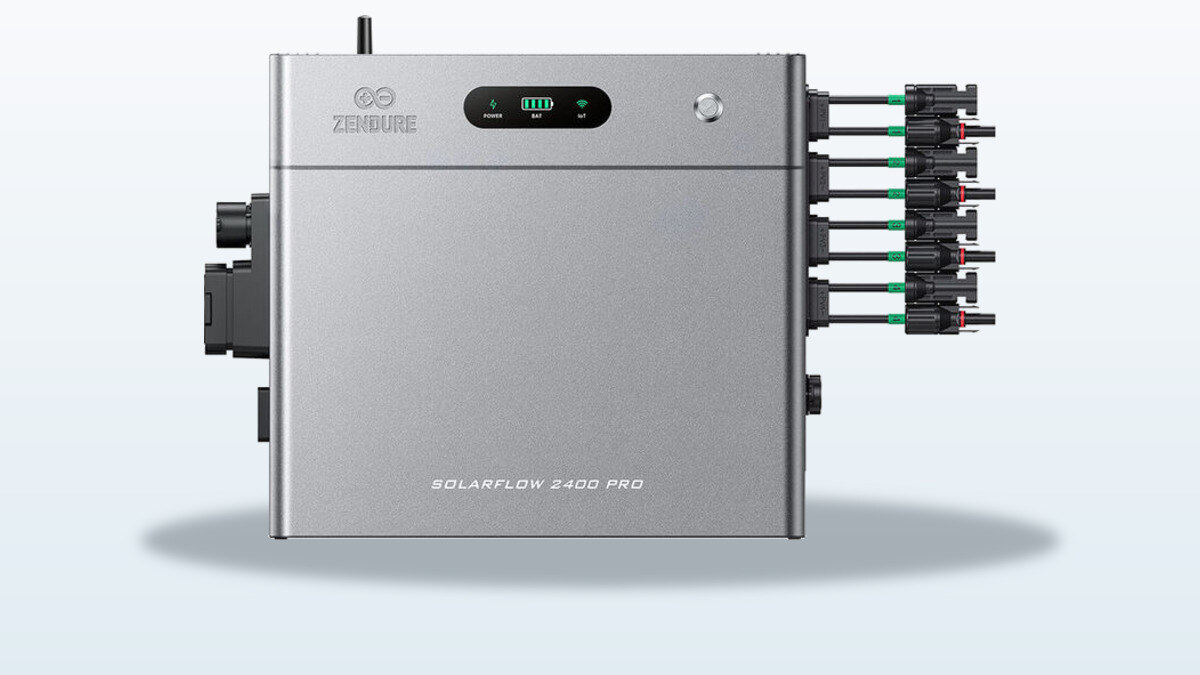
Zendure SolarFlow 2400 Pro balcony solar battery sitting on the ground, compact light grey enclosure

The essentials

The Zendure SolarFlow 2400 Pro combines a dual solar input, up to 3000 W directly through 4 MPPT controllers and an additional 1800 W via AC coupling from an existing setup, a rare configuration in this segment. Its round-trip efficiency, measured at 87 to 90% across several independent tests using different protocols, ranks among the best observed on this type of product, and the ZenKI assistant efficiently optimizes charging based on rates across more than 840 European providers. The full combination of both solar inputs up to 4800 W, however, has not yet been verified at full power in real-world conditions. Several documented firmware bugs, including a discharge lockup after a full charge, and recurring Wi-Fi drops limited to the 2.4 GHz band, come up across several independent sources. No safety issue or BMS reliability problem has been recorded to date. A solid, well-verified reference in this segment, provided you accept these software growing pains.

Strengths

  • Round-trip efficiency measured at 87 to 90 % across several independent tests using different protocols, among the best observed on this type of product
  • Dual solar input, DC (3000 W, 4 MPPT) and AC (1800 W, coupling onto an existing setup), a rare configuration in this segment
  • ZenKI assistant effective for tariff optimization, compatible with more than 840 European providers
  • No recall or BMS failure recorded to date, dual protection with aerosol fire suppression
  • 2400 W bidirectional output, clearly higher than its direct competitors

Limitations

  • Full combination of both solar inputs up to 4800 W not verified at full power in real-world conditions
  • Documented firmware bugs: discharge lockup after a full charge to 100 %, standby lockup after an update
  • Recurring Wi-Fi drops with unwanted standby mode, resolved by reconnecting the unit to the router
  • Wi-Fi limited to the 2.4 GHz band, no 5 GHz compatibility
  • Adding the AC input to an already-regularized solar setup generally requires a new Consuel certificate
Zendure SolarFlow 2400 Pro: see the full details and price →

The dual DC+AC solar input, the central selling point

The SolarFlow 2400 Pro combines two distinct solar inputs: up to 3000 W directly through its 4 built-in MPPT controllers, for panels wired directly to the unit, and up to 1800 W more via AC coupling from a solar setup already fitted with an inverter. In theory, the two modes add up to 4800 W of total solar input, a central selling point of the product and a rare configuration in this segment.

This full combination has not so far been confirmed at full power in real-world conditions: the combined charging ceiling actually reached came close to 2370 W in one given configuration, with automatic adjustment of the AC power to stay within that limit. Each input taken separately, however, does perform in line with the announced figures.

Round-trip efficiency, a strength that holds up well

The round-trip efficiency of the SolarFlow 2400 Pro consistently comes out at 87 to 90 % across several independent measurements carried out using different protocols, a result among the best observed on this type of product. This is a point on which the unit delivers particularly well on its promises.

The ZenKI assistant and tariff optimization, effective but cloud-dependent

The ZenKI assistant, compatible with more than 840 European energy providers, makes consistent charge and discharge decisions over several days in a row once configured, a real asset for anyone on a variable-rate contract. This optimization, however, remains dependent on an active internet connection: a dropout deprives the unit of its finest-grained optimization, which relies on the manufacturer's cloud rather than on a local calculation.

Documented firmware bugs

Several firmware anomalies, distinct from the ZenKI decision engine itself, come up on the manufacturer's online support channels: a discharge lockup at 0 W after a full charge to 100 %, requiring a restart to resume, as well as a device-not-recognized error in home automation integration. A firmware update released between April and July 2026 also introduced a standby lockup for several users.

Wi-Fi, a recurring friction point

An unwanted standby mode after a Wi-Fi connection loss comes up in several independent customer reviews, resolved by reconnecting the unit to the router. Wi-Fi is also limited to the 2.4 GHz band, with no 5 GHz compatibility, a limitation that also comes up in the feedback reviewed.

Installation and compliance

In the default standard mode, output power stays capped at 800 W, within the format of plug-and-play kits with a simple Enedis declaration. Beyond that, a “Premium” mode that can be enabled in the app unlocks full power, but requires a professional installation and a Consuel certificate.

One point deserves attention for anyone planning to use the AC input on a solar setup that has already been regularized: adding a storage battery to an existing setup generally shifts the regulatory file from generation-only to generation-and-storage, which calls for a new Consuel certificate rather than remaining covered by the initial regularization.

Safety and build quality

No recall or BMS failure has been recorded to date on this model. The dual battery management system is paired with aerosol fire suppression, and surface temperature stayed even, with no hot spot, during an independent check, fairly reassuring on this front.

Against its direct competitors

Against the Anker Solix Solarbank 3 E2700 Pro and the EcoFlow Stream Ultra, already featured in our comparison, the SolarFlow 2400 Pro stands out for its dual DC and AC solar input, combinable in theory up to 4800 W, against 1200 W for the Solarbank 3 Pro and 2000 W for the Stream Ultra. Its 2400 W bidirectional output also clearly exceeds the 800 W and 1200 W of its two competitors.

The actual price recorded

The listed price varies by configuration: 1319 € for the unit alone, or 1439 € for a bundle including four bifacial solar panels included as part of an ongoing promotion. The struck-through price also changes regularly with the manufacturer's campaigns, worth checking at the time of purchase rather than taken for granted.
The product and its alternatives

Zendure SolarFlow 2400 Pro

Zendure SolarFlow 2400 Pro

£1299.00 (4)

2.4 kWh, 4 MPPT and 4800 W of total solar input: the balcony battery combining DC panels with AC coupling, expandable to 16.8 kWh.

View product
Anker Solix Solarbank 3 E2700 Pro

Anker Solix Solarbank 3 E2700 Pro

See price (7)

2688Wh of plug-and-play solar storage: 4 MPPT, a bidirectional 1200W microinverter and an AI that optimises your self-consumption on its own. Balcony solar finally pays off.

View product
EcoFlow Stream Ultra

EcoFlow Stream Ultra

£799.00 (8)

1920 Wh, 4 MPPT and 2000 W of solar input: the all-in-one hybrid system that stores and feeds back solar power, expandable to 11.52 kWh.

View product
Zendure SolarFlow 4000 Mix AC+

Zendure SolarFlow 4000 Mix AC+

£2399.00 (2)

The retrofit that changes scale: 8 kWh expandable to 50 kWh, 4 kW bidirectional power, and a dedicated input for your existing solar inverter.

View product

Frequently asked questions

In theory yes, 3000 W of DC plus 1800 W of AC. This full combination at full power has not yet been confirmed in real-world conditions, however; a combined ceiling closer to 2370 W was observed in one tested configuration.

Round-trip efficiency comes out at 87 to 90 % across several independent measurements, a result among the best observed on this type of product.

An unwanted standby mode after a connection loss comes up in several independent customer reviews, resolved by reconnecting the unit to the router. Wi-Fi is also limited to the 2.4 GHz band.

Generally yes: adding a storage battery shifts the regulatory file from generation-only to generation-and-storage, which calls for a new Consuel certificate.

Several firmware anomalies are documented, including a discharge lockup after a full charge to 100 % and a standby lockup that appeared after an update between April and July 2026.

1319 € for the unit alone, or 1439 € for a bundle including four solar panels included as part of a promotion. The struck-through price changes regularly with the manufacturer's campaigns.

The rating in detail

Our rating
3.8/5
Efficiency 4.2
Portability and size not measured
Weather resistance not measured
Output ports not measured
Capacity and expansion 4.0
Solar input and MPPT 4.0
Control and smart features 3.2
Installation and compliance 3.4
Build and endurance 3.6
Zendure SolarFlow 2400 Pro: see the full details and price →