
The real differentiator: a 1200 W off-grid backup output
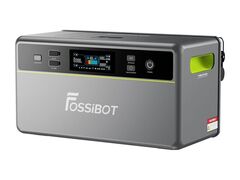
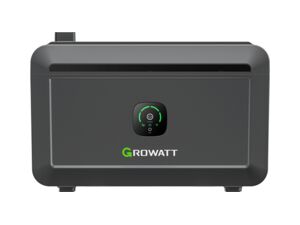
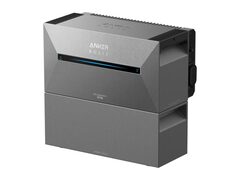
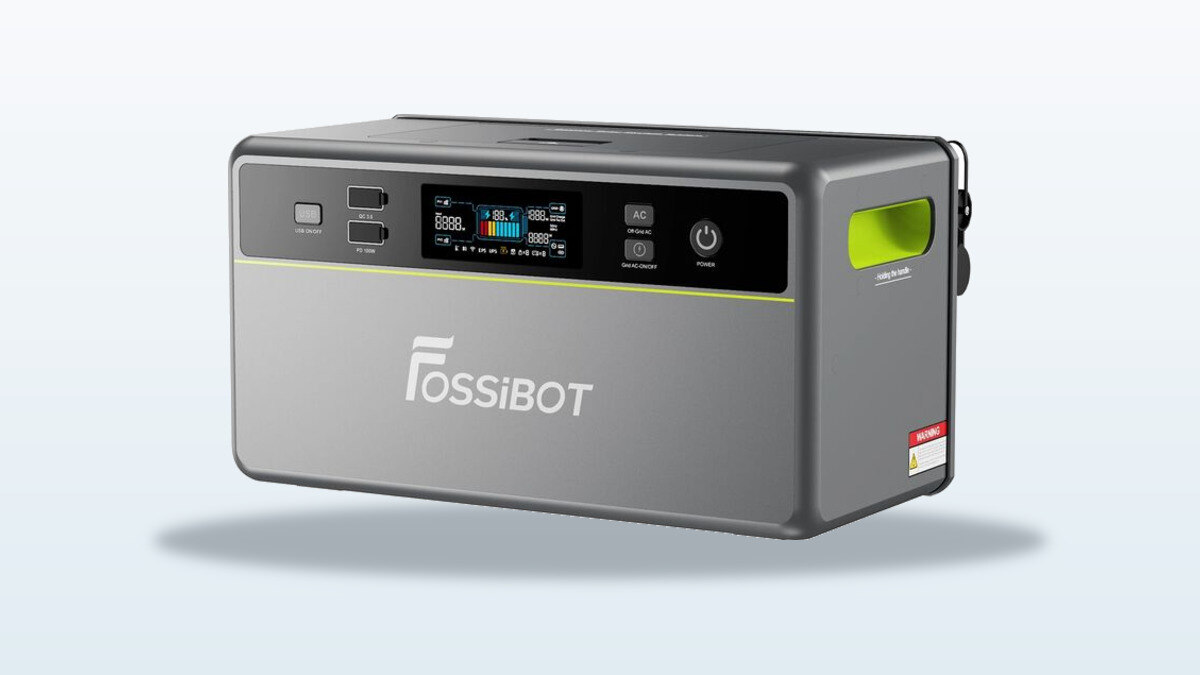
The FBP1200 offers two clearly distinct output modes: 800 W fed into the home grid for everyday use, and up to 1200 W in standalone off-grid output, a genuine backup power supply during a power cut. None of its three direct competitors, the Marstek Jupiter C Plus, the Anker Solix Solarbank 2 E1600 or the Growatt NOAH 2000, offers this off-grid output: their 800 W is limited entirely to standard grid feed-in.
This is a genuine differentiating argument in this segment, turning the product into a usable energy reserve even when the grid goes down, not just a tool for saving on the electricity bill.
What the announced "837 € a year" in savings is really worth
The manufacturer claims up to 42 % off the electricity bill and roughly 837 € in yearly savings thanks to the built-in AI-driven home energy management, for an estimated payback period of 2.8 years. The calculation breakdown published by the manufacturer itself gives a base of 2092 kWh produced per year at roughly 0.35 € per kWh, or about 733 €, a figure that doesn't exactly line up with the announced 837 €, without any household size or specific sunlight level being disclosed to justify the gap.
This kind of savings claim generally corresponds to maximum conditions, rarely representative of everyday use. No independent verification of this figure has been found to date.
The HEMS artificial intelligence, a software promise not yet delivered
The app, meant to automatically manage charging and output based on the weather and electricity rates, runs into a few teething problems: its interface has bugs that call for an update, and its three operating modes (green plan, custom, smart plug) need some time to get used to before becoming genuinely useful. Against more established apps in this segment, the FBP1200's software maturity remains behind the curve.
The actual learning of consumption habits over time, the central argument for the built-in AI, hasn't yet been the subject of any independent verification over several months of use.
The power limit in real-world use
With 800 W fed into the grid and 1200 W in off-grid output, the FBP1200 struggles with the hungriest appliances. An electric kettle plugged directly into the off-grid output caused a cutoff within seconds during a test. For powering a refrigerator, a home router, lighting or charging electronic devices, the available power is more than enough; for a hot plate, an oven or any powerful heating appliance, it quickly hits its limits.
The uncertainty around how the backup mode actually works
The commercial documentation doesn't clearly detail the exact electrical operation of the 1200 W backup mode: is it islanding that cuts the home's entire circuit off from the grid in the event of an outage, or a separate dedicated outlet for plugging in one specific appliance, in the manner of a conventional home UPS? The manual distinguishes a grid connection cable from a separate off-grid connection cable, which leans toward the second hypothesis, a dedicated outlet rather than islanding of the whole home, but no official diagram confirms this clearly to date.
This point deserves to be checked directly before buying for anyone relying on this mode during an outage.
Enedis declaration and the Consuel question
In standard 800 W use, filing a declaration with Enedis before commissioning remains necessary, as with any balcony solar kit regardless of its power output. The question of a Consuel certificate, meanwhile, isn't settled uniformly for this product category that pairs a storage battery with a built-in inverter: a Consuel certificate requirement as soon as a battery is coupled to the installation comes up in certain sources, even below the threshold usually exempted, without this specific case being systematically addressed elsewhere. The manufacturer itself mentions neither Enedis nor Consuel in its French documentation.
With no settled doctrine, it's best to check directly with Enedis and a local Consuel-approved inspector before buying rather than rely on a one-size-fits-all answer.
Expandable up to 9790 Wh, with packs available in France
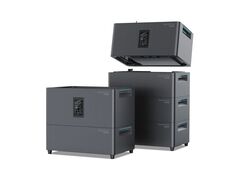
The 1958 Wh base capacity extends up to 9790 Wh by stacking up to four additional FBP1200-B packs, a modular block-based design. These expansion packs are already available to buy in France, at a price recorded around 489 € each, and a bundle of the FBP1200 plus one expansion pack works out cheaper bought together than bought separately. This concrete availability sets the FBP1200 apart from many expandability claims that remain theoretical for lack of packs actually on sale.
Still too recent for a reliability track record
The FBP1200 has only six customer reviews on Amazon.fr to date, none from a French buyer, with the few available reviews coming from Italy and Germany. That's far too small a sample to draw a reliable trend on dependability. The brand has a solid track record with its portable power stations, a different segment, but fixed balcony solar storage remains a brand-new category for it, with no after-sales service history specific to this product.
Against its direct competitors
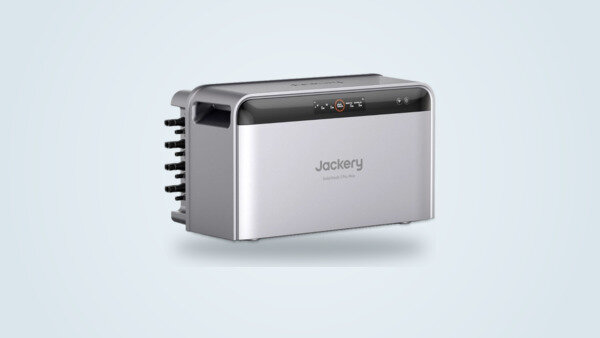
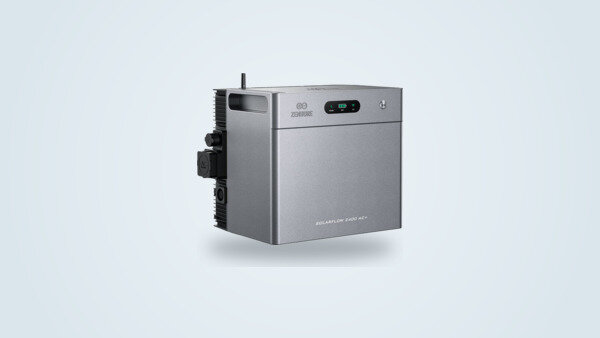
Against the Marstek Jupiter C Plus, the Anker Solix Solarbank 2 E1600 and the Growatt NOAH 2000, the FBP1200 stands out with its off-grid backup output, a feature none of the three offers. The Jupiter C Plus keeps the edge on solar input (2400 W across 4 MPPT trackers versus 2000 W), raw expandability (10240 Wh versus 9790 Wh) and price, the lowest of the four. The Growatt NOAH 2000 is the most expensive in the comparison despite a more modest capacity.
For anyone wanting to both save on their electricity bill and keep a usable energy reserve off-grid in the event of an outage, the FBP1200 remains a relevant option, provided its software reservations and lack of track record are accepted.
The actual price recorded
The listed price ranges between 549 € and 599 € depending on ongoing promotions, a range consistent with the recent history of prices recorded, with 599 € currently in effect, the top of that range. This price remains competitive against the three direct competitors mentioned above.