
Zendure SolarFlow 4000 Mix AC+: Our Full Review

The only product on the market that plugs directly into an already-installed solar inverter, the Zendure SolarFlow 4000 Mix AC+ targets an unprecedented use case, but its measured efficiency on a pre-production unit remains clearly short of the announced 90 %, and real-world hindsight is still sorely lacking on this manufacturer's very first model of its kind.

Our rating
3.4/5
Efficiency: 3.0 out of 5 (weighting 25%)Efficiency3.0Capacity and expansion: 4.4 out of 5 (weighting 20%)Capacity4.4Control and smart features: 3.2 out of 5 (weighting 15%)Control3.2Installation and compliance: 3.0 out of 5 (weighting 10%)Installation3.0Build and endurance: 3.4 out of 5 (weighting 10%)Build3.4

How is this rating calculated?

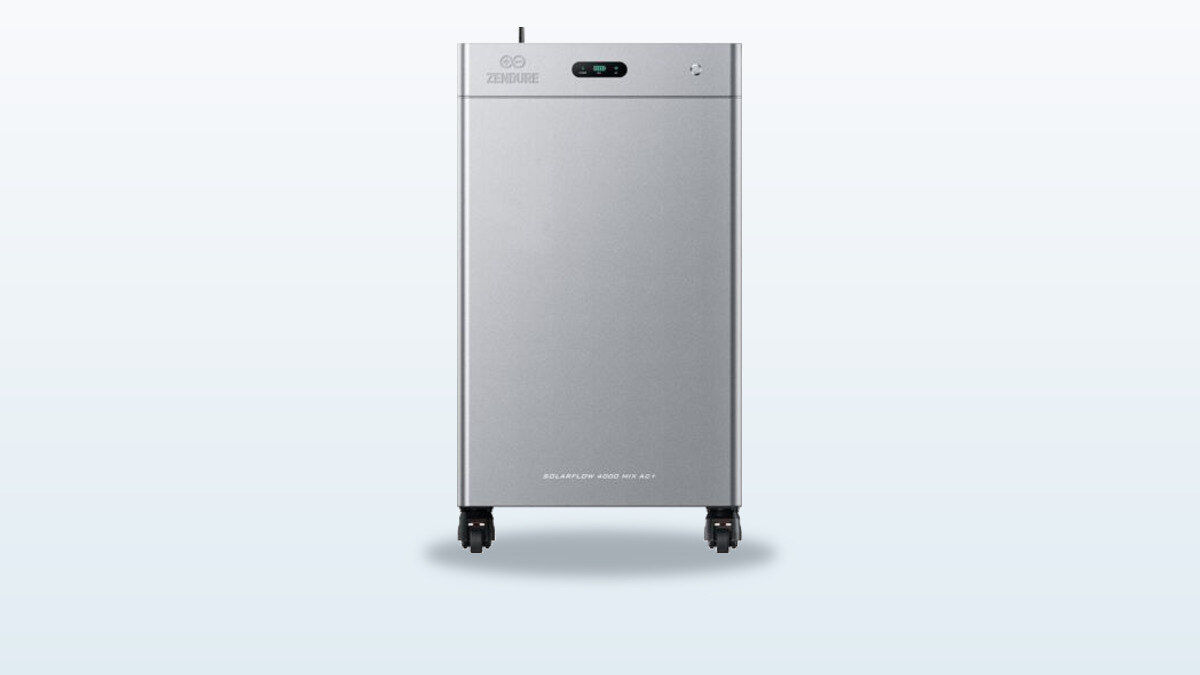
Zendure SolarFlow 4000 Mix AC+ home battery, tall grey metal enclosure standing on the ground

The essentials

The Zendure SolarFlow 4000 Mix AC+ occupies a category of its own: its 8000 Wh capacity, expandable to 50 kWh, and its dedicated 5000 W input that plugs directly into a third-party photovoltaic inverter make it the only product in its comparison able to be added to an existing solar setup without reconfiguring it. Its 4000 W bidirectional power clearly exceeds that of its direct competitors. But real-world hindsight is sorely lacking: the product remains on pre-order more than four months after its launch, rolled out on a very small scale, and almost all the available technical data comes from a single pre-production unit tested before final commercialization, not from a production unit. On this unit, the measured round-trip efficiency, 87 % at full load and down to 78-82 % in real-world use, remains clearly short of the announced 90 %. Compatibility with third-party inverters, the product's central selling point, has also not been independently verified brand by brand. An installation process that falls outside the plug-and-play framework, with a mandatory Consuel certificate and a mandatory qualified installer, rounds out the picture of a product that looks promising on paper but is still largely unproven in the field.

Strengths

  • The only product in its comparison to directly accept the output of an already-installed third-party photovoltaic inverter, without reconfiguration
  • Highest starting capacity in the comparison (8000 Wh), expandable up to 50 kWh
  • 4000 W bidirectional power, rising to 5000 W in PV bypass, clearly higher than its direct competitors
  • No recall or safety incident recorded to date
  • Ten-year manufacturer warranty

Limitations

  • Round-trip efficiency measured on a pre-production unit at 87 % at full load and 78-82 % in real-world use, below the announced 90 %
  • Compatibility with third-party inverters, the product's central selling point, not independently verified brand by brand
  • HEMS 2.0 control system that required an emergency software patch released in June 2026
  • Installation falls outside the plug-and-play framework: mandatory Consuel certificate and mandatory qualified installer, adding cost and lead time on top of the unit's price
  • Product still on pre-order more than four months after launch, rolled out on a very small scale: almost no hindsight available yet on a production unit
Zendure SolarFlow 4000 Mix AC+: see the full details and price →

The real promise: plugging directly into an existing solar inverter

The SolarFlow 4000 Mix AC+ replaces nothing: a dedicated 5000 W input takes the output directly from an already-installed photovoltaic inverter, with most major brands on the market according to the manufacturer (Huawei, SMA, Fronius, Enphase, SolarEdge, Sungrow). This is a genuine change of category compared with plug-and-play balcony kits: this product is aimed at anyone who already has a solar installation with an inverter and wants to add storage to it without reconfiguring everything.

An incompatibility case comes up on the manufacturer's community forum, with no accessible detail on the inverter model involved. Outside of this isolated report, the announced compatibility with each inverter brand has not so far been independently verified brand by brand.

Real-world efficiency, below the announced figure

The manufacturer states a round-trip efficiency of 90 %. On a pre-production unit, loaned temporarily ahead of final commercialization, the measured efficiency comes out at 87 % at 3000 W and at 800 W, dropping to 78-82 % in real-world self-consumption use, a clear gap from the announced figure. This measurement still needs to be confirmed on a production unit, not yet on the unit actually being sold.

ZenKi and HEMS 2.0 control, an emergency patch in June 2026

The HEMS 2.0 energy management system, which also controls this model, required an emergency software patch released at the end of June 2026, without the exact detail of the problem remaining independently verifiable to date. On the pre-production unit tested before launch, the ZenKi mode itself showed no identified bug during the test period, a test window that remains short, on software described as a beta version at the time.

An installation that falls outside the plug-and-play framework

Unlike balcony solar kits, this product falls outside the simplified regime as soon as it exceeds the power threshold of plug-and-play kits: the standard connection procedure with Enedis applies, with a mandatory Consuel certificate and the mandatory involvement of a qualified installer. Expect several weeks between the Enedis application and commissioning, plus an installation budget to add on top of the unit's own price. An approved distributor supports installation in France, but no network of certified installers dedicated specifically to this product has been identified to date.

Real-world noise level

The manufacturer states around 25 dB at half load and just under 40 dB at full load. On the pre-production unit, the noise level comes out at around 39 dB at one meter for a 3000 W load, a result consistent with the upper end of the announced range rather than with the half-load figure.

Still too early for a real track record

The SolarFlow 4000 Mix AC+ remains on pre-order on the manufacturer's site more than four months after its April 2026 launch, with an announced shipping window of 20 to 30 days. The launch happened on a very small scale, fifty units initially, against several hundred for other models in the same range, a sign of the manufacturer's cautious approach to this more complex segment.

The first buyers are only just beginning to receive and install their units, but no complete usage feedback over several months is yet available. This is also Zendure's first product in this high-end, AC-coupled home battery segment, a step above their more established balcony models.

Against its direct competitors

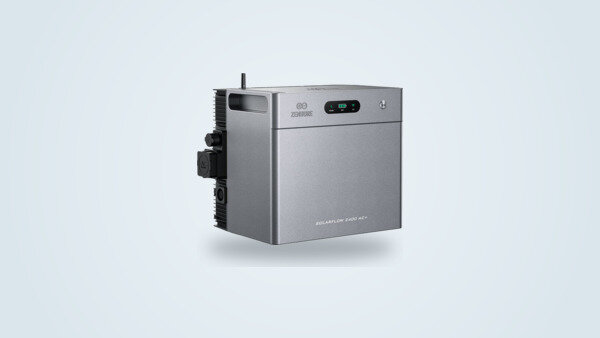
Against the SolarFlow 2400 AC, the EcoFlow Stream AC 5000 and the Anker Solix Solarbank 3 E2700 Pro, the 4000 Mix AC+ shows the highest starting capacity in the comparison (8000 Wh) and the only dedicated input for a third-party photovoltaic inverter, an advantage none of the other three offer. Its 4000 W bidirectional power, rising to 5000 W in PV bypass, also clearly exceeds that of its competitors.

This technical edge comes at a steep price: at 2399 €, it costs roughly twice as much as the three other references in the comparison.

The actual price recorded

The listed price is 2399 €, against 2599 € outside of promotions, confirmed directly on the manufacturer's site. No price history is available for this specific model, too recent to have been tracked for promotions.
The product and its alternatives

Zendure SolarFlow 4000 Mix AC+

Zendure SolarFlow 4000 Mix AC+

£2399.00 (2)

The retrofit that changes scale: 8 kWh expandable to 50 kWh, 4 kW bidirectional power, and a dedicated input for your existing solar inverter.

View product
Zendure SolarFlow 2400 AC

Zendure SolarFlow 2400 AC

£1798.00 (6)

AC-coupled storage rated 2400 watts both ways and expandable past seventeen kilowatt-hours, on a battery platform Zendure has since replaced.

View product
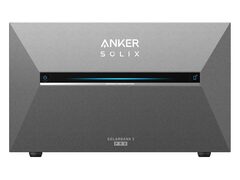
Anker Solix Solarbank 3 E2700 Pro

Anker Solix Solarbank 3 E2700 Pro

See price (7)

2688Wh of plug-and-play solar storage: 4 MPPT, a bidirectional 1200W microinverter and an AI that optimises your self-consumption on its own. Balcony solar finally pays off.

View product
EcoFlow Stream Ultra

EcoFlow Stream Ultra

£799.00 (8)

1920 Wh, 4 MPPT and 2000 W of solar input: the all-in-one hybrid system that stores and feeds back solar power, expandable to 11.52 kWh.

View product

Frequently asked questions

Yes, that's the intended use: a dedicated 5000 W input takes the output directly from the existing photovoltaic inverter. The announced compatibility with each brand has not, however, been independently verified brand by brand.

On a pre-production unit, the measured efficiency comes out at 87 % at full load and 78-82 % in real-world use, below the announced figure. This measurement still needs to be confirmed on a production unit.

Yes. This product falls outside the simplified regime for plug-and-play kits: a mandatory Consuel certificate and the involvement of a qualified installer, adding cost and lead time on top of the unit's price.

No, it remains on pre-order more than four months after its April 2026 launch, with an announced shipping window of 20 to 30 days and a launch limited to a small batch of units.

No bug was identified on the pre-production unit tested, but the HEMS 2.0 energy management system that also controls this model required an emergency software patch released in June 2026.

The price actually recorded is 2399 €, against 2599 € outside of promotions, confirmed directly on the manufacturer's site.

The rating in detail

Our rating
3.4/5
Efficiency 3.0
Portability and size not measured
Weather resistance not measured
Output ports not measured
Capacity and expansion 4.4
Solar input and MPPT not measured
Control and smart features 3.2
Installation and compliance 3.0
Build and endurance 3.4
Zendure SolarFlow 4000 Mix AC+: see the full details and price →