
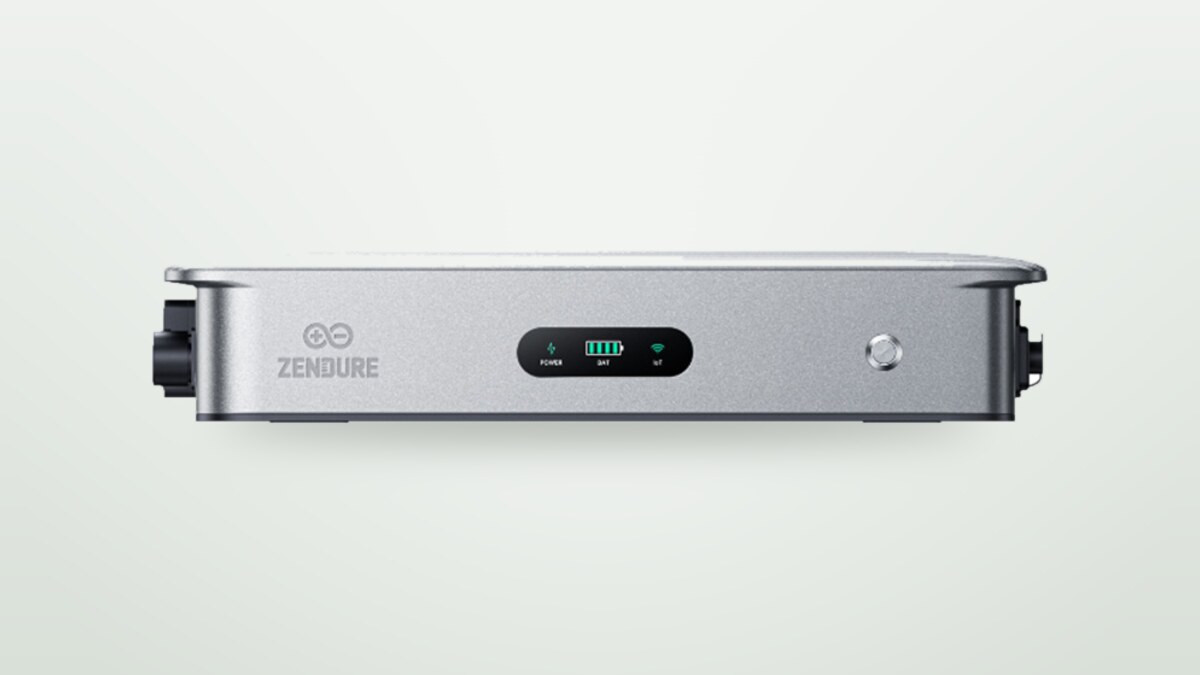
2400 W on paper, 800 W without an electrician: what extended mode really involves
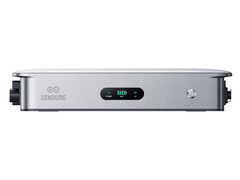
The SolarFlow 2400 AC works in two clearly distinct modes. In standard mode, power stays capped at 800 W and the unit plugs into an ordinary wall socket, with no special paperwork, just like a balcony solar kit. This is the mode that matches the regulatory limit for a simple, non-dedicated socket.
But 800 W is not what justifies choosing this model over a balcony kit at half the price: it is the 2400 W of bidirectional power that makes the product worthwhile. Reaching it requires a hard-wired connection on a dedicated circuit, and the official manual is explicit on this point: professional installation is mandatory, because the procedure involves working with high-voltage household wiring and must be carried out by a certified electrician to prevent any risk of fire, electric shock, or fatal danger. In France, this means compliance with the NF C 15-100 standard and a signed attestation in the app confirming that the installation supports it. For a group of several units (up to 7200 W), having an electrician intervene and issue an attestation becomes mandatory without exception.
This step, and its cost, appear nowhere on the product page or in the product's usual marketing material. Yet it is a precondition for making use of the device's main selling point.
Efficiency at 86 to 87%, not 93%
Round-trip efficiency for a full cycle comes out at 87.3% for a cycle charged at 2000 W then discharged at 1000 W, at 86.0% for a 200 W discharge scenario closer to real household use, and at 86.1% on a day-to-day test with variable solar surplus. That is clearly below the advertised 93%.
This efficiency degrades further at low power levels: at low loads, losses can exceed 40%, and the regulation electronics alone are estimated to draw around 50 W at low load. The 93% figure therefore appears to correspond to a laboratory value close to rated power, not to representative everyday use.
The real tariff-saving figure: 40 to 65 € a year, not over 2000 €
The AI-driven HEMS energy manager connects to more than 840 European suppliers across 32 markets to charge during off-peak hours and discharge during peak hours. In practice, native control does not natively handle the French EDF Tempo tariff structure (six prices depending on the time of day and the day's colour code): making fine use of this tariff means building your own automations through third-party home-automation software, with real friction points (conflicts between automations, no discharge in smart mode without sunshine, charge commands that sometimes do not persist).
On a red Tempo day, the gap between the cost of charging and the value of discharging comes to around 1.90 €, which works out to an annual saving of 40 to 65 € depending on how many days are actually put to use, for a total investment of around 2200 € (unit plus two AB3000X modules). No other independent, quantified estimate has been found to date. It stands in sharp contrast to advertising campaigns claiming up to 2121 € in annual savings, explicitly identified as paid promotional content rather than as an independent measurement, and covering a different tariff-control device from the one on this base model. No independent, rigorous full twelve-month simulation has otherwise been found for this specific product.
800 W of back-up power: a socket limit, not a device limit
Switchover to the back-up output in the event of an outage sits at 15 to 20 ms, a value close to the manufacturer's claim. The less obvious point: the standard Schuko back-up socket is capped by default at 800 W, a regulatory limit tied to a simple, non-dedicated socket, not a hardware limit of the device itself. To unlock a continuous 2400 W (with a possible 3600 W peak for 10 seconds) on that same back-up output, an electrician must certify a dedicated circuit before the limit is lifted in the app.
The precise behavior once the set back-up power is exceeded, a clean cutoff or a gradual drop, was not found in the available documentation. Zendure states only that this mode is not designed to run the whole home for several days, and advises against large loads such as a water heater, an oven, or air conditioning.
It reads neither the Linky nor the German smart metre
The SolarFlow 2400 AC does not communicate directly with the French Linky metre or with the German regulatory Smart Metre Gateway. It uses its own private metre, with current clamps, installed in the electrical panel downstream of the official metre. The practical consequence: plugging in the unit does not change the electricity supply contract and requires no special step with Enedis for the measurement side itself.
In Germany, the unit is compatible with metres using an optical D0 port, standard on German digital metres, but not with the certified Smart Metre Gateway. Tariff control depends solely on the internet connection to electricity suppliers' APIs, regardless of the type of metre installed at the user's home.
A documented fire on another Zendure product, with no structural link to this model
A confirmed fire occurred in Germany in late March 2025 involving a Zendure AiO 2400, a different product from this SolarFlow 2400 AC. According to the manufacturer's explanation, the identified cause is a contact fault at a solar-input MPPT connector, combined with around 10 hours of failed network reconnection attempts that kept an alert from reaching the user. The battery cells were explicitly ruled out as the cause by the manufacturer.
This specific mechanism does not apply structurally to the SolarFlow 2400 AC, which by design has no direct solar input or MPPT connector at all: the failure point identified on the other product simply does not exist on this one. No separate incident has been found on the SolarFlow 2400 AC or on the AB3000X battery modules specifically, although European product-safety databases could not be queried directly to confirm a total absence.
Already replaced by the SolarFlow 2400 AC+ in the current lineup
This model, launched in April 2025, is no longer the current flagship in the Zendure lineup: the SolarFlow 2400 AC+, launched in early 2026 with fully passive cooling, now holds that position at several retailers. That most likely explains the discount observed (1499 € brought down to 1199 €), which looks more like an end-of-line clearance than a one-off promotion.
Worth knowing before buying: this model's AB3000X battery modules are not compatible with the new AB3000L modules on the SolarFlow 2400 AC+. Investing in this model today therefore locks you into a module ecosystem that will not be developed further, a question worth asking for anyone considering expanding capacity later.
A 10-year warranty, voided if the battery sits unused too long
The official warranty, confirmed by two matching Zendure pages, covers 10 years on both the main unit and the AB3000X battery modules, across the European Union and Switzerland. One maintenance clause is easy to miss, though: cell warranty coverage is voided if the buyer does not fully charge the battery within 30 days of receiving it, and then does not recharge it at least once every 3 months after that. A unit bought and then stored without being put into service quickly can therefore lose its coverage without the buyer realising it.
No specific clause was found regarding cover for electrical damage linked to a non-compliant installation, for instance if the 2400 W mode is activated without the required electrician connection. This point deserves to be clarified in writing before buying, for anyone considering the extended mode.
Installation that is genuinely accessible, with a few concrete friction points
Installation in standard mode is generally accessible without an electrician, with the app communicating correctly with compatible measurement accessories (notably the Shelly Pro 3EM). Two concrete friction points nonetheless recur: the three-phase metre's current clamps are bulky and hard to fit into a standard electrical panel, and all three phases of the metre must be powered for the measurement to work correctly, a frequent trap during first-time installation.
Minor but real bugs also turn up: occasional loss of history, isolated WiFi disconnections, behavior changes after a firmware update. None of this was a dealbreaker, but it does point to still-young firmware.
Price positioning: cheaper per kWh than a professionally installed system
At 1199 € for 2.88 kWh to start, the price works out to around 416 € per kWh, dropping to 326 € per kWh at full extension (17.28 kWh). That is hardware price alone, excluding the electrician's cost needed for the 2400 W mode. For comparison, a DC-coupled home storage system installed by a certified installer generally runs between 800 and 1200 € per installed kWh in France, though the comparison is not quite equivalent: it includes labor and eligibility for certain grants that this kit-sold product does not have.
The capacity-to-price ratio against other storage solutions deserves to be checked case by case rather than taken at face value: no rigorous, independent, quantified comparison has been found for this specific product.
| Market | Standard mode (800 W) | Extended mode (2400 W) |
|---|---|---|
| France | No paperwork, same as a balcony kit | NF C 15-100 compliance and electrician attestation |
| Germany | MaStR registration only | Connection by an electrician and full registration |
| Italy, Spain | Sold, CE compliant | No specific official doctrine found for storage without the unit's own solar generation |
The product is also not sold in the United States to date.