
Steca PR 2020 IP65: our full review

The PR 2020 IP65 sells one argument, but a real one: a sealed housing for salty, humid environments, where the standard version of the same controller wouldn't last more than a few seasons on a sailboat or in exposed outdoor conditions.

Our rating
3.5/5
Solar input and MPPT: 3.0 out of 5 (weighting 20%)Solar3.0Control and smart features: 3.5 out of 5 (weighting 15%)Control3.5Build and endurance: 4.2 out of 5 (weighting 10%)Build4.2Battery compatibility: 3.0 out of 5 (weighting 30%)Compatibility3.0Safety and protections: 4.2 out of 5 (weighting 25%)Safety4.2

How is this rating calculated?

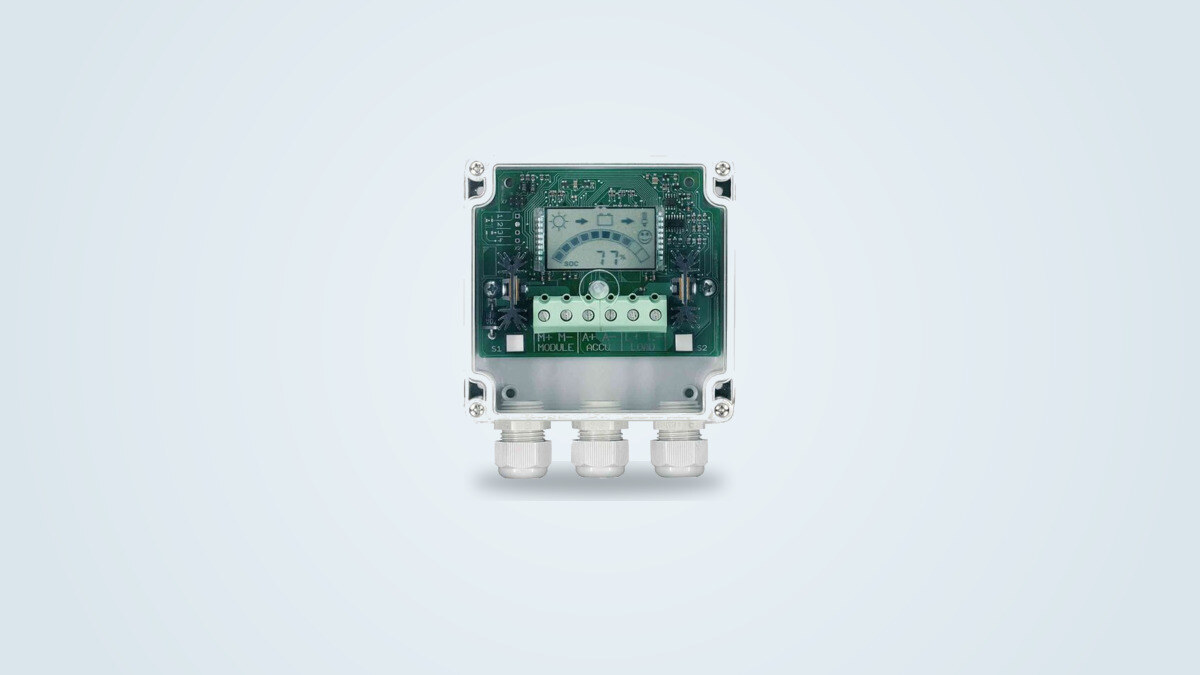
Steca PR 2020 IP65 sealed solar charge controller with transparent housing and LCD screen visible

The essentials

The PR 2020 IP65 runs on the same electrical base as Steca's standard PR range, PWM, 20A, automatic 12V/24V detection, but adds a sealed housing with three cable glands, built to resist salt, humidity, and dust where an open controller wears out within a few seasons. Its LCD screen with the self-adapting AtonIC algorithm clearly displays the charge percentage, and the tropical-climate certification is reassuring for long-term humid conditions. Like the entire Steca PWM range, it stays without a lithium profile and without MPPT, a real efficiency shortfall against a modern MPPT. The price runs notably above the non-sealed version for the same current. For a marine, agricultural, or job-site installation genuinely exposed to the elements, that sealing justifies the price gap. For sheltered use, the standard PR 2020 or a similarly priced MPPT remains more sensible.

Strengths

  • IP65 sealed housing with three cable glands (module, battery, load cables), built specifically for salty, humid, and dusty environments
  • Graphic LCD screen with the self-adapting Steca AtonIC algorithm, clearly displaying the battery charge percentage
  • Certified for tropical climate use (DIN IEC 68 part 2-30 standard), a genuine mark of long-term durability in constant humidity
  • Data logger with energy meter, programmable dusk and night-light functions, built-in automatic self-test
  • Automatic 12V/24V detection and up to 20A of charging and discharging current
  • Full protection list: overcharge, deep discharge, reverse polarity, short circuit, nighttime reverse current

Limitations

  • PWM technology, not MPPT, a real efficiency shortfall in low light against a modern MPPT controller
  • No LiFePO4 lithium charging profile at all: lead-acid batteries only (flooded or gel depending on the menu)
  • No Bluetooth connectivity or mobile app, unlike recent MPPT controllers
  • Priced notably above the non-sealed version of the same PR 2020 for an identical 20A current
  • Screen offers fewer features than a recent high-end MPPT controller
Steca PR 2020 IP65: see the full details and price →

A controller built for environments that destroy standard electronics

The Steca PR 2020 IP65 belongs to the professional PR range from German manufacturer Steca (Kontron/Katek group). Its distinction comes down to one word: sealing. Where a standard controller wears out fast in salty, humid, or dusty conditions, this one carries an IP65-certified housing built for exactly those harsh environments.

20 A
Maximum charging current
480 W
Panels handled at 24V
IP65
Housing sealing rating

Technically, it runs on the same base as the standard PR range: shunt-topology PWM technology with MOSFET, automatic 12V/24V detection, and up to 20A of charging and discharging current under an open-circuit voltage capped at 47V.

A sealed housing with three cable glands, not just an IP65 label

The sealed housing integrates three separate cable glands for module, battery, and load cables, and houses the electronics behind a screwed-on transparent cover that lets you see the circuit's state without opening the housing. The controller is further certified for tropical climate use under the DIN IEC 68 part 2-30 standard, a certification that goes beyond a simple IP rating and is reassuring for long-term durability in constant humidity.

Worth knowing: the IP65 rating protects against water jets and fine dust, a notably higher level than the IP31 rating on most entry- and mid-tier Steca controllers. It's this specific housing difference, and this alone, that sets this model apart from the standard PR 2020 at the same electronic component cost.

For a marine installation, an outdoor agricultural setup, or a job site persistently exposed to the elements, this sealing genuinely changes the picture against a standard controller that would sooner or later give out under salt or moisture.

The AtonIC algorithm: a readable charge percentage, no jargon

The heart of the controller is its self-adapting Steca AtonIC state-of-charge algorithm, which displays the battery charge percentage on the graphic LCD screen as a gauge and a numeric value. It's a direct, intuitive reading, with no technical jargon to decode.

The controller also carries a data logger with an energy meter, programmable dusk and night-light functions, and a built-in automatic self-test. These features stay less rich, though, than the same brand's Tarom 4545, which holds twelve years of history against a more basic function here.

No Bluetooth connectivity or mobile app is offered, unlike recent MPPT controllers that bet on remote control from a smartphone.

PWM with no lithium, and a price that mostly reflects the sealing

Like the entire Steca PR range, this controller stays PWM, not MPPT: no maximum power point tracking, a real efficiency shortfall in low light against a modern MPPT. The controller is set up for lead-acid batteries (flooded or gel depending on the menu), with no charging profile dedicated to LiFePO4 lithium at all.

Steca PR 2020 IP65: what the extra price actually buys
FeaturePR 2020 IP65Standard PR 2020
Electrical specsIdentical (PWM, 20A)Identical (PWM, 20A)
HousingIP65, cable glandsIP32, open
Recommended useMarine, agricultural, outdoor job siteUtility room, sheltered enclosure

This model's price runs notably above the non-sealed version for an identical 20A current. It's the sealed housing, and it alone, that justifies this gap: the electrical specs and charging algorithm stay the same.

Who the PR 2020 IP65 is for

This controller suits a solar setup persistently exposed to harsh conditions: a sailboat or boat (humidity, sea spray), an outdoor agricultural operation, a job site, or any environment where a standard controller would wear out fast. The tropical certification and sealed housing fully justify the extra cost over the standard version in that case.

For a sheltered installation (electrical enclosure, utility room, enclosed RV), the standard PR 2020, cheaper for identical electrical specs, remains the more rational choice. And for a lithium setup or a need for optimal efficiency in low light, a modern MPPT controller is the way to go, sealed or not.
The rating in detail

Our rating
3.5/5
Efficiency not measured
Portability and size not measured
Weather resistance not measured
Output ports not measured
Capacity and expansion not measured
Solar input and MPPT 3.0
Control and smart features 3.5
Installation and compliance not measured
Build and endurance 4.2
Battery compatibility 3.0
Safety and protections 4.2
Steca PR 2020 IP65: see the full details and price →

The product and its alternatives

Steca PR 2020 IP65

Steca PR 2020 IP65

£143.40 (1)

An IP65 enclosure built for salt, humidity and dust: the Steca PR 2020 IP65 regulates 20A of solar charge where a standard controller would not survive.

View product
Steca Tarom 4545

Steca Tarom 4545

£205.74 (2)

45A of charge, a graphic LCD screen and a 12-year data logger: the Steca Tarom 4545 reliably drives good-sized 12/24V solar setups.

View product
Steca Solsum 0606

Steca Solsum 0606

£17.47 (2)

Light, reliable and affordable: the Steca Solsum 0606 regulates solar charging on small 12V/24V lead-acid setups, drawing under 4 mA of self-consumption.

View product

Frequently asked questions

The electrical specs are identical (PWM, 20A, automatic 12V/24V). The difference is the housing: sealed IP65 with cable glands, against an open IP32 housing on the standard version, not suited to moisture.

Yes, that's one of its typical uses. Its sealed housing resists humidity and sea spray, and the controller is certified for tropical climate use (DIN IEC 68 part 2-30).

With 20A of charging current and a maximum open-circuit voltage of 47V, it handles roughly 240W of panels on a 12V system and 480W at 24V, comfortable output for this compact format.

No. This professional controller is set up for lead-acid batteries (flooded or gel depending on the menu), with no charging profile dedicated to LiFePO4 lithium.