
Redmi 20000mAh 18W: our full review

This entry-level power bank delivers measured output below its advertised 18 W and has no USB-C output at all, but its own recharging keeps its promise and its capacity remains decent for the price, provided you do not trust the weight sometimes listed well below the real figure.

Our rating
3.7/5
Capacity and runtime: 3.9 out of 5 (weighting 25%)Capacity3.9Output power: 3.5 out of 5 (weighting 20%)Power3.5Size and weight: 3.7 out of 5 (weighting 20%)Size3.7Ports and cables: 3.3 out of 5 (weighting 15%)Ports3.3Recharging: 4.2 out of 5 (weighting 10%)Recharging4.2Build and endurance: 3.4 out of 5 (weighting 10%)Build3.4
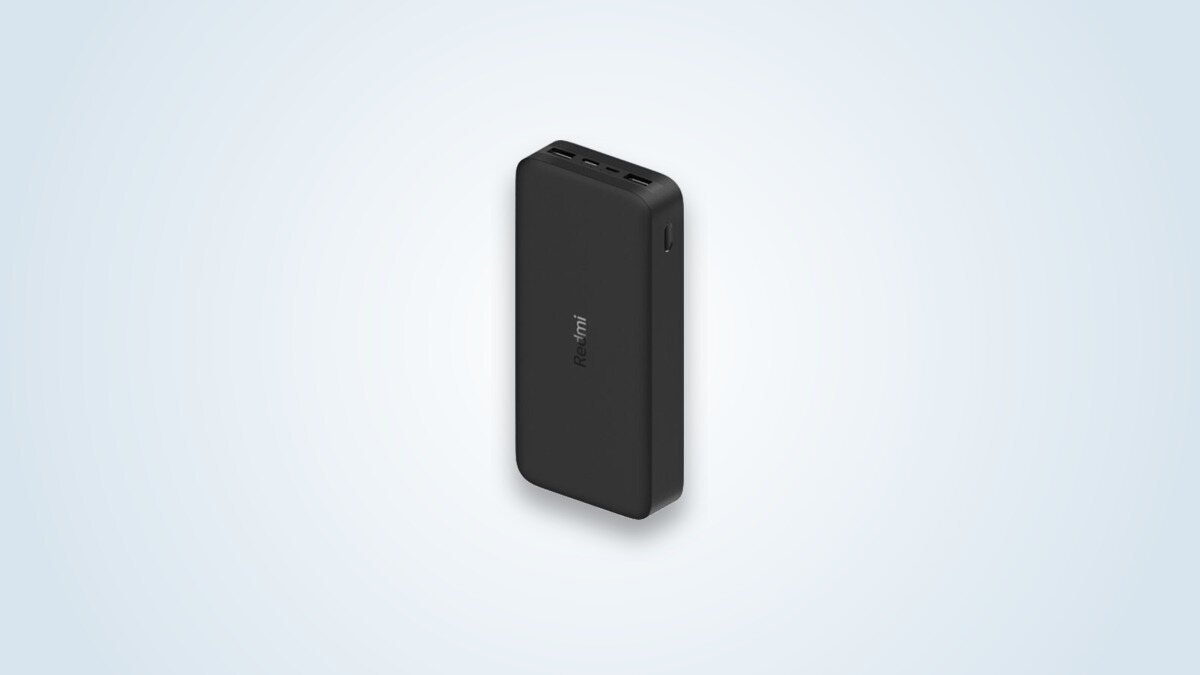
Black Redmi 20000mAh external battery, with two USB-A ports and one input port, Redmi logo visible on the edge

The essentials

The Redmi 20000mAh 18W remains a decent external battery for basic use, with the battery's own recharging matching the manufacturer's claim. Two structural limits weigh on the score: measured output power falls below the advertised 18 W on both independent measurements available, and the device has no USB-C output at all, its USB-C port serving only to recharge the battery itself, which has created real confusion among several buyers. Several verified reviews also report defective units straight out of the box. A sound choice for anyone looking for simple capacity and a tight budget with USB-A devices, less so for anyone already invested in a USB-C ecosystem.

Strengths

  • The battery's own recharging matches the manufacturer's claim, about 7 hours with an 18 W charger
  • Manufacturer-declared capacity of around 61 Wh usable out of 74 Wh nominal, a decent figure for this format
  • Two USB-A ports allowing two devices to charge at the same time
  • Build quality rated solid overall in one detailed long-term user account, despite sharp edges

Limitations

  • Measured output power below the advertised 18 W on both independent measurements available
  • No USB-C output at all: the USB-C port present only recharges the battery itself, a frequent source of confusion among buyers
  • Several verified reviews report defective units straight out of the box
  • Real weight around 440 to 450 g, not to be confused with the 300 g sometimes listed on certain retailer product pages
  • Quick Charge compatible only, without USB Power Delivery, which limits fast charging on recent smartphones
Xiaomi Redmi 20000mAh: see the full details and price →

What the advertised capacity is really worth

The manufacturer itself declares a usable capacity of 12,000 mAh at 5.1 V, or about 61 Wh out of the cell's 74 Wh nominal rating, which puts efficiency around 82 %. This figure remains a manufacturer-supplied value, intended for regulatory purposes rather than a full discharge measurement carried out by a third party, none having been found for this specific model. It nonetheless stays consistent with what comparable products show.

61 Wh
usable capacity declared by the manufacturer, out of 74 Wh nominal

Output power, below the advertised figure

Across the two independent measurements available, both carried out with a USB tester, output power stays below the advertised 18 W: up to 17.3 W with a Quick Charge-compatible smartphone, but only 14 W with another compatible device, never reaching the stated maximum. Using both ports at the same time, total measured output drops to around 13.5 to 15.4 W, against a theoretical maximum of 36 W.

The protocol supported is Quick Charge 3.0, without USB Power Delivery. That is a real limitation for recent smartphones, many of which favor the USB PD protocol for fast charging, and which then fall back to a slower standard charge on this battery.

The USB-C port, a genuine source of confusion

This battery does have a USB-C port, but as an input only: it serves exclusively to recharge the battery itself, never to charge a device. The only two outputs available are USB-A. This point comes up repeatedly in buyer reviews from people who expected to charge a USB-C smartphone directly on this port and discovered the limitation after buying.

The battery's own recharging, matching the claim

On this point, the Redmi 20000mAh keeps its promise: a full recharge measured with an 18 W charger takes about 7 hours, a result consistent with the 7 hours 30 minutes advertised by the manufacturer. With a weaker 10 W charger, a full recharge takes about 10 hours.

Weight, worth checking before buying

Real measured weight sits around 440 to 450 g. That is a normal weight for a 20,000 mAh power bank, but it clashes sharply with the 300 g sometimes listed on certain retailer product pages, a gap that has led several buyers to return the product after receiving it, feeling misled about the actual weight. This is not a flaw in the product itself, but a point worth checking before buying.

Reliability, a signal worth watching

Several verified buyer reviews, across different markets, report a unit that arrived non-functional straight out of the box. This is not an isolated case: the pattern recurs often enough to constitute a genuine signal, without necessarily pointing to a widespread failure rate. None of these reviews mention swelling or any safety incident. One detailed, long-term account spanning several years describes build quality as solid overall, by contrast, with only somewhat sharp edges as a reservation.

Who this battery suits today

This model belongs to a generation of power banks that has already been on the market for several years, with no built-in cable and no digital percentage display, using simple LED indicators instead. Against more recent models with a USB-C output port, a readable display and often a built-in cable, it clearly settles for a more basic positioning. It is a sound choice for a tight budget and simple needs, less so for anyone wanting equipment up to current standards.

The price actually observed

The listed price is €16.99, but prices actually observed at retailers, in both France and Germany, run noticeably higher, generally between €19 and €27 depending on the market and the seller. This gap is worth knowing before buying: this product's value for money has to be judged against the price actually paid, not the reference price shown.
The product and its alternatives

Xiaomi Redmi 20000mAh

Xiaomi Redmi 20000mAh

See price (17)

20000 mAh, 18 W fast charging and dual USB output to charge two devices: several days of backup power at a rock-bottom price, by Redmi.

View product
Xiaomi Power Bank 10000 Lite

Xiaomi Power Bank 10000 Lite

See price (9)

10000 mAh, 22.5 W fast charging and three ports to charge several devices: the slim, light backup battery at the softest price, by Xiaomi.

View product
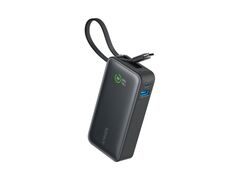
Anker Nano 30W

Anker Nano 30W

See price (47)

Compact with its built-in USB-C cable, a display and 30 W fast charging, the 10,000 mAh Anker Nano 30W recharges everything, anywhere.

View product
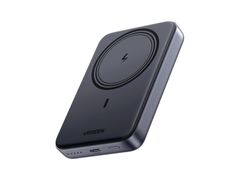
Ugreen Nexode 10000mAh

Ugreen Nexode 10000mAh

See price (60)

A magnetic MagSafe-compatible power bank: 10,000 mAh, wireless charging for iPhone, 20W USB-C and a built-in foldable stand, in an ultra-thin design.

View product

Frequently asked questions

No. The USB-C port present only recharges the battery itself. The only two outputs for charging a device are USB-A.

The independent measurements available record between 14 and 17.3 W, below the advertised 18 W, with Quick Charge 3.0 as the only protocol supported, without USB Power Delivery.

About 7 hours with an 18 W charger, matching the manufacturer's claim, and about 10 hours with a weaker 10 W charger.

Around 440 to 450 g, a normal weight for this capacity, but well above the 300 g sometimes listed on certain retailer product pages.

Several verified reviews report defective units straight out of the box, a real signal worth knowing about, though no safety incident or swelling has been reported.

The rating in detail

Our rating
3.7/5
Capacity and runtime 3.9
Output power 3.5
Size and weight 3.7
Ports and cables 3.3
Recharging 4.2
Build and endurance 3.4
Xiaomi Redmi 20000mAh: see the full details and price →