
The historic reference for motorcycle care in Europe
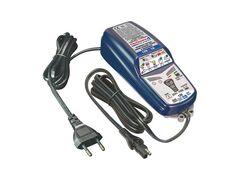
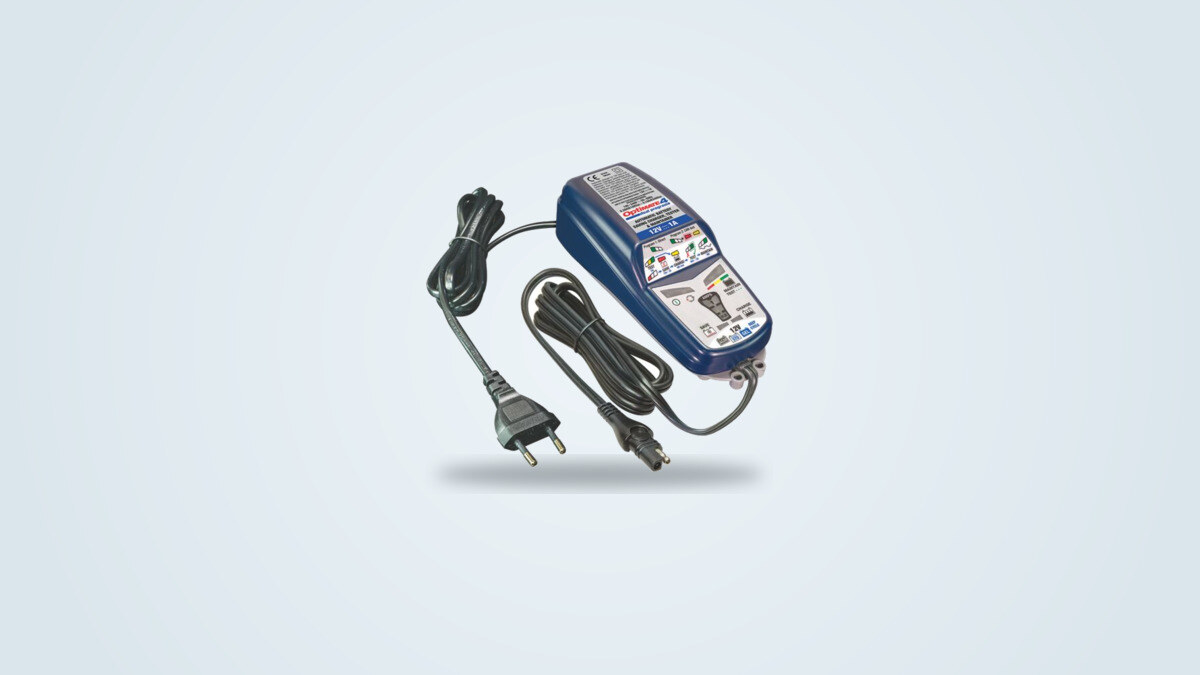
TecMate has built itself into the reference brand for motorcycle battery care in Europe over the years, recommended by virtually every major manufacturer (BMW, Triumph, Honda, Yamaha...) to protect their batteries through winter storage or long periods of inactivity. The OptiMate 4 Dual Program is the entry model in the range, a fully automatic 12V charger across 9 stages: low-voltage start, pre-charge test, wake-up pulse, turbo recovery, pulse recovery, controlled charge, optimise, post-charge test, then maintenance.
1A and a 50Ah ceiling: a charger built for the small battery
The OptiMate 4 Dual Program delivers 1A constant current, designed for lead-acid STD, AGM and GEL batteries from 3 to 50Ah, typical of motorcycles, scooters, quads, jet skis and small classic cars. That is noticeably less than most car and motorcycle chargers on the site, which climb to 4, 5, or even 20A. On a small motorcycle battery, the gap does not show: a full charge takes overnight, which is entirely normal for this type of battery. On a large car or motorhome battery, though, the unit would be the wrong tool, its 50Ah ceiling rules it out for that use from the start.
Recovery from as low as 0.5V, for the most compromised batteries
Its recovery function restarts charging from as low as 0.5V, a threshold far below a standard battery's nominal 12V. That allows an attempt to save very deeply discharged or sulphated batteries, a case where a standard charger would simply refuse to start, lacking enough voltage to trigger charging in the first place. As with any charger, this is no universal guarantee: excessive sulphation or a dead cell remain physical limits no unit can lift. But the attempt costs nothing and can bring a motorcycle or quad battery left unused for months back to life.
The Dual programme, with a one-of-a-kind BMW CAN-bus option
Its defining feature is the Dual programme: programme 1 charges the battery directly through the supplied clamps or permanent eyelet, while programme 2, with a DIN cable sold separately, safely charges and maintains via the 12V socket controlled by the CAN-bus on BMW motorcycles equipped since 2004, without removing the battery or touching the bike. No other charger in the site's car and motorcycle line-up offers this option, a real selling point for an owner of an equipped BMW.
The permanent eyelet, the real everyday convenience
Supplied with a permanent eyelet connector alongside SAE clamp leads, the OptiMate 4 Dual Program can be fixed to the battery terminals once and for all, tucked under the seat or in the boot. Reconnecting the charger then comes down to plugging in a simple SAE connector, without ever reopening the battery compartment or handling the terminals. A detail that genuinely changes day-to-day use on a motorcycle or quad parked up for much of the year.
Weatherproof, spark-free, protected against short circuits
The unit is weatherproof and usable from -40 °C indoors or out, a rare claim for a charger stored in an unheated garage or a garden shed. It produces no sparks and protects itself automatically against short circuits or an accidentally disconnected battery. Supplied with a 180cm mains lead and a 180cm charge lead, it can be left connected indefinitely with no risk of overcharging, including through several months of winter storage.
No lithium compatibility, the structural limit to know
Its main limitation: it does not charge lithium (LiFePO4) batteries and tops out at 50Ah. It is therefore not suited to a lithium motorcycle battery, a motorhome, or a large car battery. For a lithium motorcycle battery, TecMate offers a dedicated range, the OptiMate Lithium, which remains a separate unit to buy on its own.
Against the CTEK MXS 5.0 and the Noco Genius5
How does the OptiMate 4 Dual Program compare with the other charger-maintainers most sought after for motorcycle and car care?
| Criterion | OptiMate 4 Dual Program | CTEK MXS 5.0 | Noco Genius5 |
|---|---|---|---|
| Charge current | 1 A | 0.8 / 5 A | 5 A |
| Battery capacity | 3 to 50Ah | 1.2 to 110Ah | Up to 120Ah |
| Lithium compatible | No | No | Yes |
| BMW CAN-bus socket | Yes (optional cable) | No | No |
| Observed price | ≈ £82 | ≈ £83 | ≈ £68 |
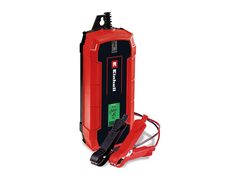
The OptiMate 4 Dual Program stands out for its direct compatibility with the BMW CAN-bus socket, a unique feature in this comparison, and its long-standing credibility with motorcyclists. The Noco Genius5 remains more versatile with lithium support and a higher current, at a lower price too; the CTEK MXS 5.0 targets larger batteries. Another model in the same range, the OptiMate 5 Start-Stop, charges faster (4A) and suits larger batteries (up to 96Ah), but without lithium or a CAN-bus option, leaning more towards cars. For fine-tuned care of a small motorcycle or quad battery, BMW or not, the OptiMate 4 Dual Program remains a benchmark.
Who the OptiMate 4 Dual Program is for
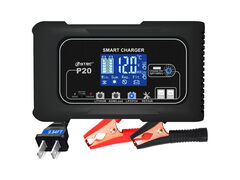
This charger is aimed first at owners of a motorcycle, quad, scooter or small classic car, particularly those with a CAN-bus equipped BMW who want to plug in the charger without ever removing the battery. For a standard car battery, a motorhome, or a lithium battery, a more powerful and versatile charger such as the HTRC P20 is a better fit, able to cover both lead-acid and lithium at a noticeably higher current.