
Nitecore NB20000 Gen 3: Our Full Review

This carbon-fiber power bank delivers on its most visible promise, a measured weight of 288 to 291g for 20,000mAh, but its real-world efficiency remains uncertain: the available measurements diverge sharply, between 40% and 74% of rated capacity depending on the protocol, and its price can double depending on the buying channel.

Our rating
3.6/5
Capacity and runtime: 3.3 out of 5 (weighting 25%)Capacity3.3Output power: 3.0 out of 5 (weighting 20%)Power3.0Size and weight: 4.5 out of 5 (weighting 20%)Size4.5Ports and cables: 3.2 out of 5 (weighting 15%)Ports3.2Recharging: 3.8 out of 5 (weighting 10%)Recharging3.8Build and endurance: 3.7 out of 5 (weighting 10%)Build3.7
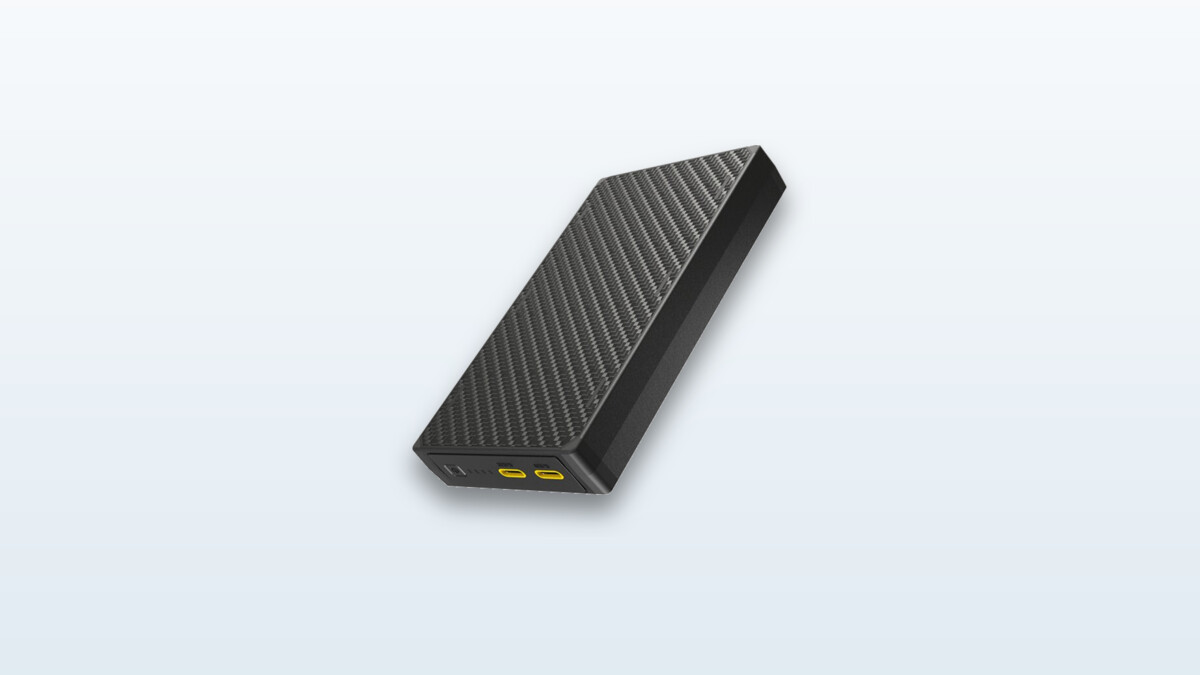
Nitecore NB20000 Gen 3 carbon-fiber power bank shown in profile, with its two USB-C ports visible

The essentials

The Nitecore NB20000 Gen 3 delivers on its main promise: a genuinely light braided carbon-fiber shell, independently weighed at 288g against a stated 291g, which makes it one of the lightest 20,000mAh power banks on the market. That is a concrete argument for hiking and travel at minimum weight. The rest of the picture is more nuanced. The real-world efficiency of the rated capacity is hard to pin down with certainty: a German lab-style measurement puts the return between 62 and 74% of the nominal 20,000mAh, while two independent trials run by experienced users converge instead around 40 to 50% in real-world use with a smartphone. This gap remains unresolved at this point, and we would rather flag it than display a single figure that would be too precise to be honest. Output power stays modest (22.5W maximum on a single port, 15W shared across two), with no USB-A port. And the lowest catalog price only reflects one particular buying channel: the official prices seen elsewhere are markedly higher. A sound choice for anyone who prioritizes weight above all else, less obvious for versatile use at the best power-to-price ratio.

Strengths

  • Weight independently confirmed at 288g against a stated 291g, among the lightest 20,000mAh power banks on the market
  • Braided carbon-fiber shell with corner pads added compared to the previous generation
  • Battery recharge measured at just over 4h, faster than the 5h stated on the spec sheet
  • Per-port power close to the stated figures, around 20W measured on both USB-C ports
  • Functional pass-through, lets a device be powered while the battery itself recharges

Limitations

  • Real-world efficiency uncertain: available measurements diverge sharply, from 40 to 74% of rated capacity depending on the protocol
  • Modest output power for a battery of this capacity, 22.5W maximum and no USB-A port
  • Simultaneous charging on both ports capped at 15W total, regardless of the number of devices
  • IPX5 certification not corroborated by any independent water-exposure test, claimed only on the manufacturer's spec sheet
  • Price highly variable depending on the buying channel, the lowest price does not match the official price seen elsewhere
Cost of available energy
1 880 £per kWh returned

Computed from today's price and the measured capacity, not the claimed capacity. Cheaper than 7 of the 11 comparable products in the catalogue, on claimed capacity.

Nitecore NB20000 Gen 3: see the full details and price →

The weight, the central promise, genuinely kept

The woven carbon-fiber shell is this power bank's main selling point, and it delivers: an independent weighing shows 288g against the 291g stated on the spec sheet, a negligible gap. For a 20,000mAh capacity, that is well below the market average, where batteries of equivalent capacity often exceed 350 to 450g. The measured dimensions (117 x 68 x 21mm) also closely match the stated 118 x 69 x 21.5mm.

288 g
independently measured weight, against a stated 291g

Real-world efficiency: two protocols, two results

This is the trickiest point to settle on this product. A lab-style measurement puts the returned capacity between 62 and 74% of the nominal 20,000mAh. But two independent trials run separately by experienced users, using different protocols, one based on the actual charge delivered to a smartphone, the other on an input-versus-output energy measurement, converge instead around a net efficiency of 40 to 50% in real-world use.

This gap is too wide to ignore, and neither series of measurements follows a protocol complete enough (a stated reference voltage, charging conditions documented start to finish) to settle the question with certainty. Rather than display a single figure that would suggest a false precision, it is more honest to say that this battery's real-world efficiency sits somewhere within this range, probably closer to the low end than the high end in daily use with a smartphone.

Per-port power and sharing between two devices

Both USB-C ports show measured power close to the stated figures, around 20W each, against theoretical maximums of 22.5W and 18W. That is decent but modest: with no USB-A port and never exceeding 22.5W on a single port, this battery will not recharge a demanding laptop at full speed. In simultaneous use of both ports, the total power available drops to 15W shared between the two devices, a low ceiling that limits the appeal of charging two devices at once with this battery.

Battery recharge, faster than advertised

An independent measurement puts a full recharge at just over 4h using an 18W USB-PD source, while the manufacturer's spec sheet states about 5h. That is a good point, even though this figure comes from a single source and would merit confirmation. Pass-through mode, which lets a connected device be used while the battery itself recharges, works with no reported issue.

IPX5: a claim not independently verified

IPX5 certification, which protects against water splashes, appears on the manufacturer's spec sheet and on most product listings. No independent water- or rain-exposure test could be found to confirm it under real conditions, whether hiking in the rain or in a lab setting. For a product explicitly positioned for outdoor use, that is a data point missing from the record, without this calling the certification itself into question.

A price that varies sharply by buying channel

The lowest price observed, around 80 euros, comes from a general online retailer offering direct shipping. Official prices seen at the brand's authorized resellers are markedly higher across several markets, generally between 100 and 125 euros depending on the country. This gap is not abnormal in itself, it is the usual result of different distribution channels, but it concretely changes the value-for-money calculation depending on where the purchase is made: this battery's positioning is far more convincing at 80 euros than at 120.

A Nitecore lineup that has already moved beyond the Gen 3

The NB20000 Gen 3 is no longer the top of its own family at Nitecore: the brand already offers the Carbo 20000, an earlier model but faster on other points, and has launched a new Carbo 20 that is markedly more powerful (65W) and better protected against water (IPX8). No following generation of the NB20000 has been announced to date, however, which leaves the Gen 3 as the current representative of this specific line, focused on lightness rather than power.

Reliability: still thin data

No early failure, swelling, or port defect documented by multiple independent sources has been found on this specific model. That is a fairly good sign, but the volume of available feedback remains limited, which does not yet allow for a real reliability track record to be established. The manufacturer's warranty is 18 months, extendable to 24 months through certain authorized distributors.

Who this power bank is for

The NB20000 Gen 3 is most convincing for one specific use: hiking, trekking, or travel where every gram counts, with a comfortable 20,000mAh capacity in a shell among the lightest in its category. For versatile everyday use, demanding in power or connectivity, other power banks offer a better capacity-to-power-to-price ratio. This is a deliberate niche product, not an all-purpose power bank.
The product and its alternatives

Nitecore NB20000 Gen 3

Nitecore NB20000 Gen 3

£75.19 (8)

20,000 mAh for just 291 g: the carbon-fiber Nitecore NB20000 Gen 3 is the ultralight power bank for hikers and travellers.

View product
Nitecore Pocket 10000

Nitecore Pocket 10000

£62.95 (8)

10,000 mAh and a built-in USB-C cable in 12.5 mm of thickness: the carbon-fiber Nitecore Pocket 10000 slips in anywhere, for just 160 g.

View product
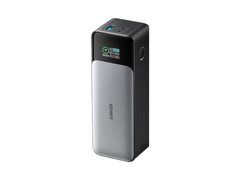
Anker 737 Power Bank

Anker 737 Power Bank

See price (60)

24000mAh and 140W of power: the Anker 737 charges a laptop like a smartphone, with a display that shows everything in real time.

View product
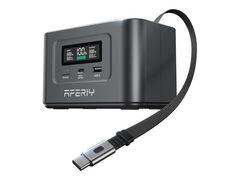
Aferiy Nano100

Aferiy Nano100

£71.47 (8)

99 Wh of LiFePO4 in your pocket: the Aferiy Nano100 is a 100 W power bank with a retractable USB-C cable, cabin-friendly and long-lasting (2000+ cycles).

View product

Frequently asked questions

Yes. An independent weighing shows 288g against the 291g stated on the spec sheet, a negligible gap that confirms it is indeed one of the lightest 20,000mAh power banks on the market.

Available measurements diverge sharply: between 62 and 74% of rated capacity according to a lab-style measurement, against 40 to 50% according to two independent user trials in real-world use. Neither series follows a protocol complete enough to settle the question with certainty.

Yes, but the total available power then drops to 15W shared between the two ports, against 22.5W and 18W maximum when a single port is used alone.

Not entirely. The lowest price comes from a general retailer; official prices seen at the brand's authorized resellers are noticeably higher, generally between 100 and 125 euros depending on the market.

The rating in detail

Our rating
3.6/5
Capacity and runtime 3.3
Output power 3.0
Size and weight 4.5
Ports and cables 3.2
Recharging 3.8
Build and endurance 3.7
Nitecore NB20000 Gen 3: see the full details and price →