
A modest base capacity, but one of the highest expansion ceilings in its class
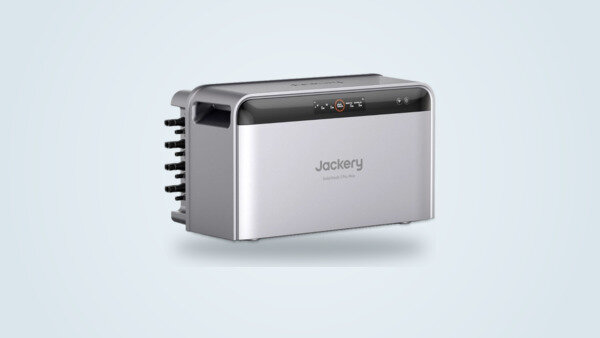
The SolarVault 3 Pro starts with a 2520 Wh LiFePO4 battery, of which about 2.1 kWh remains usable once the BMS protection reserve is taken out, a little over 80% of the rated capacity. That modest base then scales up considerably: up to five BP2500 expansion batteries can stack onto the main unit, each adding 2.52 kWh, for a ceiling of 15.12 kWh on a single tower. Linking up to three SolarVault 3 Pro units in parallel with fifteen expansion batteries in total can push combined capacity as high as 45.36 kWh, an option aimed at households with the largest needs rather than a first purchase.
This roughly 80% usable-capacity ratio is nothing unusual for a recent LiFePO4 pack with a cautious BMS: it shows up, give or take a few points, on several balcony storage kits already reviewed here. The real strength of the SolarVault 3 Pro lies more in how easy that expansion is: the add-on batteries simply stack physically with no complex wiring between them, which makes growing the system accessible to anyone who did not budget for maximum capacity on day one.
Round-trip efficiency: solid under full load, more fragile at low power
Round-trip efficiency on the SolarVault 3 Pro sits around 85% under an 800 W load, and drops to about 81% under 200 W. That gap is not a one-off flaw: it comes down to the fixed cost of the unit's power electronics, which weighs proportionally more as the power being moved gets smaller. On a unit built ahead of the commercial launch, overall AC efficiency had even fallen to 76% across two weeks of real use in late winter, a period when the unit mostly ran at low export power; that specific figure applies only to a pre-production sample and is not necessarily representative of the final retail firmware, but it points the same way as the broader trend.
Two more factors weigh on overall efficiency across a full day. Standby draw sits around 30 W continuously, a loss that adds up as soon as the unit stays plugged in without moving any energy. Maximum power point tracking on each MPPT channel also loses efficiency below roughly 30 W per input, a threshold reached quickly at the end of the day or under heavy cloud cover: this is exactly the low-export condition where overall efficiency slides toward 75 to 80%. On the backup socket alone, output efficiency climbs to 95%, a figure that covers discharge only and does not reflect a full charge-then-discharge AC cycle.
4 MPPT and 4000 W of solar input: the SolarVault 3 Pro's real strength
This is where the SolarVault 3 Pro pulls furthest ahead of its class. Its 4 MPPT trackers are independent of one another, each accepting up to 1000 W within a 16 to 60 V range and up to 28 A, for a total solar input of 4000 W. That independence allows panels facing different directions to be wired in, or partial shading on one side of the balcony to be absorbed, without the other three inputs suffering for it.
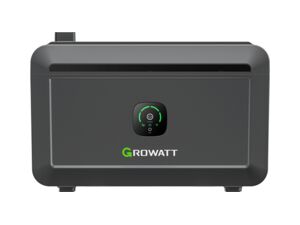
Unlike a system such as the Growatt NOAH 2000, which needs a separate microinverter bought and installed alongside the storage unit, the SolarVault 3 Pro handles the entire chain itself: panels connect directly to its 4 inputs, with no extra hardware needed to get a setup running. An additional AC-coupling input can also capture, on top of that, surplus power from a rooftop solar setup that already has its own inverter, a useful option for anyone with panels elsewhere on the property.
A built-in bidirectional inverter, with a cap set by default
The built-in inverter reaches 1200 W bidirectional, but factory output is capped at 800 W by default to stay within the small plug-and-play solar bracket commonly recognised across several European countries. Raising it to 1200 W stays possible, but only after a qualified electrician steps in, which then takes the setup out of the simplified bracket. A separate bypass mode, meant for passing current straight through without going through the inverter's usual limit, reaches up to 2300 W.
During a grid outage, a dedicated backup outlet delivers up to 1200 W, with an automatic transfer claimed at under 20 milliseconds, well under the threshold most electronics can even notice. That backup power is on par with the best balcony storage kits reviewed here, but still noticeably below the higher tiers of Jackery's own line-up, which pass 2000 W on this exact point: enough to keep a few essential devices running, not to power an entire home.
Installation and compliance: a format built for the simplified bracket
Installation is designed to be plug-and-play: the unit connects in a few minutes, with no work needed on the home's electrical panel for the default 800 W configuration. No complex wiring is needed between the base unit and its expansion batteries, which simply stack physically on top of one another.
On the regulatory side, the 800 W factory default matches the ceiling commonly recognised for small plug-in solar setups in several continental European countries, Germany or Italy for instance; France requires a grid registration regardless of the power output chosen. Rules in the UK differ from that continental bracket, so checking current requirements with the local distribution network operator before connecting any inverter to the grid remains an essential step, one worth repeating given how these rules can change over time.
Control: app, artificial intelligence and local control
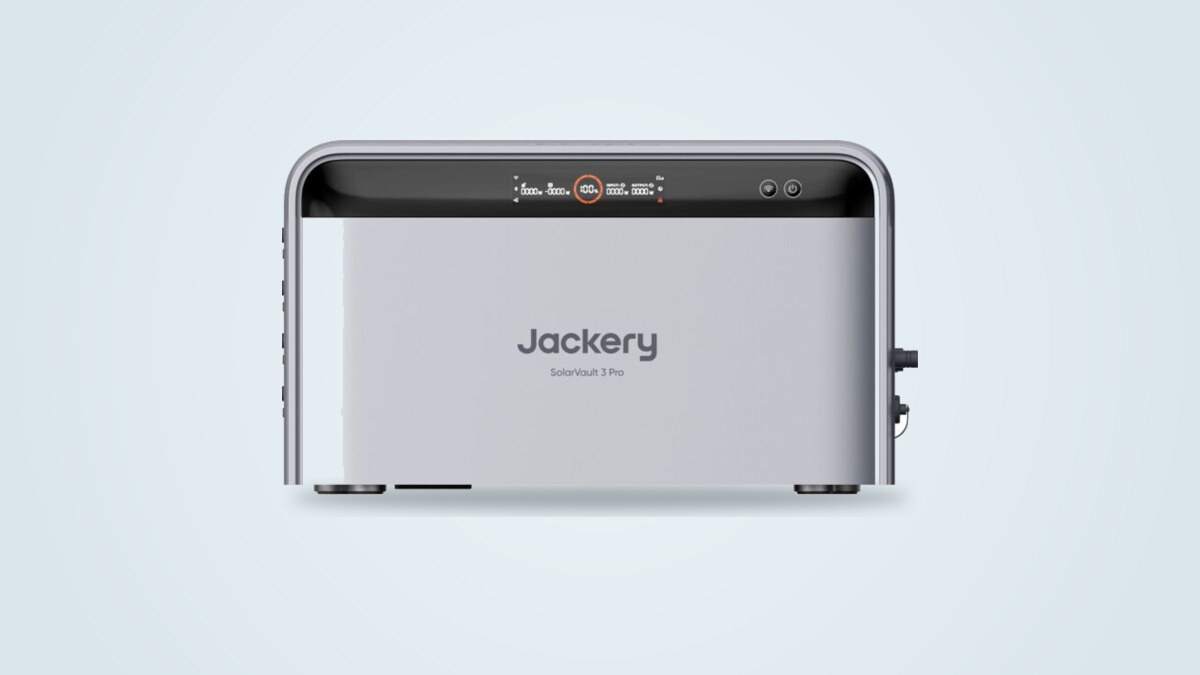
The SolarVault 3 Pro is controlled through the Jackery app over Wi-Fi and Bluetooth, with an LCD screen directly on the unit that shows live values without needing to open the app. An AI mode automatically adjusts charging and discharging based on electricity tariffs and weather forecasts, aiming to maximise self-consumption without manual input. One notable point for a product in this segment: local integration through MQTT and Home Assistant is available, letting the unit be monitored and controlled without depending permanently on the maker's app or servers, a genuine plus for anyone who values a self-sufficient home automation setup.
For near-zero export down to the watt, a smart electricity meter noticeably sharpens precision: around 5 W of deviation in normal operation, up to 12 W in the least favourable cases, with a reaction time of 5 to 7 seconds to a change in household load. That meter is not included with the base unit: it is a separate accessory, offered by Jackery or compatible with common third-party options on the balcony solar market. Without one, the unit still works in AI mode or on manually programmed schedules, but with coarser control over the power being exported.
Build and safety: strong specifications, a still-young line-up
The enclosure is IP65 rated against water and dust, with a self-heating battery that allows continuous operation from -20 °C to 55 °C, a wide range for a unit meant to stay outdoors year-round. Jackery states a built-in fire-safety system and 6000 charge cycles for the battery, backed by a 10-year warranty and a targeted 15-year lifespan. No safety flaw or recall has been identified for this model to date.
One real point worth flagging on finish: the rear panel gets noticeably warm during charging, and the side ports leave little room to route cables once the unit sits against a wall. Launched in March 2026, the SolarVault 3 Pro also remains too recent to judge multi-year reliability, a caveat that applies to this entire new Jackery line-up.
Against the direct competition
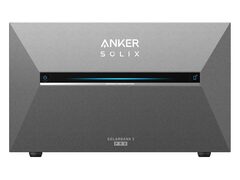
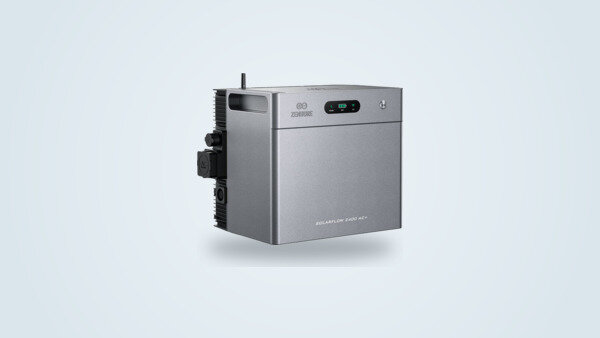
Among balcony storage kits with a built-in inverter, three references help place the SolarVault 3 Pro: the Growatt NOAH 2000, which needs a separate microinverter, the Anker Solix Solarbank 3 E2700 Pro, the closest architecture with its own inverter already built in, and the EcoFlow Stream Ultra X, the most generous capacity of the group.
| Criterion | SolarVault 3 Pro | NOAH 2000 | Solarbank 3 E2700 Pro | Stream Ultra X |
|---|---|---|---|---|
| Base capacity | 2520 Wh | 2048 Wh | 2688 Wh | 3840 Wh |
| Built-in inverter | 1200 W bidirectional | Separate microinverter required | 800 W | 800 W hybrid |
| Solar input | 4000 W (4 MPPT) | 1800 W (2 MPPT) | 1200 W (4 MPPT) | 2000 W (4 MPPT) |
| Expandable up to | 15.12 kWh (45.36 by linking several units) | 8192 Wh | About 16 kWh | 23.04 kWh |
| Backup output | 1200 W | Not stated | Not stated | 1200 W |
How to read this table depends mostly on what matters most to the buyer. For the widest solar input and an inverter already built in, the SolarVault 3 Pro clearly leads over the NOAH 2000 and the Solarbank 3 Pro. For the largest storage capacity on a single tower, the Stream Ultra X stays ahead, with both a bigger base and a higher expansion ceiling. The NOAH 2000, for its part, remains the simplest option for anyone willing to manage a separate microinverter in exchange for a more modest solar input.
Who the SolarVault 3 Pro suits, and where it is not yet available
The SolarVault 3 Pro suits anyone wanting to start a balcony setup with the inverter already built in, without having to pick and wire in a separate microinverter, and with real room to expand in the years ahead. Its wide 4-MPPT solar input works particularly well on a balcony with mixed orientations or partial shading, where a narrower input would force a poorly placed panel to be sacrificed.
For anyone chasing the finest export precision from day one, budgeting for a smart electricity meter on top of the unit itself remains necessary. And for anyone wanting backup power to cover an entire home during a prolonged outage, the dedicated outlet's 1200 W will stay a ceiling, not a complete answer. Outside those two specific cases, the SolarVault 3 Pro stands today as one of the most complete balcony storage kits on paper, carried by a solar input no direct rival yet matches.