
Titan 2400: a name that describes the inverter, not the battery
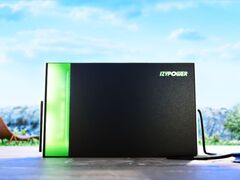
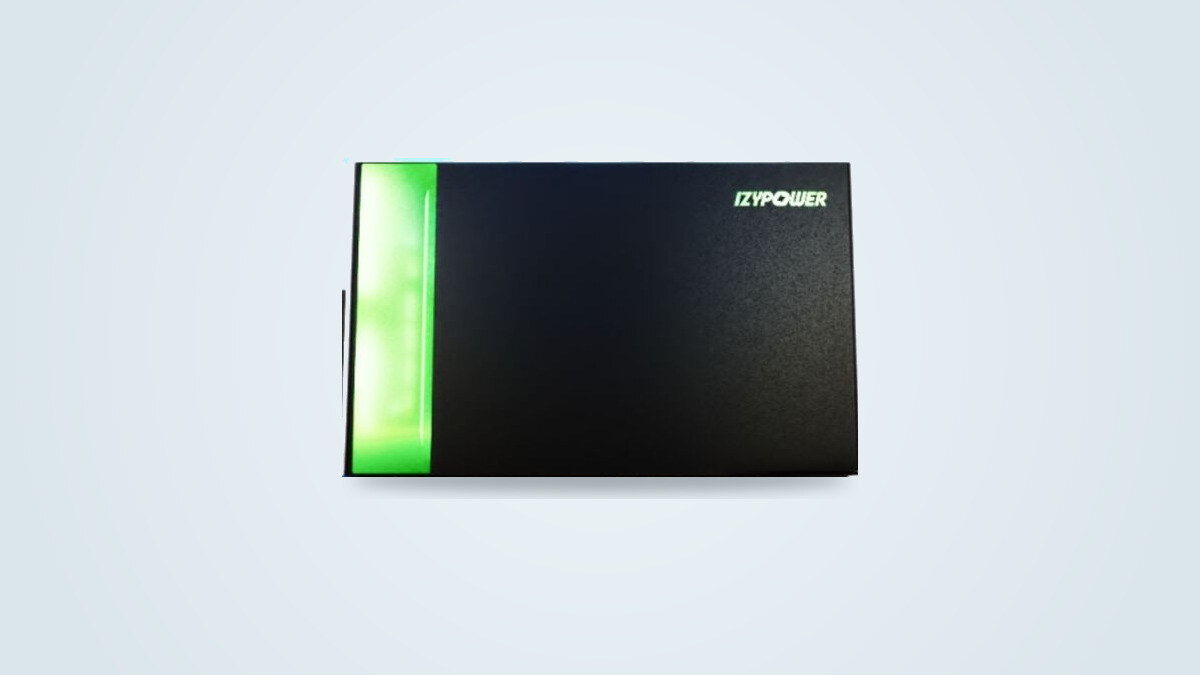
The Izypower Titan 2400 is a plug-and-play solar balcony battery, sold in Europe by the French retailer MaterFrance. The number in its name is a common source of confusion: it doesn't refer to storage capacity, but to the power of the integrated hybrid micro-inverter, the component that feeds solar energy back into the home circuit.
The battery itself uses LiFePO4 cells supplied by REPT, a recognised Tier 1 supplier in the sector, a useful distinction to keep in mind before comparing this product to other balcony batteries with a similar capacity figure but a far less powerful inverter.
A conversion efficiency claimed above 96%
Izypower states a conversion efficiency above 96% for the built-in micro-inverter. No independent measurement of that figure is available to date, a common situation for recent products in this segment.
On durability, the battery is rated for 8000 cycles at 70% depth of discharge, with a lifespan estimated at 20 years by the manufacturer. That cycle count and depth-of-discharge pairing sits toward the upper end of current LiFePO4 balcony batteries.
2400W advertised, 1000W actually available on the standalone unit
This is the point that deserves the closest reading. The built-in micro-inverter is indeed rated for 2400W, the figure behind the product's name and what sets it apart from rival balcony batteries generally capped at 800W. But that rating doesn't apply to the standalone unit: continuous output on the Titan 2400 alone is 1000W (1200W peak). Reaching the advertised 2400W requires expanding the system with additional battery units.
Even capped at 1000W, the base output still beats several direct rivals fitted with a separate 800W inverter, and the headroom once expanded is a real argument for a household planning to grow its solar setup over time.
4 independent MPPT inputs: a genuine advantage for mixed orientations
The Titan 2400 packs 4 independent MPPT inputs at 600W each, for 2400W of connectable solar power in total. Where most rivals make do with 2 inputs, often paired together, having 4 separate trackers means panels facing different directions (a roof slope and a balcony rail, say) can be wired in without the less exposed one dragging down the whole system's yield.
That's a concrete technical advantage for complex or irregular installations, a common case on rooftops or balconies where a perfect south-facing orientation isn't always available.
Expandable up to 12kWh, up to 36kWh in clustering mode
The base 2010Wh capacity extends up to 12kWh by adding up to five Link 2000 or Link 4000 modules. MaterFrance also offers a clustering mode combining up to three Titan units and fifteen Link batteries, for a stated total of 36kWh and 7200W combined.
| Configuration | Capacity | Combined power |
|---|---|---|
| Standalone unit | 2010Wh | 1000W continuous (1200W peak) |
| With Link modules (max 5) | 12kWh | Up to 2400W |
| Clustering (3 Titan + 15 Link) | 36kWh | 7200W |
Clustering mode clearly targets whole-home needs rather than a simple balcony setup, and remains a niche configuration at this budget. For the more common case, a balcony or small roof, expanding to 12kWh with one or two Link modules comfortably covers typical household consumption.
Controlled via IZYPOWER or ENERGY EASE: an app that still feels early
Monitoring runs through the IZYPOWER app, or through ENERGY EASE for setups fitted with DEYE micro-inverters, with real-time tracking of solar production, consumption, and charge level.
Several user reports describe solar production cutting off once the battery reaches 100% charge, rather than continuing to power appliances directly or feed the surplus back. That behaviour, common on plug-and-play batteries capped by simplified feed-in rules, is worth checking against your own setup. The same reports describe an app that still feels early, with room to improve on usability and notification reliability.
Plug-and-play installation, no certified electrician sign-off in France
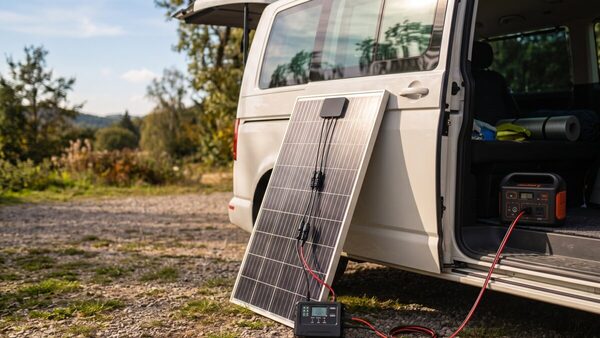
Setup comes down to a few steps: plug the mains cable into a dedicated socket, connect the panels' MC4 cables to the four MPPT inputs, and the app finds the unit within minutes. In France, where the product is primarily sold, this setup complies with the NFC 15-100 wiring standard and the CACSI declaration without requiring prior certified sign-off, like other plug-and-play balcony batteries on that market. Rules for grid-connected microgeneration differ in the UK, so check your own network operator's notification requirements before installing.
An IP65 rating and a -20 to 55 °C operating range allow year-round outdoor installation, on a balcony or in a utility room.
REPT cells and a 15-year warranty, the longest on this segment
The LiFePO4 cells come from REPT, a recognised Tier 1 supplier in the battery sector. Combined with the 8000 cycles at 70% depth of discharge already mentioned, this technical base supports the 20-year lifespan the manufacturer estimates.
The 15-year manufacturer warranty, covering both the battery and the micro-inverter, is the longest seen in this balcony-battery comparison, well ahead of the 10 years typical among rivals.
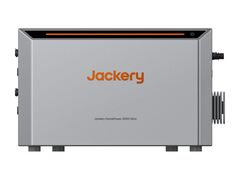
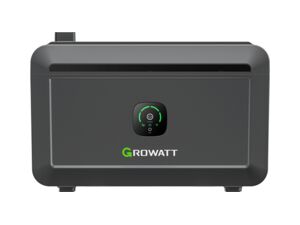
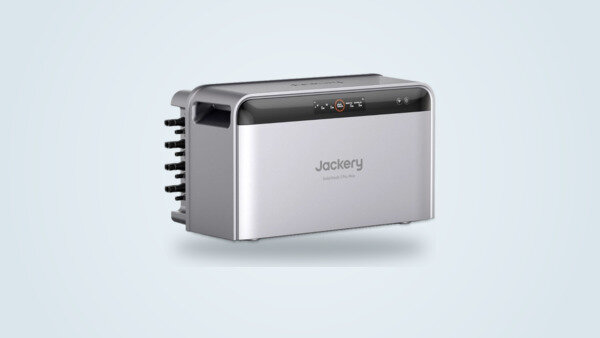
Against the Jackery HomePower 2000 Ultra, the Growatt NOAH 2000, and the EcoFlow Stream Ultra
Among plug-and-play balcony batteries with a capacity close to 2kWh, the Titan 2400 compares against three already-established rivals.
| Criterion | Titan 2400 | HomePower 2000 Ultra | NOAH 2000 | Stream Ultra |
|---|---|---|---|---|
| Capacity | 2010Wh | 2048Wh | 2048Wh | 1920Wh |
| Solar input | 2400W (4 MPPT) | 2000W (2 MPPT) | 1800W (2 MPPT) | 2000W (4 MPPT) |
| Micro-inverter | 2400W built-in | 800W built-in | Separate micro-inverter required | 800W built-in |
| Expandable to | 12kWh | 8kWh | 8192Wh | 11.52kWh |
| Warranty | 15 years | 10 years | 10 years | 10 years |
The Titan 2400 stands out with the most powerful micro-inverter in this comparison and the longest warranty. The HomePower 2000 Ultra remains cheaper to buy, and both the NOAH 2000 and the Stream Ultra benefit from wider international distribution than the Titan 2400, for now centred on France.
Who the Titan 2400 is for
The Titan 2400 suits a household that wants to push as much solar power as possible without stacking separate micro-inverters, and is comfortable with a brand still more niche than Jackery or EcoFlow. The 4 independent MPPT inputs also make it a sound choice for installations with mixed panel orientations.
For a first purchase focused above all on simplicity and a lower entry price, the HomePower 2000 Ultra remains a more accessible option. The Titan 2400 is sold through the French retailer MaterFrance; UK buyers should confirm shipping, warranty support, and total landed cost before ordering.