
What the 2400 W power rating really means
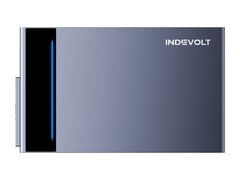
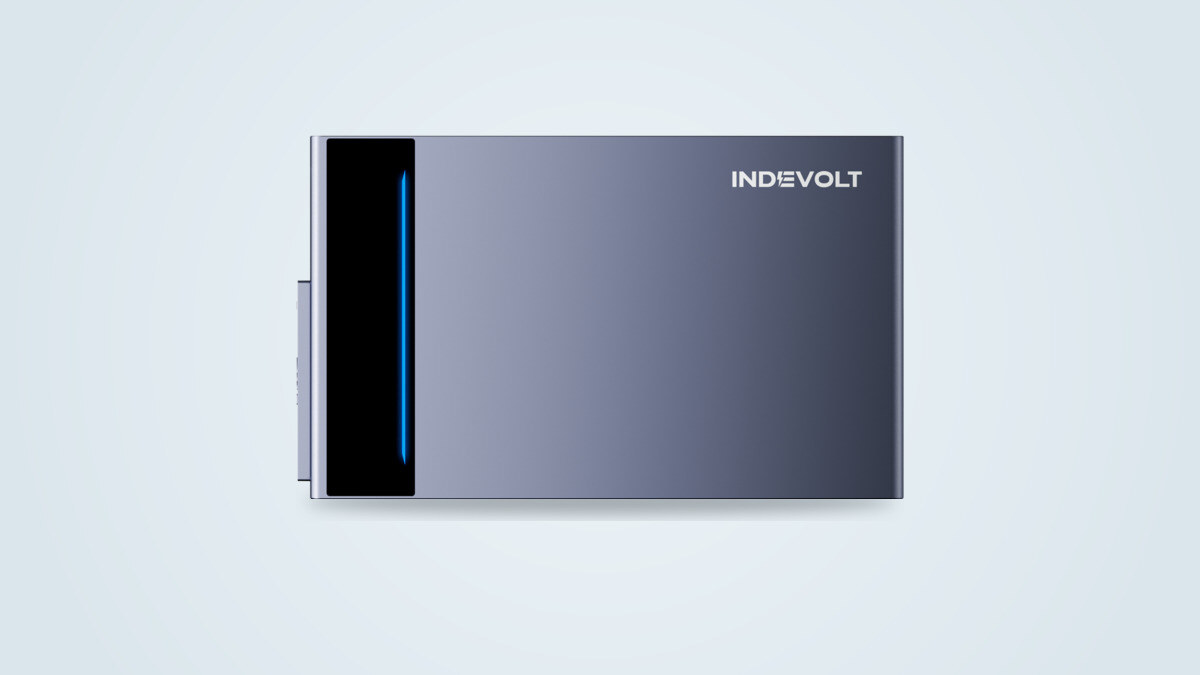
The SolidFlex 2000 is marketed everywhere as a 2400 W system: on the product page, on the manufacturer's site, even in the "Highlight" field of its own listing. That figure is real, but it describes the most heavily expanded configuration, not the standalone unit sold on its own for £799. The manufacturer's own spec sheet actually breaks this down into three tiers.
Without any expansion, backup output tops out at 1000 W and AC charging power at 896 W. Adding a single SFA1800 battery raises backup output to 2000 W and charging to 1792 W. It takes two SFA1800 units, or a single SFA3600, to finally reach the advertised 2400 W in both directions.
In practice, the standalone unit covers a fridge, a router and a few lights, but not a hob or a space heater. Anyone planning on 2400 W of backup power from day one needs to budget for at least one SFA module on top of the unit's own price.
The measured efficiency, and what remains unknown
The SolidFlex 2000's round-trip efficiency reaches 80.1% under a constant 800 W load. That is a respectable figure for this segment, but no second independent measurement confirms it to date, and behaviour below a few hundred watts (the most common case late in the day, as solar output tapers off) remains unknown.
Against the 1792 Wh rated capacity, this efficiency works out to an estimated 1435 Wh returned under the same conditions. Enclosure temperature peaked at 39.4 °C after a continuous 800 W discharge, pointing to effective passive cooling with no worrying temperature rise.
This places the SolidFlex 2000 in the upper-middle of the segment, without quite matching the best-performing references already reviewed on this site. The lack of a second independent source is an honest caveat to keep in mind, not a proven flaw.
Semi-solid cells: the promise, and what can be verified
The SolidFlex 2000 claims a first for this balcony-battery segment: semi-solid LiFePO4 cells, combining a solid and a liquid electrolyte. Indevolt promises better thermal stability and stronger sealing against moisture than a classic liquid LFP cell, targeting 8000 cycles to 70% remaining capacity and backing the base unit with a 10-year manufacturer warranty.
The battery management system automatically isolates any faulty cell by cutting it to 0 V, a design feature the manufacturer cites to prevent a fault from spreading. No documented safety incident has been found for this model to date, a genuine plus, though it needs some context: the product has only been on sale since November 2025, which mechanically limits how much track record exists.
Four built-in MPPT trackers: a genuine edge over direct rivals
This is the SolidFlex 2000's strongest argument, and it holds up under scrutiny: the standalone unit packs 4 MPPT trackers rated at 600 W each, for a total of 2400 W of solar input directly usable with no micro-inverter or third-party inverter to add. That figure applies to the standalone unit, not to an already-expanded system: a distinction the spec sheet does not always make clear enough for this type of product, and one worth checking before any similar purchase.
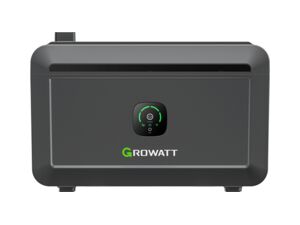
This genuinely sets the SolidFlex 2000 apart from two direct rivals already reviewed on this site: the Growatt NOAH 2000, which needs a separate micro-inverter to accept panels, and the Zendure SolarFlow 3000 Mix AC+, which also depends on a third-party inverter. For a household installing new panels without keeping an existing inverter, that is one less device to buy and wire in.
For anyone who already owns a solar inverter, the SolidFlex 2000 remains compatible via AC coupling, a flexibility that avoids having to choose between the two approaches at installation time. In the three-group expanded configuration, total solar input climbs to 7200 W, a figure that logically assumes buying all three complete units.
Expansion: the gap between the marketing claim and the manufacturer's own UK site
This is the most serious reservation in this review. Indevolt advertises an expansion ceiling of 22 kWh per group and up to 66 kWh by stacking three groups. But the manufacturer's own UK site tells a different story for this same model: it lists a noticeably lower figure, 10.8 kWh per group (the base unit plus a maximum of five SFA1800 batteries) and 32.4 kWh for three groups, an internal contradiction with the 22 kWh Indevolt highlights elsewhere in its own communication.
This gap is not a rounding error for anyone planning an ambitious expansion project: the difference between 22 and 10.8 kWh per group goes well beyond ordinary marketing rounding. Before choosing this product for its expansion promise, it is worth planning around the lower figure the manufacturer's own UK site confirms rather than the highest figure in its own communication.
| Module | Capacity | Observed price | Advertised cycles |
|---|---|---|---|
| SFA1800 | 1792 Wh | 499 € | 8,000 |
| SFA3600 | 3584 Wh | 849 € | 10,000 |
Expansion cost also weighs into the decision: on Indevolt's EU store, a single SFA3600 lists at 849 €, more than the base unit's own price, just to double native capacity; UK-specific pricing for the SFA modules was not published on the manufacturer's UK site at the time of writing. A 499 € SFA1800 to double backup power stays more affordable in relative terms, but the budget climbs fast once maximum capacity or power is the goal.
The app, tariff control and the included meter
The Indevolt app offers a fairly complete range of modes for this segment: normal operation, time-based scheduling, self-consumption priority, zero-export with or without backup bypass, smart-plug control, and dynamic electricity tariff tracking. A communicating meter branded Indevolt ships in the box, which means zero-export can be activated right after installation with no mandatory extra purchase, unlike some competitors where that accessory is left for the buyer to source separately.
For fully local control with no dependency on Indevolt's cloud, the system also supports a separately sold Shelly Pro 3EM meter (around £115 in the UK, based on comparison-site listings). That is not a required purchase, but an option for anyone who wants to be completely independent of a network or third-party service. A Home Assistant integration is also available for advanced users.
The interface includes real-time flow graphs, and support runs through an official Discord server. Two genuine points of friction stand out even so: an initial WiFi pairing process that sometimes needed several attempts, and a state-of-charge drift between multiple stacked units in multi-battery setups, which calls for a full recalibration charge roughly every 15 days to stay accurate.
The backup switchover: what it actually covers
The manufacturer's spec sheet states that the off-grid output switches over in under 10 milliseconds during an outage, fast enough that a computer or a router will not reboot.
That switchover feeds a dedicated backup output, limited to the power of whichever configuration is installed (1000 to 2400 W per the previous section), not the whole house circuit: appliances that need protecting must be plugged directly into that output, or into a circuit the installer connects to it. A prolonged outage is limited above all by the battery capacity available, not by how fast the switchover itself happens.
Installation rules: a genuine patchwork, and a fresh complication in the UK
The SolidFlex 2000 is aimed first and foremost at the European balcony-storage market, where injection rules vary noticeably from country to country. The table below summarises the picture at the time of publication: it can change, and some points (particularly leasehold or shared-building rules) remain a matter of local application.
| Market | Self-install threshold | Main process |
|---|---|---|
| United Kingdom | 800 W, but for solar-only systems | As of 27 August 2026, a plug-in solar microgenerator became legal below this threshold under new legislation (SI 2026/848). Crucially, that exemption explicitly excludes any system designed to store energy: a battery-equipped unit like the SolidFlex 2000 still needs the full G98 notification process through a certified MCS installer, regardless of its 2400 W AC rating |
| Germany | 800 W inverter output (VDE-AR-N 4105) | Simplified notification to the local grid operator plus registration on the Marktstammdatenregister; above that, installation by a qualified electrician |
| France | 800 W inverter output | A free, online no-export self-consumption agreement (CACSI) with grid operator Enedis, required even without exporting surplus; no Consuel compliance certificate below 3 kVA |
| Spain | 800 W, a regime modelled on Germany's since 2024 | Exemption from the standard self-consumption registration (RD 244/2019) below this threshold; permission from the residents' association is needed if the facade is shared property |
| Italy | 800 W for the solar side | Simplified notification to the local distributor (technical rule CEI 0-21 V2, ARERA 315/2020 threshold); a kit that also bundles a battery, like this one, remains a commercially less established category in the country |
This is the single most important thing for a UK buyer to know before treating this product as truly plug and play: unlike the mainland European rules above, the UK's newly simplified route is solar-only. A battery-equipped balcony system needs a certified installer and the standard G98 paperwork regardless of how it is marketed, and that adds real cost and lead time that a French or German buyer would not face for the same unit.
Build quality, a young brand, and practical limitations
The enclosure appears sturdy, with generously rated cabling and adjustable feet for levelling. Manufacturer support is reachable through an official Discord server, with software fixes rolled out there after a problem is reported.
Two genuine reservations temper that picture. First, Indevolt remains a young brand in this segment: the SolidFlex 2000 has only been on sale since November 2025, leaving little track record on long-term reliability compared with manufacturers established for years in balcony storage. Second, a few installation details could be better: the MC4 cables needed to connect panels are not included in the box, and the initial WiFi pairing process sometimes took more than one attempt.
No product recall or documented safety incident has been found for this model to date. That is a genuinely positive result, taken for what it is: the absence of a negative signal after a serious search, not a guarantee of long-term reliability for a still-recent product.
Who the SolidFlex 2000 suits, and who it does not
The SolidFlex 2000 suits a household that wants to install new solar panels without buying a separate inverter, is happy to grow capacity gradually rather than aiming straight for the highest figure in Indevolt's own marketing, and lives in a market where the 800 W self-install regime is already well established, such as France, Germany or Spain.
It suits less well anyone expecting 2400 W or a large backup capacity from the first purchase without budgeting for an extra module, anyone looking for a brand with a long, documented reliability record, or anyone basing their decision on the advertised 22 kWh-per-group ceiling without accounting for the noticeably lower figure the manufacturer's own UK site confirms. In the UK specifically, it also suits less well anyone expecting a genuinely plug-and-play install: the battery exclusion from the new SI 2026/848 exemption means a certified installer and full G98 paperwork are still required here.
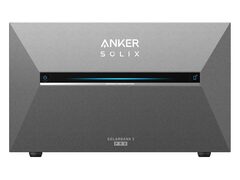
Against the cheaper Growatt NOAH 2000, which lacks built-in MPPT, the SolidFlex 2000 justifies its position for anyone who values direct solar input. Against more established systems like the Anker Solix Solarbank 3 E2700 Pro, it offers a newer cell chemistry and an included meter, but with less field history and a communication gap on expandability that is worth knowing about before buying.