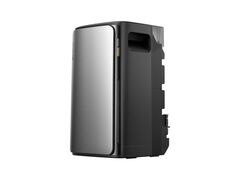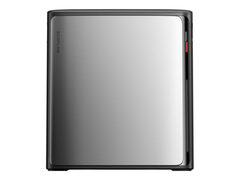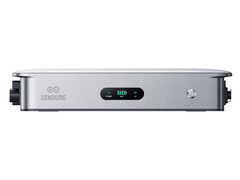

4-MPPT solar input, the central argument
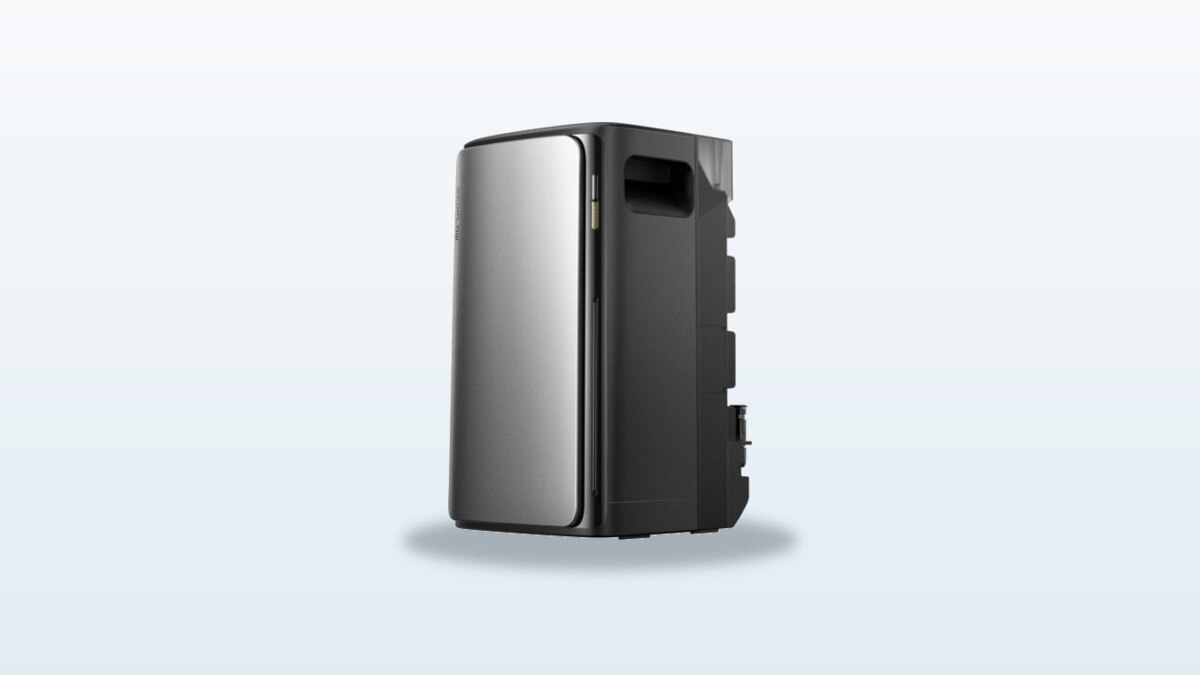
With 4 independent MPPT trackers and up to 2000 W of solar input, the Stream Ultra has the widest configuration in the entire STREAM range: the Pro is limited to 3 MPPT trackers and 1500 W, the Max to 2 MPPT trackers and 1000 W. This difference matters in practice as soon as the panels aren't all facing the same way (east and west, roof and balcony combined), a common scenario on urban balcony roofs where a single MPPT tracker heavily penalises the less-exposed panel.
The system accepts more than 99 % of solar panels on the market, as well as third-party micro-inverters already installed, which makes it easier to integrate into an existing setup without replacing everything. A technology dedicated to low light keeps capturing power under overcast skies.
Discharging to the grid with a full battery, a conscious design choice
One behavior comes up repeatedly in user feedback: once the battery is charged to its cap, the surplus produced by the panels goes straight to the home grid, including when a charge cap below 100 % has been set in the app, down to 50 % in one specific case. The practical result is that the Stream Ultra keeps feeding energy back rather than storing it for later use, contrary to what you'd intuitively expect from a system marketed as a self-consumption tool.
The manufacturer describes this behavior as normal given the system's current design and states that it has passed on a request for change to its development team, with no commitment to a fix to date. This is therefore a deliberate choice, not an isolated bug, though nothing indicates it's a final position either.
The app's AI assistant, a subscription with a turbulent pricing history
The app offers an AI-driven assistant that analyzes the household's consumption and suggests settings. This feature is billed by subscription, at a rate that has gone through several changes: after an initial tier at 9.90 € a month (or 69.90 € a year), the rate came back down to 3.90 € a month or 39.90 € a year as of August 13, 2025. A rise to 99.90 € a year had been announced in the meantime, then dropped after negative reactions.
The rate currently in effect remains moderate given the price of the system, but its pricing history is worth knowing before buying: the app's most advanced optimisation features aren't acquired once and for all with the unit.
Electromagnetic interference: a real weak point
The Stream Ultra causes electromagnetic interference strong enough to make a television flicker, a speaker buzz, or a WiFi connection drop near the device. Other comparable systems on the market share this flaw; one model in the segment avoids it, the Anker Solix Solarbank 3 E2700 Pro already featured in our comparison below.
What "6000 cycles" actually means for this battery
The spec sheet states 6000 charge and discharge cycles. This figure is defined down to 70 % of retained capacity, the threshold the manufacturer itself sets to define the stated end of life of the LiFePO4 cell, and not as a limit on the battery's daily use: day to day, the full capacity remains available, within the limits of the reserve the user sets in the app.
A ten-year contractual warranty comes with this figure, one to distinguish from the estimated lifespan in number of cycles: the two rarely line up exactly, with the warranty generally being the more conservative of the two figures.
Installation and compliance in France
The Stream Ultra is installed without an electrician: the panels connect directly to the MPPT inputs, and the built-in hybrid inverter handles conversion and feed-in. IP65-rated and fitted with a self-heating battery that activates below 5 °C, it officially operates from -20 to 55 °C, which allows year-round outdoor installation, on a balcony or terrace.
Filing a declaration with Enedis before commissioning remains necessary regardless of the installation's power output. A Consuel certificate additionally becomes mandatory if the connection is made through a dedicated circuit rather than a simple outlet: worth checking with Enedis and a local Consuel-approved inspector before buying, as the rules may change.
Expandable up to 11.52 kWh, a medium-term argument
Storage scales from 1.92 to 11.52 kWh by combining several STREAM units together, and solar input can climb to 12 kW with 24 combined MPPT trackers across six linked units. This expandability changes things for anyone starting small: the first unit covers an occasional need or a tight budget, without ruling out completing the setup in later years rather than buying a whole new system.
Against the Anker Solix Solarbank 3 E2700 Pro
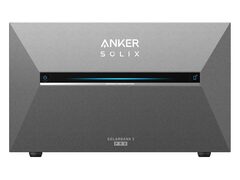
Against the Anker Solix Solarbank 3 E2700 Pro, already in our catalogue, the Stream Ultra shows a lower base capacity (1920 Wh versus 2688 Wh) but a clearly higher solar input (2000 W across 4 MPPT trackers versus 1200 W) and a hybrid inverter that combines grid feed-in and direct output through its sockets, where the Solarbank 3 Pro is limited to grid feed-in through a micro-inverter. The Stream Ultra's entry price also remains noticeably lower.
On one specific point, though, mentioned above, this balance of power reverses: the Solarbank 3 Pro avoids the electromagnetic interference seen on the Stream Ultra. For anyone looking for the largest solar capture capacity at the best price, the Stream Ultra remains a relevant choice; for anyone prioritizing the absence of electromagnetic interference, the Solarbank 3 Pro is the better-placed of the two alternatives.
The actual price
The official listed price is 1299 €, but the price actually recorded comes out at 799 €, or roughly 38 % less. This price puts the Stream Ultra below the Solarbank 3 E2700 Pro for a higher solar input, at the cost of the reservations detailed above.