
3840 Wh claimed, about 3072 Wh actually recoverable
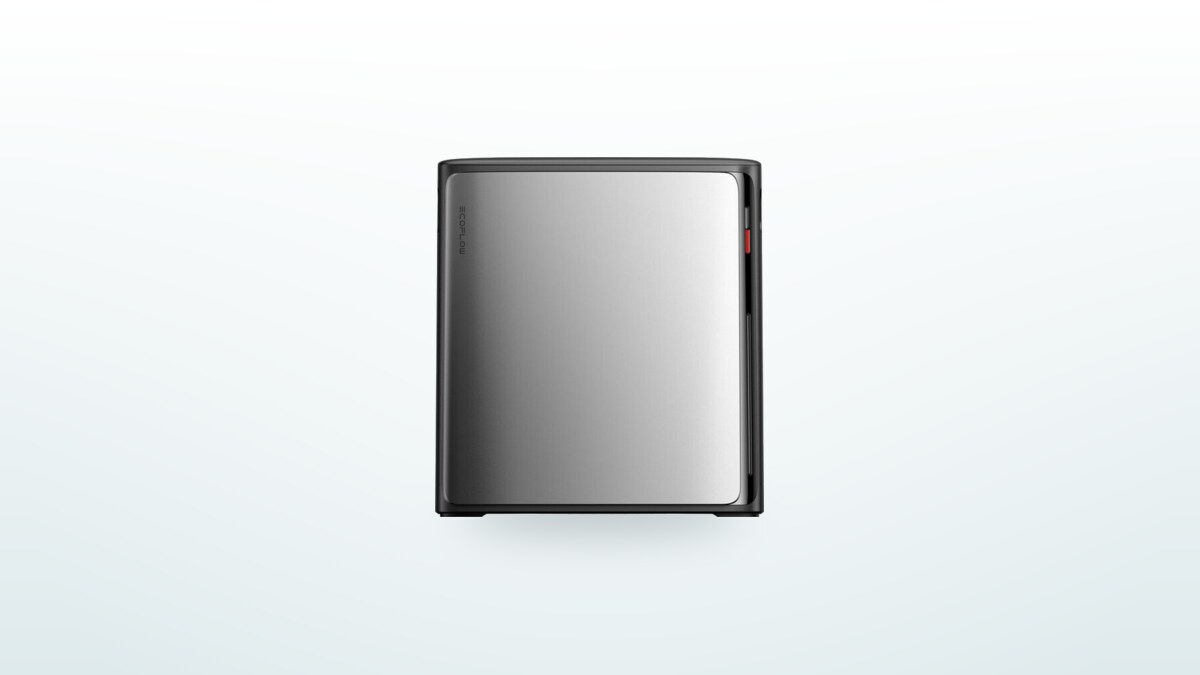
The LiFePO4 battery in the EcoFlow Stream Ultra X stores 3840 Wh in total. Round-trip efficiency, over a full cycle of charging at 1200 W and discharging at 800 W in zero-export mode, sits around 80 %, or about 3072 Wh actually recoverable.
One point deserves attention, less dramatic than an efficiency figure but just as important in practice: zero-export precision is particularly well tuned, with residual import and export of only around 0.03 to 0.035 kWh. For a setup aiming to consume its own production without ever selling to or buying from the grid, this parameter determines whether that goal is actually met, more than the headline efficiency figure.
While charging at 1200 W, surface temperature at the back of the unit reaches around 43 °C, a normal value for this type of device with no impact on the service life stated by the manufacturer.
This 80 % figure differs from the efficiency announced by the manufacturer, which covers conversion segments taken separately rather than a full round trip. The same logic applies here as for other systems of this type: charging the battery, then discharging it, takes its own share of losses at each step, and they add up over a full cycle.
2300 W on the box, 1200 W for a single unit: read the fine print
The 2300 W figure is highlighted everywhere the product is presented. It is accurate, but incomplete on a point that concretely changes what the unit can do on its own.
A single unit delivers 1200 W on its two direct outlets. The 2300 W figure is only reached by coupling two Stream units in parallel with a dedicated cable, a setup that costs around 2400 € for the pair at current prices, not the cost of a single purchase. Export to the home grid, meanwhile, stays capped at 800 W for a single unit, the usual limit under the simplified regime that applies to this type of kit.
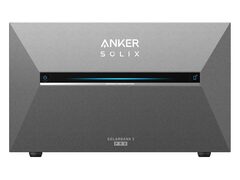
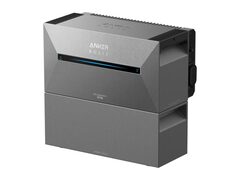
This is not a quirk unique to this brand: the same confusion between the hardware power of an expanded system and the power of a single unit exists on the spec sheet of its main direct competitor, the Anker Solix Solarbank 3 E2700 Pro, where the headline 1200 W figure actually corresponds to a back-up mode, with the real default value at 800 W. In this still-young market segment, power figures shown on the box are always worth checking against the fine print of the conditions.
Seven Stream variants: getting the right model
The EcoFlow Stream lineup has seven models that share the same prefix, with differences that can be major from one letter or word to the next.
| Model | Capacity | MPPT | Distinguishing feature |
|---|---|---|---|
| STREAM (microinverter) | None | 2 | No storage, direct grid export |
| STREAM Max | 1.92 kWh | 2 | No off-grid AC discharge |
| STREAM AC | 1.92 kWh | 0 | Grid-connected only |
| STREAM AC Pro | 1.92 kWh | 0 | Expansion battery, off-grid discharge possible |
| STREAM Pro | 1.92 kWh | 3 | 1500 W solar input |
| STREAM Ultra | 1.92 kWh | 4 | 23.1 kg, not to be confused with the Ultra X |
| STREAM Ultra X | 3.84 kWh | 4 | The subject of this review |
The most concrete trap concerns the STREAM Ultra, without the "X": a distinct product, with half the capacity of the one covered in this review, but an almost identical name. The two units nonetheless perform differently, which creates a real risk of confusing them when buying.
Another pair is worth telling apart: the STREAM AC and the STREAM AC Pro, two batteries with no MPPT of their own that connect to the rest of the system rather than directly to panels. Only the Pro version allows off-grid discharge; the plain AC version only works connected directly to the mains, a difference that concretely changes what is possible during a power cut.
A second mix-up, rarer but real, pits "Stream" against "PowerStream", an older lineup with a completely different architecture: PowerStream attaches to a portable power station you already own, while Stream is a complete standalone system. The similar name carries a real risk of confusion between two architectures that otherwise have nothing in common.
A new generation, the Stream 5000, was announced in mid-2026 with a markedly higher unit capacity. It had not yet shipped at the time of writing: the Stream Ultra X remains, for now, the top of the range that is actually available.
Smart control you rent, not one you buy
The AI mode in the EcoFlow Stream Ultra X analyses dynamic electricity tariffs and weather forecasts to automatically decide when to charge and when to release power, with up to 29 % in additional annual savings claimed by the manufacturer.
One point is worth knowing before buying: this function requires a subscription, stated in black and white in the official documentation, without its price being announced at the time the unit is purchased. The amount only becomes clear once the app is installed. That is a notable difference from a direct competitor covered on this site, the Anker Solix Solarbank 3 E2700 Pro, whose functional equivalent relies on an accessory bought once rather than a recurring subscription.
A smart metre, sold separately, is presented as recommended rather than strictly required to get the best results. On the dependency on an internet connection, the official documentation stays cautious: it states that Wi-Fi is necessary to fully use the features, without ever promising fully autonomous offline operation. In practice, without an active Wi-Fi connection, communication with the smart metre and automatic control stop working.
As with the whole balcony solar storage market, no independent, rigorous measurement of the real benefit this smart control brings has been found: the 29 % figure remains a manufacturer's claim, to be treated as such rather than as a verified result.
On compatibility, though, the device opens up more broadly than some competitors: it works with the Shelly, Matter and Tibber protocols, which allows it to connect to metres or tariff services already installed at home, without necessarily having to go through the brand's own smart metre.
3.84 kWh as standard, up to 23 kWh in theory
With 3.84 kWh, the EcoFlow Stream Ultra X already starts with the most generous native capacity in its category at this price point, comfortably enough to cover an evening of typical household consumption.
Expansion up to 23 kWh, as claimed by the manufacturer, deserves a clarification: it means putting six complete Stream Ultra X units in parallel, each with its own battery, its own MPPT controllers and its own inverter, not progressively adding cheaper expansion batteries to a single base unit. Combining it with the cheaper Stream AC Pro expansion batteries remains possible, but that then caps out considerably lower.
The top of the advertised range therefore corresponds to buying six units at full price, a budget worth keeping in perspective before using that figure as a comparison point: at current prices, that represents several thousand euros, not counting the panels, a long way from the image of an affordable, progressive expansion that the 23 kWh figure can suggest on its own.
During a power cut, nothing automatic on the home circuit
If the grid goes down, the system immediately stops exporting power, for safety and compliance reasons. To keep using the stored energy, devices need to be plugged directly into the Stream Ultra X's AC outlets: no automatic transfer switch relays power to the home's main electrical circuit.
On the direct outlets, the switch-over to battery power takes up to three seconds depending on conditions. The official documentation states this explicitly: it is not a back-up inverter in the strict sense, and no equipment requiring a strictly uninterrupted power supply should be plugged into it.
In addition, the outlets switch off automatically after around two hours of inactivity, and the whole unit after thirty minutes, to preserve the battery.
Export disabled by default, but a grey area remains
By default, the Stream Ultra X exports nothing to the grid: an anti-export protection switch, active straight out of the box, has to be deliberately turned off in the app to allow the 800 W of export. That is a reassuring setting for a first installation.
On paperwork, the manufacturer's official documentation is specific for installations of 3 kWp or less: no authorisation is required, a no-export self-consumption agreement (CACSI) with Enedis is enough. Above 3 kWp, a grid connection and a Consuel certificate become mandatory.
Under 30 dB, still limited track record over time
Noise stays under 30 dB thanks to fanless natural convection cooling, a genuine strength for a balcony or facade installation close to windows or outdoor living spaces.
Wi-Fi connectivity, limited to the 2.4 GHz band, can experience occasional disconnections and app crashes, a point worth watching without amounting to a confirmed systemic flaw.
As the product has been on the market since August 2025, the track record stands at around one year at the time of writing: no report of a recurring fault has been found beyond isolated cases linked to installation mistakes rather than a confirmed hardware defect. The manufacturer's warranty, confirmed in the official documentation, runs for 10 years, to be distinguished from an estimated 15-year service life, which does not carry the same contractual commitment.
The unit itself is designed for permanent outdoor installation: IP65 certification against rain and dust, claimed operation from -20 to 55 °C, though with a manufacturer's caveat about reduced performance above 35 °C, a figure worth keeping in mind for a south-facing installation in summer.
Up against the Anker Solix Solarbank 3 E2700 Pro, at the same price
At the time of writing, the EcoFlow Stream Ultra X and the Anker Solix Solarbank 3 E2700 Pro are listed at exactly the same price, which makes a direct comparison particularly useful.
| Criterion | Stream Ultra X | Solarbank 3 E2700 Pro |
|---|---|---|
| Base capacity | 3840 Wh | 2688 Wh |
| Solar input, single unit | 2000 W | 1800 W |
| Direct output, single unit | 1200 W | 1200 W |
| Default grid export | 800 W | 800 W |
| Smart control | Subscription required | Accessory bought once |
| Cycles / warranty | 6000 / 10 years | 6000 / 10 years |
| Price | ≈ 1199 € | ≈ 1199 € |
EcoFlow takes the lead on base capacity and single-unit solar input, two criteria that matter from the first purchase, with no expansion needed. Anker keeps an edge on smart control, whose cost stops after buying one accessory, with no recurring subscription to keep track of. Zendure, with its modular SolarFlow ecosystem and its own AI, remains a third path for anyone who prefers building a system piece by piece rather than buying one fully integrated unit.
At an identical budget, the EcoFlow Stream Ultra X is the more generous option on capacity and native solar input. The Anker Solix Solarbank 3 E2700 Pro remains preferable for anyone who wants to avoid any recurring subscription tied to smart control.
Who it suits, and who it does not
It suits anyone who wants the most integrated system on the market, with no separate hub to install, and who already has balcony or facade panels capable of feeding its 2000 W of native solar input.
It does not suit anyone who refuses any recurring subscription to use automated control, nor anyone counting on the 2300 W shown on the product sheet as power available from the first unit installed.