
1800 W on gasoline, 1600 W on propane: power calibrated for recharging, not running a house
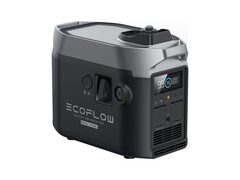
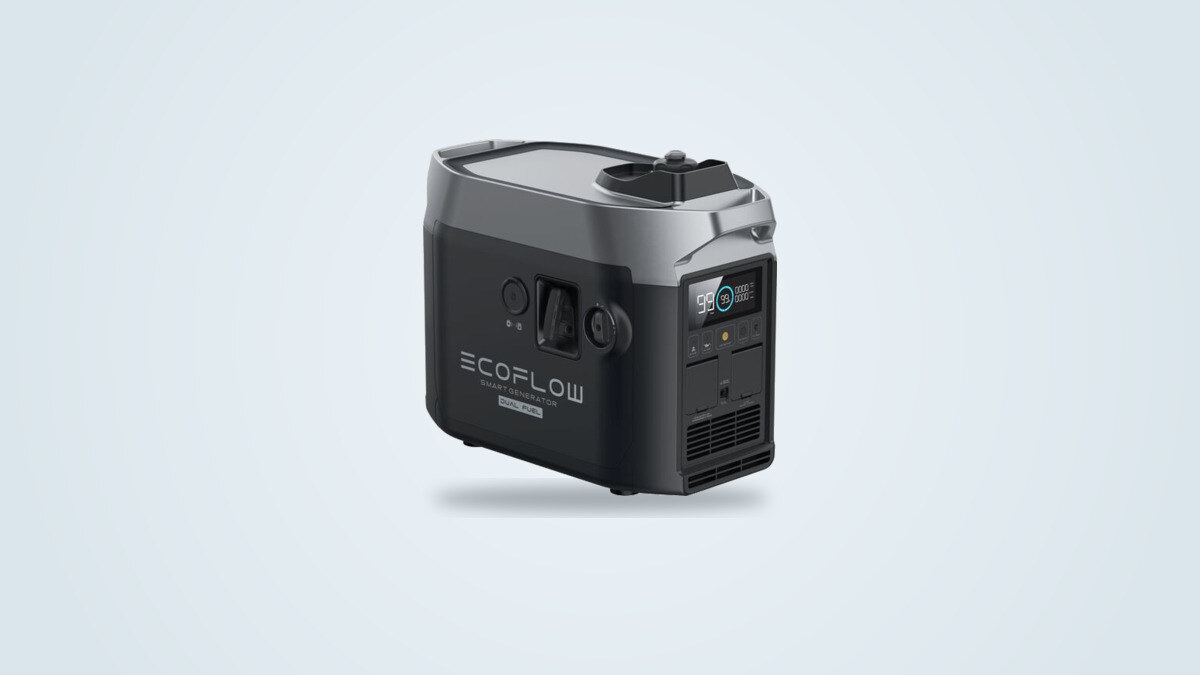
EcoFlow's dual fuel generator is an inverter generator built around a genuine 4-stroke, single-cylinder, 79.7 cc combustion engine (model R80-i), forced-air cooled with an overhead valve. This has nothing to do with a solar accessory or one of the brand's power inverters: combustion, whether on gasoline or propane, is what actually produces the electricity here, exactly as on a classic generator.
Rated power reaches 1800 W on gasoline (1900 W peak) and 1600 W on propane (1700 W peak), at 230 V and 50 Hz, for a rated current of 7.8 A. The gap between rated and peak power is only about 6% on both fuels, the tightest margin of the whole generator family already reviewed on this site (14 to 19% on the conventional gasoline units): the stated power is held with very little headline padding.
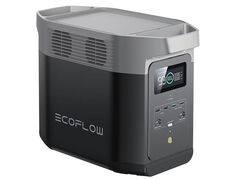
That output stays modest next to the conventional gasoline units in the same family (2100 to 2600 W), and even more so against the Pramac P7500i, a professional-grade inverter generator rated at 6500 W. The manufacturer's own documentation owns this choice: this generator is calibrated to recharge a Delta power station while running a few small appliances at the same time, not to run power tools or several heavy loads directly.
5.4 kWh on a gasoline tank, up to 20 kWh on propane: two very different runtimes
The gasoline tank is small: just 4 liters, for an available energy EcoFlow states at about 5.4 kWh, and a continuous runtime at full load of 3.5 hours according to the manufacturer's official documentation. That is a noticeably smaller tank than the conventional gasoline units already reviewed here (15 liters), closer to the compact format of the SDMO Perform 3000 (4.1 liters).
The real shift comes from the second fuel. Connected to a standard 20 lb propane tank (about 9 kg), the generator climbs to 20 kWh of available energy, for a stated runtime of about 12.5 hours, consistent with its 1600 W rated power on that fuel. No other generator already reviewed on this site offers that option.
Running on gasoline stays louder than on propane, a combustion difference specific to this kind of dual fuel engine (see next section), and EcoFlow states a fuel saving of up to 40% when the generator is paired with a compatible Delta station: the engine then starts and stops automatically based on the battery's charge level, instead of running continuously.
56 to 67 dB(A) at 7 meters: louder than expected for an inverter unit
At 7 meters and full load, the noise level sits between 56 and 67 dB(A) according to the manufacturer's official documentation, with a higher, isolated figure (up to 93 dB) also stated right next to the source. Running on gasoline is louder than on propane, a combustion difference specific to this type of engine.
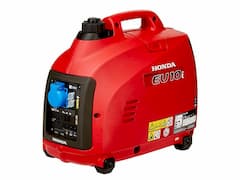
Against the two inverter generators already reviewed on this site, the gap is real. The Honda EU10i drops to 52 dB(A) at 7 meters under reduced load and sits around 58 dB(A) near rated load: the low end of the EcoFlow's range matches that figure, but its high end (67 dB(A) on gasoline, full load) clearly exceeds it. The Konner & Sohnen KS3000, a conventional AVR-regulated gasoline unit rather than an inverter, states 68 dB(A) at the same 7-meter distance, very close to the EcoFlow's high end despite a higher rated power (2600 W).
Against the conventional, open-frame gasoline units in this family, which instead state a guaranteed sound power of 96 dB(A) (a different, standardized metric, not directly comparable to a sound pressure reading at a fixed distance), a direct comparison on this one figure is not possible. Noise level remains, together with availability, the main reservation in this review of an otherwise well thought-out smart generator.
A genuine inverter, but no disclosed THD and occasional restarts to watch for
Technically, this is a genuine inverter generator, not a simple AVR regulator like the conventional units in this family: the electronics rebuild an AC waveform from the DC current produced by the alternator, which in principle makes it cleaner and better suited to sensitive electronics. EcoFlow does not disclose any total harmonic distortion (THD) figure for this model, a spec other manufacturers publish for their inverter units.
The generator carries a built-in rechargeable battery that enables an effortless electric start, backed up by a manual pull-cord handle. A spare battery and its connection cable ship in the box on top of the built-in one: a genuine safety margin for anyone who wants a backup to the backup.
The real differentiator: start and stop controlled by the Delta station
This is where this generator truly sets itself apart from every direct competitor already reviewed on this site: paired with a compatible EcoFlow Delta station, it starts and stops on its own based on the station's battery level, with no intervention needed. No other generator reviewed here so far, including the two inverter units, the Honda EU10i and the Pramac P7500i, offers this integration.
Four starting methods are available in total: the manual pull-cord as a backup, an electric start button, remote start from the EcoFlow app, and this automatic mode tied to the station. An LCD screen shows the remaining fuel percentage, total and remaining runtime, Wi-Fi status and the current operating mode in real time. ECO mode, on by default, adjusts engine speed to match actual power demand to save fuel and cut noise; it can be turned off from the app if immediate power headroom matters more.
This intelligence has a flip side already covered above: a setup designed to be unattended still needs to be checked from time to time, since the promise of a fully hands-off operation is not absolute.
29.3 kg, IP23M: build quality and safety
The generator weighs 29.3 kg empty for dimensions of 597 x 296 x 475 mm, with no wheels but with carrying handles. That makes it lighter than the conventional gasoline units already reviewed on this site (36.8 to 45 kg), for a unit that still packs a screen, Wi-Fi connectivity and a spare starting battery.
On the safety side, EcoFlow states five automatic protections: carbon monoxide detection with automatic engine shutdown and a flashing warning light for five minutes (restart stays locked during that window), low-oil shutdown, AC overload protection, DC overload protection, and overheating protection for the engine or the internal battery. The unit's regulatory nameplate states an IP23M ingress protection rating, a spec rarely disclosed this precisely on this family of products.
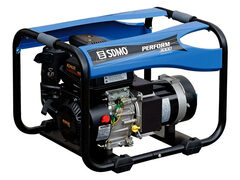
EcoFlow is still a fairly new name in combustion generators, better known for its power stations and inverters: this model has been on the market since 2021 according to its regulatory nameplate, a decent track record but a shorter one than long-established engine makers like Honda or Kohler, the latter already covered on this site via the SDMO Perform 3000.
Against the direct competition already reviewed on this site
At around 999 EUR in France, excluding the propane tank and its regulator, EcoFlow's dual fuel generator does not compare feature-for-feature with the conventional gasoline units already reviewed on this site, but the table below lays out its real trade-offs.
| Criterion | EcoFlow dual fuel | Honda EU10i | Konner & Sohnen KS3000 | SDMO Perform 3000 |
|---|---|---|---|---|
| Fuel | Gasoline + propane | Gasoline | Gasoline | Gasoline |
| Technology | Inverter | Inverter | Conventional (AVR) | Conventional (AVR) |
| Rated power | 1800 W (1600 W propane) | 900 W | 2600 W | 2400 W |
| Noise at 7 m | 56 to 67 dB(A), full load | 52 dB(A) reduced load, 58 dB(A) near rated load | 68 dB(A) | Not published at 7 m (96 dB(A) guaranteed sound power) |
| Empty weight | 29.3 kg | 13 kg | 41.5 kg | 45 kg |
| Start / control | Electric, manual, app, automatic (Delta station) | Manual (pull-cord) | Manual (pull-cord) | Manual (pull-cord) |
| Price observed | 999 EUR | 1077 EUR | 499 EUR | ≈ 645 EUR |
| best-batteries.com rating | 3.8 | 4.1 | 4.0 | 3.8 |
Against the Honda EU10i, the family's benchmark for quiet running, the EcoFlow loses on noise but gains substantially on propane runtime and automation, two areas where the Honda has nothing to offer. Against the SDMO Perform 3000, with its professional-grade Kohler engine and three-year warranty, the gap plays out on smart features and dual fuel, entirely absent on the SDMO side, against build quality perceived as less refined on the pure-engine side for EcoFlow, still a newer name in this segment. Against the Konner & Sohnen KS3000, which takes back the lead on price, rated power and a comparable noise level, the EcoFlow only comes out ahead on propane runtime and remote control.
Uneven availability
This generator currently shows as out of stock on EcoFlow's official French store, with a restock notification form already active and marketing copy urging shoppers to order before the next shortage, which suggests irregular supply cycles rather than a permanent discontinuation. The model remains listed and sold on other markets.
A point to check before buying, then, rather than a disqualifying red flag: this generator's availability appears to fluctuate more than that of the conventional gasoline units compared here, which are generally kept in stock by their retailers.
Who it suits, and who it does not
It suits anyone who already owns an EcoFlow Delta station and wants to extend its runtime without constant supervision, anyone who values the flexibility of dual fuel for occasional gasoline use and a multi-day propane-backed backup, and anyone willing to pay a premium for that built-in intelligence.
It does not suit anyone after a standalone generator able to run heavy appliances directly (1800 W rated stays modest), anyone who puts quiet operation first (the Honda EU10i is the better fit on that specific point), anyone without a Delta station to unlock the automation, or anyone who needs to buy right away: availability remains uncertain at the time of writing.