
Getting the reference right: several Zolo 20,000 models coexist
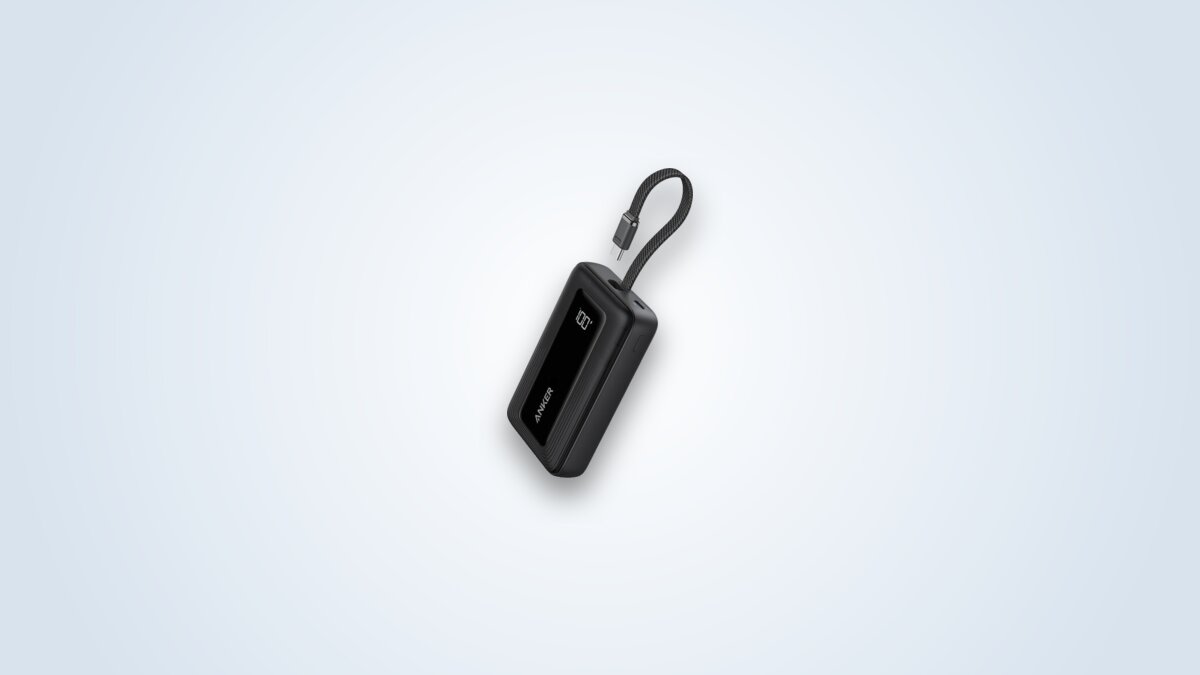
The Anker Zolo lineup includes several variants with similar names but genuinely different specifications and product histories. This review covers precisely the commercial reference A1689: 20,000mAh, a single built-in USB-C cable, one additional USB-C port, one USB-A port, and 30W maximum output. This is the model described on the product page linked to this review.
Do not confuse it with: an older regional version limited to 22.5W output; a newer version, sold since 2025 as an "upgraded" model, which moves up to 45W and builds in two USB-C cables instead of one, at a noticeably higher price. Within the same Zolo lineup, two other 10,000mAh references also exist, a standard built-in-cable version and a MagSafe-compatible magnetic version, both more compact and unrelated to the safety topic covered later in this review.
The rated 72Wh, and what it actually delivers
The Zolo's rated 20,000mAh corresponds to 72Wh, a figure calculated from the internal cells' nominal voltage rather than a conversion rounded upward. That is a sign of a credible spec sheet: inflated Wh figures usually come from assuming a higher voltage than the cells actually used.
More interesting still, the energy actually available at the output sits in a solid range for the category: between 80% and 92% of the rated value depending on the output voltage and current configuration, converging around 89% under standard charging (9V), one of the best results for this battery format. The lowest efficiency shows up at the highest voltage the device handles (20V), the highest at 9V/1A: a gap that comes down to the internal conversion electronics, more efficient at some voltage/current combinations than others, a pattern common to USB-C conversion batteries generally rather than a flaw specific to this model.
In real use, this capacity comfortably covers two to three days of a modern smartphone with no outlet access, or one long day with several devices drawing from the USB-A port and the extra USB-C port at once.
30W: a peak, not a sustained output
The built-in cable and the extra USB-C port deliver up to 30W over USB Power Delivery, with the PPS protocol on top to fine-tune the voltage for the connected device. Over the first few minutes of charging, that power genuinely holds up: a recent smartphone gains a good half of its charge in about half an hour, a clear step up from entry-level batteries capped at 18W.
Second, more structural nuance: total power does not add up across simultaneously used outputs, it is shared. Drawing from the built-in cable, the free USB-C port and the USB-A port at the same time, each individual output loses part of its share, with a floor around 5V/3A (15W) per output in multi-device configurations. Surface temperature can also exceed 70 °C under sustained maximum load at 20V, worth keeping in mind for anyone charging a heat-sensitive device in direct contact.
Recharging the Zolo itself: the slowest part of the spec sheet
Unlike its output speed, recharging the battery itself stays modest: 20W maximum input, regardless of the USB-C charger used. A full cycle takes about 5 to 5.5 hours with a compatible charger, a duration that is nothing exceptional for this capacity but stands out next to direct competitors advertising noticeably faster input charging.
No wall charger ships in the box: you need to already own or buy separately a USB-C charger of at least 20W to reach this maximum recharge speed, a less powerful charger will stretch the cycle further.
The built-in cable, the core argument, and its connectivity limits
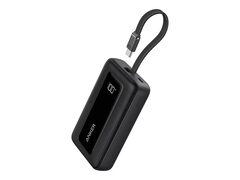
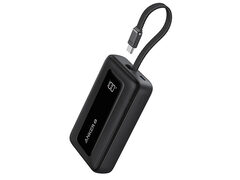
The braided USB-C cable built into the body remains this battery's strongest argument. Rated to survive over 10,000 bends, it unfolds to recharge any USB-C smartphone or tablet without ever needing to hunt for a separate cord, and doubles as a carry loop once folded back. Day to day, this is the detail that genuinely changes the experience compared with a regular power bank.
Beyond the built-in cable, connectivity is limited to one USB-C port and one USB-A port, for three usable outputs in total. That is enough to charge two devices alongside the main cable, but it feels tight for a battery pitched as the flagship of its line: the 10,000mAh version in the same Zolo lineup, smaller and cheaper, offers pass-through charging that this 20,000mAh version does not. In practice, there is no way to power a plugged-in device while the Zolo 20000 recharges itself: you have to wait out the cycle, or unplug, to resume normal use.
No wireless charging is offered on this model, a defensible technical choice at this capacity (wireless conversion loses more energy as heat, a drawback that worsens with battery size), but one that will be missed by anyone looking for that feature.
353g: a size that divides opinion depending on use
At 353g for 119.9 x 73.4 x 31.4mm, the Anker Zolo 20000 sits within the average for its capacity class, built-in cable included in that weight, which compares favorably with equivalent batteries sold without a cable. The most consistent complaint, whether for daily commuting or occasional use, centers on its thickness: it fits more naturally in a bag than in a trouser or jacket pocket.
The smooth plastic front panel and the digital readout showing the remaining percentage give an impression of solid finishing, consistent with the brand's positioning. The body does not, however, offer the more detailed status screen (cell health, cycle count) found on higher-end Anker models.
This thickness complaint shows up consistently across several markets, from English-speaking reviewers to Japanese ones, which makes it a genuine trait of the product rather than an isolated impression tied to one pocket or bag shape.
Build quality, protocols, and ActiveShield thermal management
The smooth plastic shell, the digital readout on the front, and the generally well-assembled body give an impression of solid build, consistent with the brand's positioning. On the protocol side, USB Power Delivery and PPS are both supported, which covers the vast majority of recent smartphones and tablets; there is, however, no Quick Charge certification, a detail that will only matter to older Android devices that specifically depend on that protocol.
The onboard thermal management, ActiveShield, monitors temperature continuously throughout charging and adjusts delivered power accordingly, both to protect the battery and the device being charged. That is a genuine layer of safety, present on this exact reference, which makes the next section all the more notable: it did not prevent a defect identified at the cell level itself from triggering a worldwide recall, since software temperature monitoring cannot compensate for a component that is faulty upstream.
The 2025 Anker safety recall: what to know before buying
This is the single most important point in this review, and it concerns precisely this reference. Anker launched a global voluntary recall in 2025 covering several power banks across multiple lines, including the Anker Zolo 20000 30W (reference A1689) and its dual-cable variant (A1681). The cause identified and communicated by the brand involves lithium-ion cells from a single supplier, showing composition deviations caught in quality control and capable of causing overheating.
The scope covers units sold between late 2023 and June 2025. In the United States alone, 33 incidents were reported (overheating, smoke or fire), four of which caused minor burns and one a significant property damage case, out of roughly 481,000 units covered. In Canada, close to 12,000 units fall under the same recall, with no incident reported as of the announcement. Anker offers every owner of an affected unit a free replacement, a store credit, or a refund, after checking the serial number on its official site.
The product was pulled from sale while the recall was being handled, then put back into circulation since, after the cell supply was corrected. Since returning to sale, its output efficiency ranks among the best next to comparable batteries, which points more toward a now-corrected reference than a recurring design flaw. That takes nothing away from the seriousness of the incidents that happened on affected units before the recall: it is information worth knowing before any second-hand purchase or extended use of a unit already in circulation, and a factor that genuinely weighs on this review's score.
Against the direct competition
Around £30 to £35 depending on the period, the Anker Zolo 20000 competes with 20,000mAh batteries pairing a built-in cable with good value. That reference price regularly drops lower during promotions, worth checking at the time of purchase rather than treating as fixed. Here is how it stacks up against three genuinely comparable alternatives.
| Criterion | Anker Zolo 20000 | INIU 20000 | Baseus Bipow Pro | UGREEN Nexode 145W |
|---|---|---|---|---|
| Capacity | 20,000mAh | 20,000mAh | 20,000mAh | 20,000mAh |
| Output power | 30W (peak) | 100W | 25W | 145W |
| Built-in cable | Yes (USB-C) | No | Yes (USB-C) | No |
| Known safety recall | Yes (2025) | None | None | None |
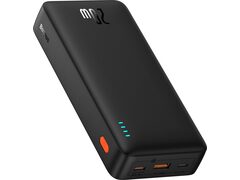
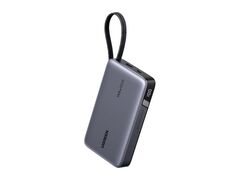
Against the INIU and especially the UGREEN, the Zolo gives up a lot of ground on raw power, a factor worth weighing for anyone also wanting to top up a laptop. Its edge remains the built-in cable, absent on both, and an output efficiency that ranks among the best of the comparison. The Baseus Bipow Pro also offers a built-in cable at a similar price, making it the most direct comparison on that specific point.
Within its own lineup, the Zolo 10000 30W, smaller and cheaper, nonetheless offers the pass-through charging that this 20,000mAh version lacks, and does not appear on any list of references covered by the 2025 recall.
Who it's for, and who should look elsewhere
The Anker Zolo 20000 suits anyone looking for a large backup capacity for daily use or travel, without ever worrying about packing a separate cable, and who mostly charges a smartphone or tablet rather than a laptop. Its high output efficiency and its format staying under the airline limit make it a safe bet for that specific use.
It suits fewer people who need to charge a laptop at full speed, plug in a device via pass-through while the battery itself recharges, or recharge the battery itself very quickly: on all three points, direct competitors do better, sometimes at a similar price. Before any purchase, especially of a unit already in circulation or bought second-hand, checking eligibility for the 2025 safety recall with Anker remains a step not to skip.
In between the two profiles, occasional backup use (a weekend, a commute, a festival) still makes sense even for someone occasionally topping up a small laptop, as long as charging speed is not the priority at that moment.