
5024 Wh on paper: what real charging and discharging show
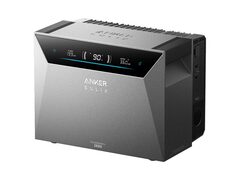
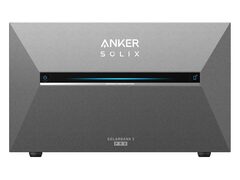
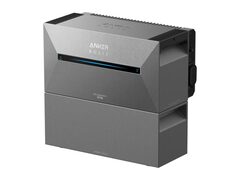
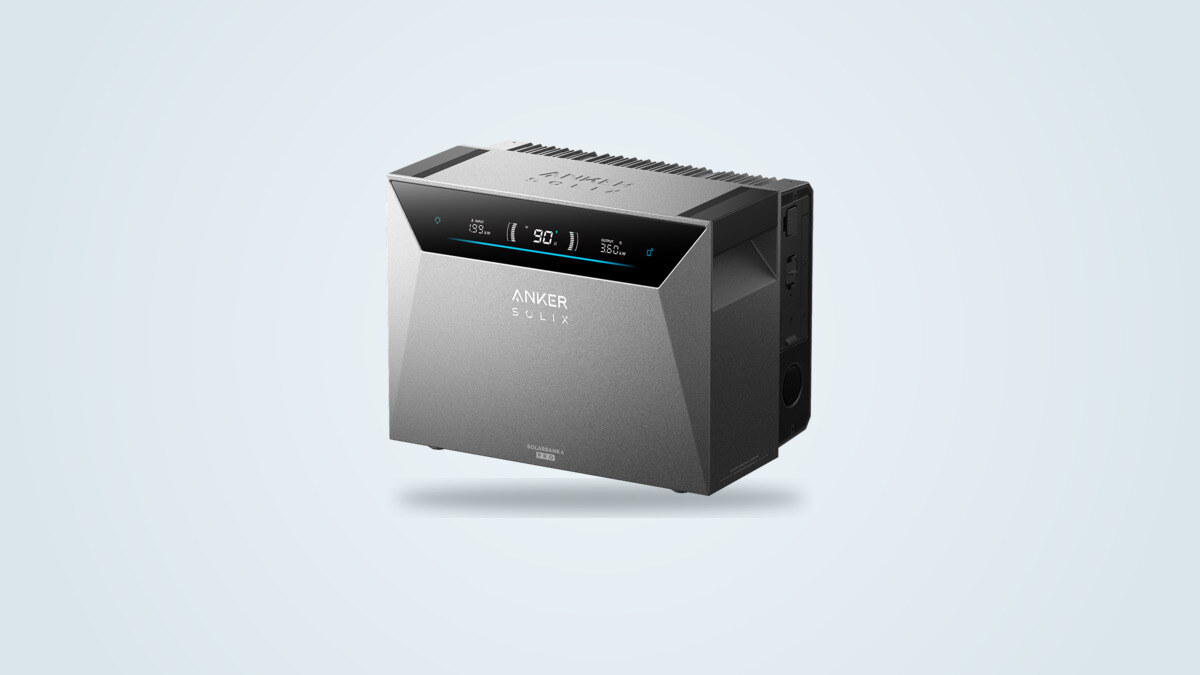
The Solarbank 4 E5000 Pro stores 5024 Wh in LiFePO4 chemistry, nearly double the Solarbank 3 E2700 Pro's 2688 Wh. But between the energy that goes into the battery and what actually comes back out, the conversion electronics take their share, at levels that stay close to the previous generation despite more powerful hardware.
On the charging side, the picture is symmetrical: over a mains charging session at up to 2500 W, around 5400 Wh flowed in from the grid, of which roughly 13% never made it into the battery. One technical nuance worth knowing: the 2500 W charging rate through the Wieland socket only holds for a limited time before dropping below 2 kW, consistent with a charging curve that tapers as the battery nears full rather than a fault.
| Figure | Result |
|---|---|
| Discharge 100% to 5% reserve, energy delivered | 4250 Wh out of 4773 Wh, roughly 89% |
| Loss on mains charging (up to 2500 W) | Around 13% |
| Losses over a full charge + discharge cycle | Between 15 and 20% |
For comparison, the Solarbank 3 E2700 Pro showed a round-trip efficiency near 82%, roughly 18% losses, a level the Solarbank 4 E5000 Pro does not clearly move forward despite a beefier inverter and controllers. The much larger capacity changes what you can do with it, not really the conversion efficiency.
4 MPPT, 5000 W of solar input from the base unit alone
This is the clearest step forward from the previous generation. The Solarbank 3 E2700 Pro promised 3600 W of solar input, but only once paired with an extra battery: the base unit alone capped out at 1800 W. The Solarbank 4 E5000 Pro reaches its full 5000 W from the base unit alone, no extension required, across 4 independent MPPT controllers (1250 W each).
Per the spec sheet, each controller accepts up to 36 A of input current, with a maximum short-circuit current of 45 A, enough headroom for nearly every residential panel on the market. The documentation allows up to 12 modules to be connected, versus 8 for the previous generation.
One point still worth checking case by case before buying: deliberately oversizing beyond the 5000 W peak rating (a common photovoltaic practice to offset cloudy-weather losses) comes up repeatedly in questions from users on specialist forums, without a single clear official answer at the time of writing. It is worth checking your own setup before going far beyond the rated power.
2500 W on the box, 800 W of grid export: the nuance that persists
The same gap that already existed on the Solarbank 3 E2700 Pro shows up here too, at a higher scale. The PluginPower 2.0 bidirectional inverter in the Solarbank 4 E5000 Pro is rated up to 2500 W, a figure repeated in most marketing titles. That is not the power injected into the grid day to day.
800 W remains the default grid export value, the simplified regime that applies to this kind of kit, identical to the Solarbank 3 E2700 Pro. The 2500 W is power available off-grid, in back-up mode, or for feeding appliances plugged directly into the dedicated outlet. The switch to back-up mode happens within milliseconds during an outage, effectively working as an uninterruptible supply for sensitive electronics in the home.
The export regulation itself is genuinely precise: paired with the Smart Meter Gen 2, the Solarbank 4 E5000 Pro keeps grid draw close to zero when the home's load stays steady, with a fast response to any change. That is a clear positive, carrying over what the previous generation already offered.
Five Solarbank generations: where the E5000 Pro sits
The Anker Solix Solarbank range keeps growing with this fourth generation. Here is how it compares with the earlier ones, already covered in our own reviews.
| Generation | Capacity | Solar (base unit alone) | Built-in inverter | Expandable |
|---|---|---|---|---|
| Solarbank 2 Pro | 1600 Wh | 2400 W (4 MPPT) | 800 W | Yes |
| Solarbank 2 AC | 1600 Wh | 1200 W (2 MPPT) | 800 W, + mains charging | Up to 9.6 kWh |
| Solarbank 3 E2700 Pro | 2688 Wh | 1800 W (4 MPPT) | 1200 W hardware / 800 W by default | Up to 16 kWh |
| Solarbank 4 E5000 Pro | 5024 Wh | 5000 W (4 MPPT) | 2500 W off-grid / 800 W by default | Up to 30 kWh |
The capacity jump is real: nearly double the Solarbank 3 E2700 Pro, itself already close to double the Solarbank 2. Expandability follows the same curve, with a 30 kWh ceiling that puts this unit closer to genuine home storage than a simple balcony top-up. Weight follows the same curve too, in the opposite direction for handling: roughly 29 kg for the Solarbank 3 Pro, 50 kg for this Solarbank 4 E5000 Pro.
One point worth flagging for anyone who already owns a Solarbank 2 or 3: the additional battery modules are not interchangeable between generations. Anyone planning to expand an existing system should check exact compatibility before ordering a BP5000 extension, which is built for this fourth generation specifically.
App and Smart Meter Gen 2: solid regulation, rougher pairing
Control runs through the Anker Solix app, over Bluetooth for initial setup and then Wi-Fi for remote monitoring. As with the Solarbank 3 E2700 Pro, a communicating meter, here the Smart Meter Gen 2, remains necessary for export regulation to work at its full potential.
On the positive side: once set up, regulation is precise, with grid draw staying close to zero under steady load and a quick reaction to changes in household consumption. On the less positive side: initial app pairing causes difficulties during first setup, a hiccup that concerns first-time setup rather than day-to-day use once the system is running.
No usable figures have turned up on what benefit, if any, a tariff-optimising AI brings on this specific model, unlike the Solarbank 3 E2700 Pro, which markets its "Anker Intelligence". If a similar feature also exists on this fourth generation, its real-world benefit remains just as hard to pin down objectively as for the rest of the market: a blind spot for the whole sector, not a weakness specific to this product.
Plug-and-play at 800 W, a qualified electrician for the rest
In its default configuration, on a standard mains outlet and at 800 W export, setup remains within reach of a private individual: connect the panels, mount the unit, finish configuration in the app. No professional work is needed at this level of use, just as with the previous generation.
On the paperwork side, the situation, as with the previous generation, needs checking case by case and market by market. In France, a balcony solar kit with no storage needs no declaration below 800 Wp. For a kit WITH a storage battery of this size, the position is less settled: a specific compliance certificate could be required once storage is added to the setup, with a possible exemption for certified plug-and-play equipment, though this precise certification is not confirmed for this model at the time of writing. Rules differ from one market to the next, so it is worth checking your own local requirements with your grid operator before installing, especially if you plan to use the maximum back-up power.
50 kg, IP66, and a launch delivery worth knowing about
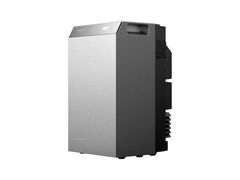
At 50 kg for the base unit alone (460 x 305 x 355 mm) versus roughly 29 kg for the Solarbank 3 Pro, needing two people to handle it becomes the norm rather than the exception, especially for a balcony install at height. On the plus side, the IP66 rating (versus IP65 on the previous generation) and a stated operating range of -20 to 55 °C point to a design meant for permanent outdoor installation. The 10,000 announced cycles, versus 6000 for the Solarbank 3 E2700 Pro, and the 10-year warranty, point the same way.
Real-world uptake looks genuine: a discussion thread dedicated to this one product on a specialist solar forum runs past a hundred pages, a sign of use that is already widespread just a few months after launch.
On Anker's own UK store, the customer rating stood at 4.40 out of 5 in early September 2026, from 10 reviews: still a small sample for a product launched only a few months earlier, but in line with a broadly positive overall impression.
Up against the EcoFlow Stream 5000, at nearly identical capacity
The most relevant rival is not each brand's biggest model, but the one that shares the same base capacity. The EcoFlow Stream 5000, already covered in our own review, is rated at exactly the same 5024 Wh.
| Criterion | Solarbank 4 E5000 Pro | EcoFlow Stream 5000 |
|---|---|---|
| Base capacity | 5024 Wh | 5024 Wh |
| Expandable | Up to 30 kWh | Up to 90 kWh |
| MPPT / solar input | 4 MPPT, 5000 W | 4 MPPT, 5000 W |
| AC output | 2500 W off-grid / 800 W export | 3000 W (3600 W peak) |
| Weatherproofing | IP66 | IP65 |
| Weight | 50 kg | 45.4 kg |
| Cycles / warranty | 10,000 / 10 years | 10,000 / 10 years |
| Price | ≈ 1999 € | ≈ 1599 € |
On paper, the EcoFlow Stream 5000 aims further on expandability (up to 90 kWh versus 30 kWh) and on raw AC output (3000 W versus 2500 W off-grid), at a lower price. The Solarbank 4 E5000 Pro keeps the edge on weatherproofing (IP66) and on an Anker ecosystem already proven across two earlier generations, with a genuine track record behind it. On specialist forums, users weighing up both systems point out that extension flexibility and load-splitting across several electrical phases can favour EcoFlow for an ambitious project (EV charging, heat pump), while the maturity of the Anker ecosystem reassures those who already own an earlier generation. With both systems still new to the market, these accounts remain individual rather than statistical for now.
Who it suits, and who it does not
It suits anyone wanting to store balcony or facade solar production at real scale, with genuine room to grow towards full home storage (up to 30 kWh), and who can handle the weight and budget of a more ambitious setup than a simple top-up kit. It also suits anyone already in the Anker Solix ecosystem who wants to stay within it.
It does not suit anyone after a light, budget-friendly top-up, nor anyone counting on the 2500 W shown on the product page as their daily export power without checking what their own situation actually allows, nor anyone unable to arrange a qualified electrician to unlock the full potential of PluginPower 2.0.