
Anker Nano 3 (511) 30W: our full review

The Nano 3 (511) delivers on its promise of fast, compact USB-C GaN charging. One point needs correcting before you buy: the foldable plug often highlighted only applies to the US version, the version sold here has fixed prongs.

Our rating
4.3/5
Safety and protections: 4.2 out of 5 (weighting 20%)Safety4.2Build and endurance: 4.0 out of 5 (weighting 15%)Build4.0Actually delivered power: 4.4 out of 5 (weighting 25%)Power4.4Protocol compatibility: 4.4 out of 5 (weighting 12%)Protocols4.4Size and technology: 4.4 out of 5 (weighting 8%)Size4.4

How is this rating calculated?

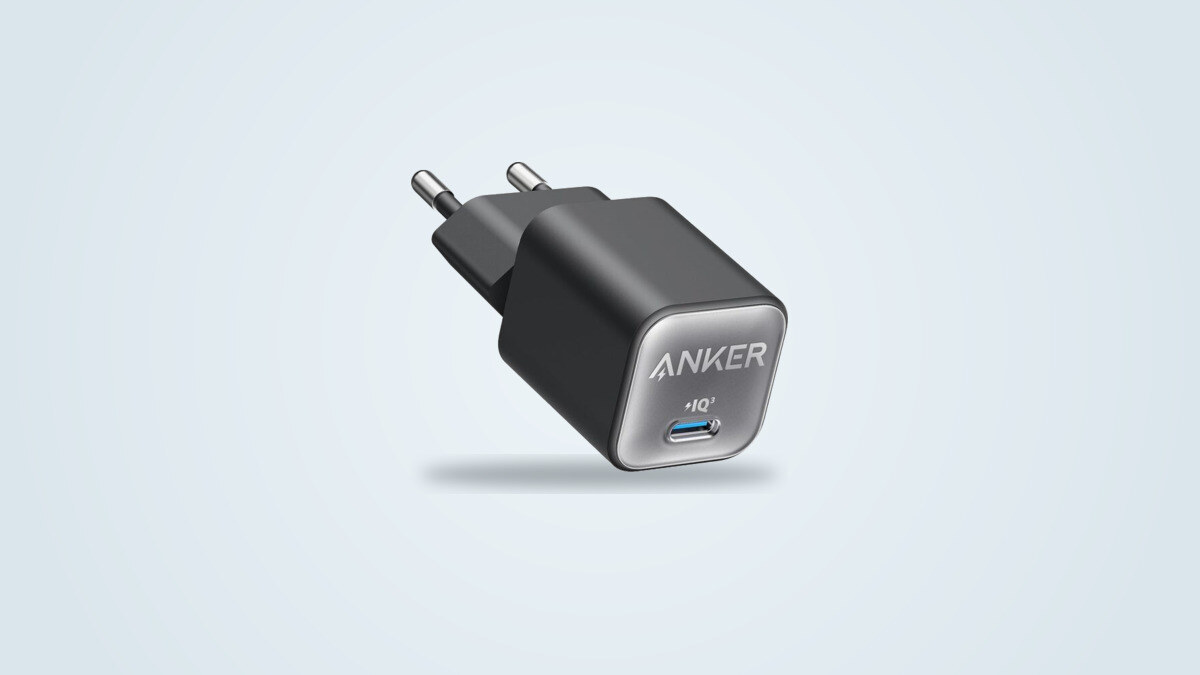
Anker Nano 3 511 30W USB-C wall charger on a light background

The essentials

The Nano 3 (511) really does deliver its 30W: an iPhone 14 Pro charges at around 20W, a Pixel 7 at around 18.7W, and a MacBook Air at around 26.5W, values consistent with the advertised power. Thermal protection holds up over time, with no temperature drift during extended use at full power. One point needs correcting compared with how the product is usually presented: the foldable plug, often highlighted as a feature, only applies to the version sold in the United States. The UK and European version has fixed prongs, a design constraint tied to the local mains plug format. Another real but less clear-cut nuance: the safety margin before cutoff in case of overcurrent seems a little tight on some units, a point worth watching rather than a proven systematic problem. As a compact, fast everyday charger, the Nano 3 remains an excellent choice, foldable plug or not.

Strengths

  • 30W genuinely delivered, confirmed on several devices (iPhone, Android, MacBook Air) at values consistent with the claim
  • Thermal protection stays stable over time, with no drift after several hours of continuous use at full power
  • Very compact format (about 44g), one of the smallest in its 30W category
  • Compatible with USB PD and PPS, works correctly with fast charging on major smartphone brands
  • Reasonable price for a GaN charger of this power

Limitations

  • The foldable plug often highlighted only applies to the US version: the version sold here has fixed prongs
  • The margin before cutoff in case of overcurrent seems a little tight on some units, a point worth watching without it being a proven systematic issue
  • No cable included in the box
  • Only one USB-C port: impossible to charge two devices at once
  • Opinions on heat build-up during extended use remain divided
Anker Nano 3 (511): see the full details and price →

30W genuinely delivered, across several types of devices

The Nano 3 holds up to its advertised power: an iPhone 14 Pro receives around 20W, a Google Pixel 7 around 18.7W, and a MacBook Air M2 around 26.5W, values consistent with what you would expect from a 30W PD/PPS charger depending on the device plugged in. An iPhone charges from 1% to 50% in just over 30 minutes, and reaches 100% in around 1h30, matching the manufacturer's promise.

30 W
Advertised power
26.5 W
MacBook Air M2
71 °C
Stabilized temperature under continuous use
44 g
Weight

Foldable plug: only on the US version

This is the most important point to correct before buying. The Nano 3 comes in several regional versions depending on the mains plug format, and the foldable plug, often cited as a compactness argument, only applies to the version sold in the United States. The version sold in the UK and Europe has fixed prongs that do not fold flat against the case. The charger stays just as compact overall, but the foldable-plug argument does not apply outside the US.

Thermal safety and protection margin

Over a test of several hours at full power continuously, the case temperature stabilizes around 71 °C, with no drift toward thermal runaway: ActiveShield protection works as expected on this specific point. One nuance exists around the margin before cutoff in case of overcurrent: some units seem to tolerate a notable overshoot beyond the nominal 30W before cutting off, a margin a little tight against the industry's usual standards. This point deserves watching rather than being treated as a proven systematic issue, as the data available on this specific point remains limited.

Compatibility and everyday use

The Nano 3 handles USB PD and PPS correctly, which covers fast charging on recent iPhones, PPS-compatible Samsung Galaxy phones, Google Pixel and most USB-C devices. Its single port, however, limits use to one device at a time. No cable is included in the box, so you need to provide a suitable one (USB-C to USB-C, or USB-C to Lightning for older iPhones).

Price and availability

The observed price sits around £19, with frequent variation depending on colour and promotions, sometimes dropping under £15 during certain periods. No product recall was found for this model in the European and American safety databases consulted.
The rating in detail

Our rating
4.3/5
Actual charging current not measured
Battery compatibility not measured
Safety and protections 4.2
Build and endurance 4.0
Cables and connectors not measured
Actually delivered power 4.4
Multi-port power sharing not measured
Protocol compatibility 4.4
Size and technology 4.4
Anker Nano 3 (511): see the full details and price →

The product and its alternatives

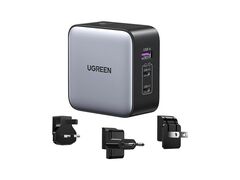
Ugreen Nexode 65W

Ugreen Nexode 65W

See price (45)

One charger for everything: 65W over USB-C GaN, 3 ports for MacBook, iPhone and tablet, and US/UK/EU plugs for travel.

View product
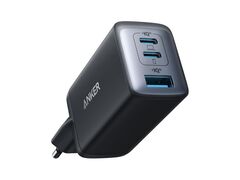
Anker Nano II 65W

Anker Nano II 65W

See price (54)

The GaN charger that replaces all the others: 65W over USB-C, 3 ports for MacBook, iPhone and tablet, in a 53% more compact format.

View product

Frequently asked questions

It depends on the regional version. The foldable plug only applies to the version sold in the United States. The version sold in the UK and Europe has fixed prongs that do not fold.

Yes. It delivers around 20W to an iPhone 14 Pro, enough to go from 1% to 50% in just over 30 minutes and reach 100% in around 1h30, matching the manufacturer's promise.

Yes, to some extent: a MacBook Air M2 receives around 26.5W, enough for a top-up charge, even though it is not the maximum speed the laptop can accept with a more powerful charger.

The Nano 3 is a single-port 30W charger, more compact and cheaper. The Nano II 65W offers more power and several ports, for use that includes more demanding laptops.