
Sunology PLAY 425W
(2 reviews)
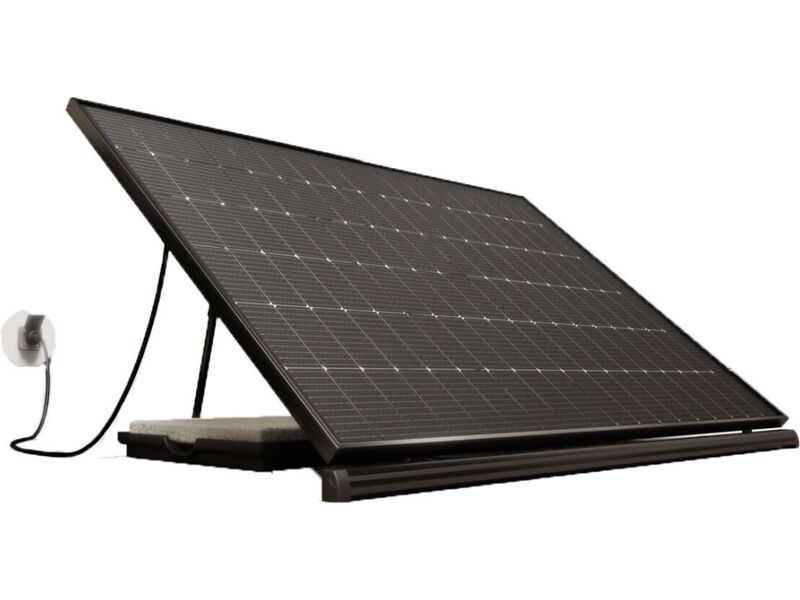
A solar station you unbox, stand up and plug into a wall socket: two minutes, no building work, and the metre starts slowing down.
Characteristics
- Power: 425 W, dual-glass bifacial panel
- Microinverter: 400 W built in, 99.8% efficiency
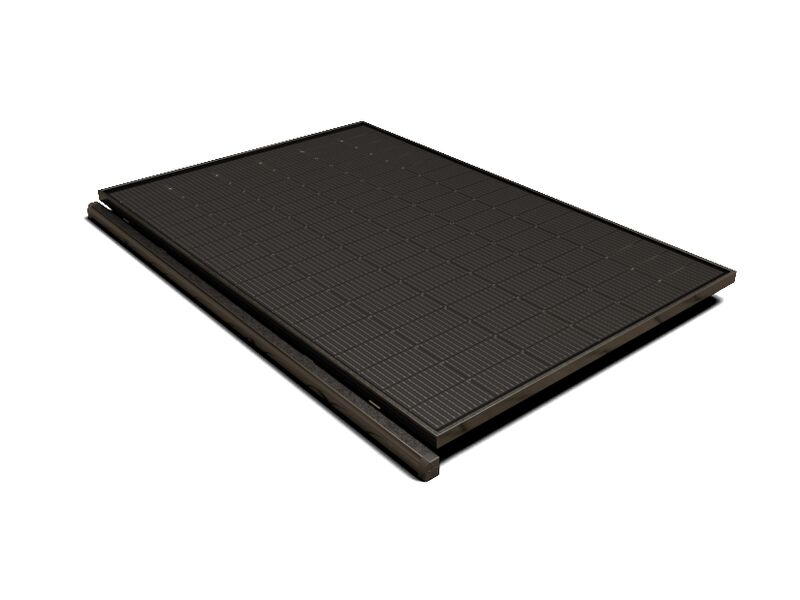
- Dimensions: 1722 x 1200 mm, adjustable stand
- Installation: 230 V socket, 3 m cable, 2 ballast trays
- Plugged in within two minutes, no building work
Detailed overview: Sunology plug-in solar station
The Sunology PLAY 425W belongs to a category born a few years ago that changed everything for residential solar: the plug-in station, or plug-and-play solar. The principle fits in one sentence, everything is already assembled. The 425 W panel carries its own microinverter, leaves the box built, and connects to an ordinary outdoor socket through a 3 m cable. There is no wiring into the consumer unit, no work on the electrical installation, no tradesman to book.
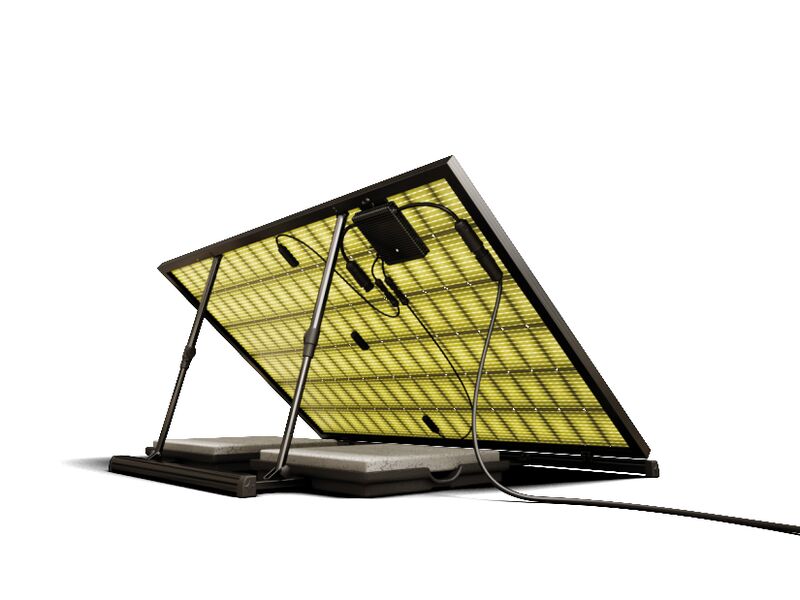
The panel is a dual-glass bifacial unit using monocrystalline PERC cells with a stated efficiency above 21%. Bifacial means it captures direct light on the front face and ground reflection on the rear, which according to Sunology lets it produce at least 105% of what a conventional monocrystalline panel of the same rating would deliver. The real gain depends heavily on the surface below: it is clear on pale concrete or gravel, close to nil on dark grass. The built-in microinverter is rated 400 W with 99.8% efficiency.
Installation works on a terrace, a flat roof, a balcony, a garden, or wall-mounted. The adjustable stand offers three ground angles (27°, 35° and 42°) and three wall angles (48°, 55° and 63°), enough to optimise by season and latitude. The kit includes the panel, the microinverter, the stand, a connected plug, the 230 V cable and two ballast trays; wall fixings have to be bought separately. The station must sit within 50 m of the socket used. An app tracks production and consumption in real time.
Over the long run Sunology warrants the panel for 25 years and the microinverter for 12, and quotes a payback of four to six years. That figure assumes the electricity produced is consumed as it is produced: a station like this mainly covers a home's permanent baseline, fridge, router, standby loads, water heater during the day. To go further the range is modular, up to four stations can be combined on a single dedicated circuit within a 1700 W ceiling, and a separately sold battery stores the surplus.
Full specifications
Detailed characteristics
Panel
| Peak power?Rated panel power in full sun (STC conditions). | 425 W |
|---|---|
| Cell technology?Cell type; monocrystalline offers the best efficiency, flexible CIGS tolerates shading better. | Monocrystalline |
| Conversion efficiency?Share of solar energy converted to electricity; higher means a more compact panel for the same power. | 21 % |
| Panel type?Foldable (portable), rigid framed (fixed install) or flexible (curved surfaces). | Rigid (framed) |
| Bifacial?Also captures reflected light on its rear side, for extra output. | Yes |
Outputs and connectors
| Output connectors?Output socket type(s) (MC4, XT60, Anderson, DC, USB…); determines compatibility with your station. | 230 V socket |
|---|
Durability and format
| Ingress protection?Water and dust resistance (IP rating). | Outdoor, dual-glass |
|---|---|
| Adjustable kickstand?Kickstand or support to angle the panel toward the sun. | Yes |
Warranty
| Warranty?Length of the manufacturer's warranty. | 25 years |
|---|
☀ How fast does this panel recharge a power station?
The Sunology PLAY 425W panel (425 W) recharges a Jackery Explorer 1000 v2 (1070 Wh) in ~3h35 or an EcoFlow Delta 2 Max (2048 Wh) in ~6h55, in full sun.
| Compact / mid | Recharge |
|---|---|
| Jackery Explorer 100 Plus (99 Wh) | ~20 min |
| EcoFlow River 2 (256 Wh) | ~50 min |
| EcoFlow River 2 Max (512 Wh) | ~1h45 |
| EcoFlow River 2 Pro (768 Wh) | ~2h35 |
| High capacity | Recharge |
|---|---|
| Jackery Explorer 2000 v2 (2042 Wh) | ~6h50 |
| Anker Solix F2000 (2048 Wh) | ~6h55 |
| Jackery Explorer 3000 v2 (3072 Wh) | ~10h |
| Fossibot F3600 Pro (3840 Wh) | ~13h |
Estimate in full sun (ideal conditions). In practice, count on 3 to 5 hours of truly useful sunlight per day, so a full recharge may span several days depending on weather and orientation.
Comparison
Between £300 and £1,100, the Sunology PLAY 425W competes with ready-to-plug solar solutions targeted by searches such as "plug and play solar kit" or "balcony solar station". Here is how it sits against two references from our catalogue and the most cited rival offer: the Zamp Solar 130W, the EcoFlow solar tracker and the Beem kit.
| Criterion | Sunology PLAY 425W | Zamp Solar 130W | EcoFlow solar tracker | Beem Kit |
|---|---|---|---|---|
| Power | 425 W | 130 W | Tracks the sun | 4 x 75 W |
| Microinverter included | Yes, 400 W | No | Yes | Yes |
| Bifacial | Yes, dual-glass | No | No | No |
| Connection | 230 V socket | 12 V controller | 230 V socket | 230 V socket |
| Panel warranty | 25 years | Not stated | Not stated | 25 years |
| Observed price | ≈ £513 | ≈ £298 | ≈ £1111 | ≈ £654 |
In short, the Sunology PLAY stands out for its per-unit power and its bifacial panel, neither of which the others offer at this level of simplicity. The Zamp Solar 130W plays a different game, 12 V mobile power for vans and motorhomes, and does not plug into a domestic socket. The EcoFlow tracker produces the most per panel since it follows the sun across the sky, but its price reserves it for ambitious setups. The Beem kit spreads its output across four small wall panels, more discreet but individually less powerful. For a first step into self-consumption, with no building work and the option of adding stations later, the PLAY 425W is the most direct choice.
Related video
Video: + 15 % SUNOLOGY PLAY RECTO VERSO, LE PLUS PUISSANT DES PANNEAUX PLUG AND PLAY - Published on 01/06/2023
Our tester's review: Julien De Jurquet
Sunology grasped something conventional solar long overlooked: the barrier is not the price of a panel, it is the quote, the installer, the paperwork and the waiting. Here the station arrives assembled, you set it down, tilt the stand to a sensible angle, plug it in and you are done. The panel is dual-glass bifacial, meaning it also captures light reflected off the ground from behind: Sunology claims output at least equivalent to 105% of a conventional monocrystalline panel of the same rating, and the difference shows most on a pale surface, a concrete terrace or a white roof. The stand offers three ground angles (27°, 35°, 42°) and three wall angles (48°, 55°, 63°), enough to adjust by season. It pays to be clear-eyed about what 425 W represents. It does not make you self-sufficient: it covers a home's permanent baseline draw, fridge, router, standby loads, and any energy not consumed at that moment flows into the grid unpaid unless the installation is declared. The claimed four to six year payback therefore depends heavily on your daytime consumption profile. Two practical points to know before buying: wall fixings are not supplied, only two ballast trays are, and the station has to stay within 50 m of an outdoor socket. For a flat tenant with a balcony, or an owner unwilling to commit to building work, this is currently one of the simplest ways to generate your own electricity.
In-depth review Sunology PLAY 425W: our full review 3.6/5 Read our full review → Efficiency 3.5 Portability and size not measured Weather resistance not measured Output ports not measured Capacity and expansion not measured Solar input and MPPT 3.6 Control and smart features 3.3 Installation and compliance 4.0 Build and endurance 3.6 Battery compatibility not measured Safety and protections not measured Storage battery compatibility not measured Control and smart features not measured Compliance and grid connection not measuredFrequently asked questions: Sunology plug-in solar station
No. The station arrives assembled, stands on the ground or mounts on a wall, and plugs into an ordinary outdoor socket. No work on the consumer unit is required.
Yes, that is one of its selling points. Nothing is permanently fixed if you choose ground mounting with the ballast trays: simply unplug and take the station with you when you move.
It covers a home's permanent baseline: fridge, router, standby loads. Sunology quotes a four to six year payback, which depends on your daytime consumption, since energy not used at the moment it is produced is not paid for.
Yes, the range is modular. Up to four stations can be combined on a single dedicated circuit within a 1700 W ceiling. A separately sold battery also lets you store the surplus.
Need help choosing?
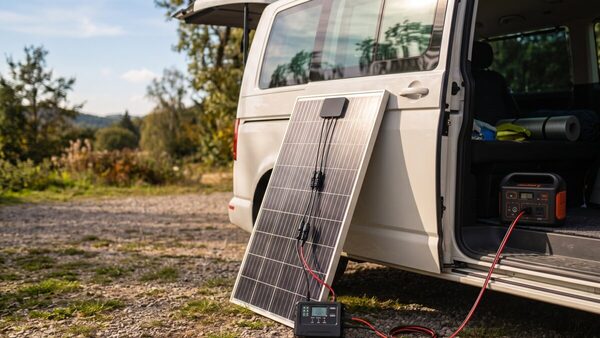
Other products in the "Solar kits" category
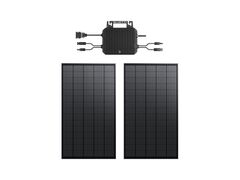
Bluetti Balcony Solar System A80P
£859.00 (3)
A balcony solar kit you plug in yourself in 30 minutes: an 800W microinverter and 2 flexible 255W panels, no electrician required.
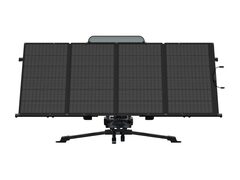
EcoFlow Solar Tracker
See price (2)
The first solar tracker for consumers: it automatically aims your panels at the sun, from dawn to dusk, for up to 30% more energy.
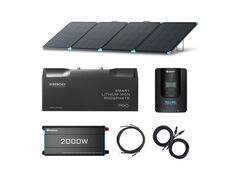
Renogy Portable Solar Kit 2kWh
£999.99
An all-in-one solar kit ready to plug in: a foldable 400W panel, a 200Ah PRO battery and a 2000W pure sine inverter, for backup power in 15 minutes.
Published on 28/07/2026, updated on 14/08/2026