
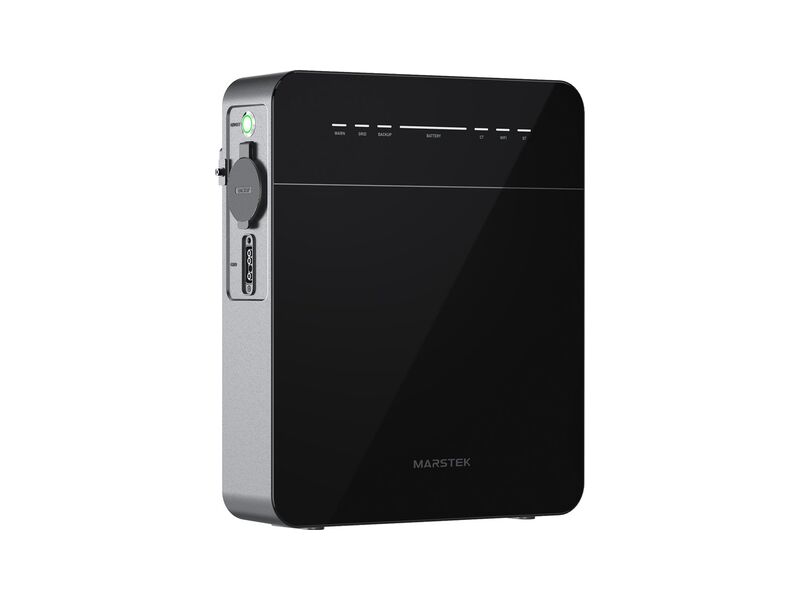
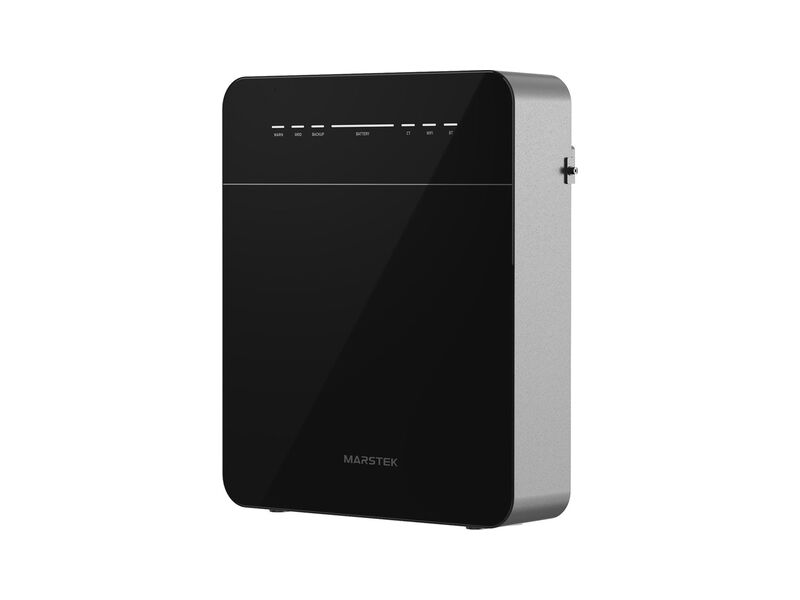
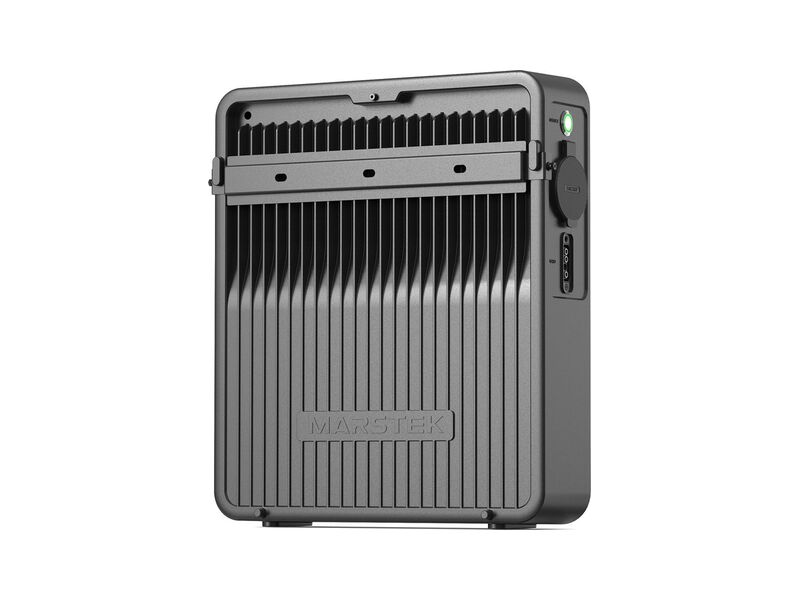
Marstek Venus E Mini
The thinnest of Marstek's plug and play batteries: 2 kWh you plug into a normal socket, installed in 5 minutes, without touching your existing setup.
Characteristics
- Capacity: 2009.6 Wh LiFePO4 (expandable to 6 kWh with 3 units)
- Power: 1.5 kW bidirectional, 1.5 kVA backup (1.8 kVA peak)
- Installation: Plug and play on a wall socket, no MPPT, under 5 minutes
- Rating: IP65, -20 °C to +60 °C, just 105 mm thick for 22 kg
- Marstek's thinnest and cheapest plug-in battery case
Detailed overview: Marstek AC-coupled solar battery, 2 kWh
The Marstek Venus E Mini is the most compact of the brand's AC-coupled home batteries, launched in March 2026 under the name Venus B before being renamed Venus E Mini in May 2026 to join the Venus E range alongside the Venus E 3.0 and the Venus E Max. The hardware and software remain identical to the original Venus B: only the name has changed, to align with the rest of the family.
Like the Venus E 3.0, it plugs straight into a standard wall socket, with no MPPT or direct solar input: it complements an existing photovoltaic installation (or simply stores off-peak electricity), without any work on existing wiring. Installation takes under 5 minutes, whether wall-mounted or standing on the floor.
Its 2009.6 Wh capacity relies on LiFePO4 cells rated for over 10,000 cycles, at a 90% depth of discharge. AC power reaches 1.5 kW bidirectional, with a claimed battery-to-AC efficiency above 88%. A dedicated backup outlet delivers up to 1.5 kVA continuous (1.8 kVA peak for 60 seconds), with a claimed switchover time under 15 milliseconds. Up to three units can be paired to reach 6 kWh and 4.5 kW combined.
Control runs through the Marstek app: manual mode, self-consumption with an optional smart meter, or AI optimisation based on dynamic electricity tariffs. Connectivity is via WiFi and Bluetooth. The case, just 105 mm thin for 22 kg, is IP65 rated and works reliably from -20 °C to +60 °C, indoors or in a protected outdoor spot.
A few points worth knowing from early independent tests: a standby draw of around 7 W that cannot be disabled, a case temperature that can climb to 65 °C under full load despite fanless passive cooling, and expandability capped at 6 kWh, more modest than some rivals. The app is also less feature-rich than some competitors, and Marstek's after-sales reputation (mixed reviews on warranty terms and support responsiveness) is worth knowing before buying.
Full specifications
Detailed characteristics
Battery
| Technology?Battery chemistry; LiFePO4 lasts far longer and can be fully discharged, gel/AGM is maintenance-free and cheaper. | LiFePO4 (lithium) |
|---|---|
| Nominal voltage?Battery voltage (12, 24 or 48 V). | 6.4 V |
| Capacity?Capacity in amp-hours; multiply by voltage to get energy in Wh. | 314 Ah |
| Energy?Stored energy in watt-hours. | 2009.6 Wh |
| Cycle life?Rated number of charge/discharge cycles, at the stated depth of discharge. | 10000 cycles (90 %) |
| Expandable up to?Maximum capacity reachable with add-on modules. | 6000 Wh |
Power and protection
| Output power?Maximum power delivered (for storages with a 230 V output). | 1500 W |
|---|---|
| Max discharge current (BMS)?Maximum current the BMS allows on discharge. | 6.52 A |
| Built-in BMS?Battery management system protecting against overcharge, deep discharge, short-circuit and overcurrent (lithium batteries). | Yes |
| Low-temperature protection / heating?Cuts off or heats charging in cold weather to protect the lithium cells. | Yes |
Solar section
| Micro-inverter?Power of the inverter that feeds energy back into the home grid. | 1500 W |
|---|
Connectivity
| Bluetooth?Monitoring and settings via an app over Bluetooth. | Yes |
|---|---|
| Wi-Fi?Remote control and updates over Wi-Fi. | Yes |
Durability and format
| Ingress protection?Water and dust resistance (IP rating). | IP65 |
|---|---|
| Maintenance-free?Sealed battery needing no water top-up (gel / AGM). | Yes |
| Weight?Weight of the battery. | 22 kg |
| Dimensions (L × W × H)?Length × width × height, in millimetres. | 386 × 105 × 450 mm |
Availability and warranty
| Market launch?Date the model first became available on the European market. Useful to place its generation: technology moves fast in this segment, and a device several years old may be at the end of its commercial life. | March 2026 |
|---|---|
| Warranty?Length of the manufacturer's warranty. | 10 years |
Comparison
Around £450 to £1,000, the Marstek Venus E Mini competes with several small plug and play batteries searched for with queries like "Venus E Mini vs NOAH 2000" or "Marstek vs Anker Solarbank". Here is how it stacks up against three alternatives of similar capacity: the Growatt NOAH 2000 and the Anker Solix Solarbank 2 E1600 AC, both fitted with a direct solar input, and the Marstek B2500-D, its own cheaper hybrid sibling.
| Criterion | Marstek Venus E Mini | Growatt NOAH 2000 | Anker Solix Solarbank 2 E1600 AC | Marstek B2500-D |
|---|---|---|---|---|
| Capacity | 2009.6 Wh, expandable to 6 kWh | 2048 Wh, expandable to 8192 Wh | 1600 Wh, expandable to 9600 Wh | 2240 Wh, expandable to 8960 Wh |
| Direct solar input (MPPT) | None, AC coupling only | Yes, 2 MPPT, 1800 W | Yes, 2 MPPT, 1200 W | Yes, 2 MPPT, 1600 W |
| AC power | 1.5 kW bidirectional | 800 W output | 1200 W output | 800 W output |
| Battery chemistry | LiFePO4 | LiFePO4 | LiFePO4 | LiFePO4 |
| Weight | 22 kg | 23 kg | 22 kg | 20 kg |
| Observed price | £999 (currently sold out) | ≈ £640 | ≈ £510 | ≈ £445 |
Overall, the Marstek Venus E Mini stands out for its ultra-thin case (105 mm) and simplicity for anyone who already has a solar setup or inverter in place: it only stores downstream, without touching existing wiring. The Growatt NOAH 2000 and Anker Solix Solarbank 2 E1600 AC, with their MPPT input, suit those starting from scratch with unconnected panels better, and the Marstek B2500-D remains the brand's cheapest option for hybrid use. The Venus E Mini keeps the edge on bidirectional power in this comparison.
Related video
Video: This Tiny Home Battery Could Change Europe's Energy Market | Marstek Venus E Mini - Published on 29/05/2026
Our tester's review: Julien De Jurquet
Delivered in a compact box, the Venus E Mini really is installed in minutes: hang it on the wall or stand it on the floor, plug it in, and the Marstek app picks it up straight away. Self-consumption mode with the optional smart meter does a solid job of keeping surplus power off the grid. Real downside: it runs hot, up to 65 °C at full load according to an independent Dutch test, and its standby draw of around 7 W cannot be switched off, which eats into the promised savings. More concerning is Marstek's after-sales reputation: on Trustpilot, its Dutch subsidiary sits at just 2.3 out of 5 across roughly 120 reviews, with recurring complaints about warranty terms (a mandatory account and forced data sharing), units arriving faulty, and slow support responses. As an affordable first step into solar storage, without any rewiring, the Venus E Mini remains convincing on paper, but keep your after-sales expectations realistic.
Frequently asked questions: Marstek AC-coupled solar battery, 2 kWh
Yes. The Venus B, launched in March 2026, was renamed Venus E Mini in May 2026 to join the Venus E range. The hardware and software have not changed, only the name was updated to match the rest of the Marstek family.
UK pricing observed at Marstek Direct is £999 for the single 2 kWh unit, though it is currently sold out there. On the continent, the same unit typically sells for around 570 to 700 euros including tax.
No, it has no MPPT input: it is an AC-coupled battery that plugs into a wall socket, downstream of an existing solar setup or simply to store off-peak electricity.
By pairing up to three units, total capacity reaches 6 kWh with 4.5 kW combined power, a more modest ceiling than the Venus E 3.0 or some rivals that expand past 10 kWh.
The dedicated backup outlet delivers up to 1.5 kVA continuous (1.8 kVA peak for 60 seconds), with a claimed switchover time under 15 milliseconds, enough to keep essential devices running.
This is the brand's weak point: on Trustpilot, its Dutch subsidiary scores just 2.3 out of 5 across roughly 120 reviews, with complaints about a warranty tied to a mandatory user account and support several customers found slow.
Need help choosing?
Other products in the "Plug and play solar batteries" category
Allpowers BS2500 Pro
£1024.79
2600Wh of plug & play solar storage: the hybrid balcony battery that stores your production to release it in the evening and finally make self-consumption pay off.
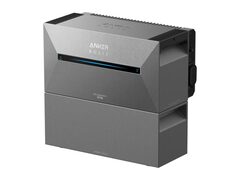
Anker Solix Solarbank 2 E1600 AC
£517.75 (7)
1.6 kWh of AC-coupled solar storage for your balcony: built-in 800W microinverter, dual MPPT, IP65 rating and a capacity expandable up to 9.6 kWh.
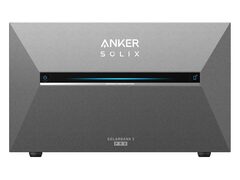
Anker Solix Solarbank 3 E2700 Pro
See price (7)
2688Wh of plug-and-play solar storage: 4 MPPT, a bidirectional 1200W microinverter and an AI that optimises your self-consumption on its own. Balcony solar finally pays off.
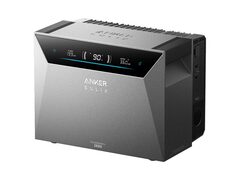
Anker Solix Solarbank 4 E5000 Pro
£1699.00
5 kWh of solar storage for your balcony: 4 MPPT, a bidirectional PluginPower 2.0 inverter, IP66 rating and a capacity expandable to 30 kWh.
Published on 16/09/2026