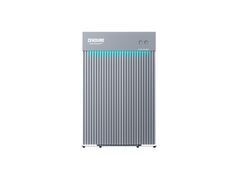

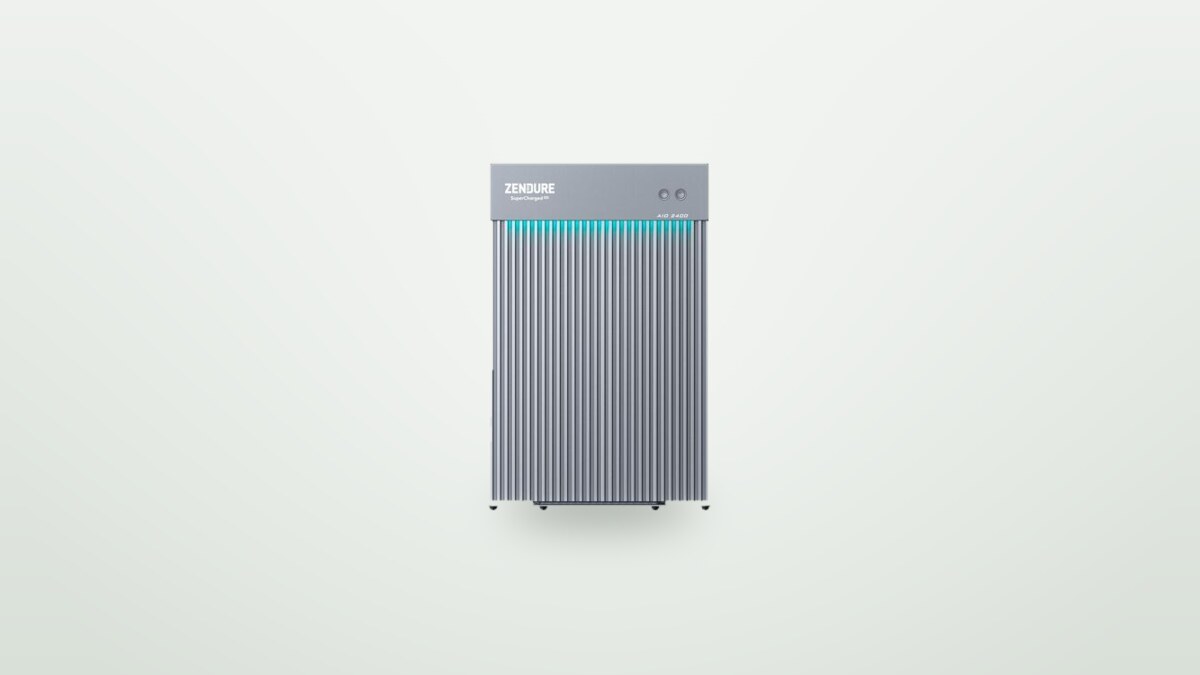
A documented fire, a manufacturer's explanation not independently confirmed
In late March 2025, a fire broke out on an AiO 2400 installation at Neuenhaus, in Lower Saxony (Germany), only two weeks after it was put into service. The system, paired with about 1780 W of solar panels, was spotted by a neighbour; firefighters brought the fire under control in 2 hours. The utility room and part of the heating system were affected, the roof structure had to be inspected, and the rest of the home remained habitable.
The manufacturer communicated its explanation after investigating: the plastic housing of the battery packs showed no deformation or swelling, which leads it to rule out the cells as the cause of the fire. Its adopted hypothesis combines several factors: a possible contact fault on the 400 W MPPT input that caused a local rise in temperature, and a loss of the micro-inverter's network connection for about 10 hours, during which the system operated with degraded stability without the alert reaching the user.
This is the manufacturer's own explanation, communicated after its own on-site investigation: no independent assessment has come forward to confirm or disprove it to date. No product recall has been issued. The manufacturer has announced several corrective measures: an app interface that makes error messages more visible, a strengthened emergency shutdown function in the event of a high-risk fault, and additional notification channels (email in particular) so as to no longer depend solely on an in-app alert.
Self-heating advertised down to -20 °C: a real doubt, not yet verified in extreme conditions
The manufacturer advertises an automatic self-heating function said to keep the battery operational down to -20 °C. The only independent test identified was not carried out at this temperature: at just 5 to 7 °C, far milder than advertised, the system triggered thermal alerts and blocked the battery's discharge. The heating function does not yet seem to work perfectly at this temperature.
No test has been able to verify actual operation at -20 °C in winter conditions: the trials identified all took place in mild to slightly cool weather. The power draw needed to keep the battery frost-free lies between 0 and 70 W depending on conditions, sometimes as high as 100 W.
Solar efficiency: no independent measurement for this specific model
Most of the round-trip efficiency figures attributed to the AiO 2400 actually concern a different product in the Zendure range (SolarFlow 2400 AC+/Pro), which recharges from mains power through a different conversion architecture, not the AiO 2400 itself. No independent round-trip efficiency measurement specific to the AiO 2400 has been identified to date.
What has been measured on this specific model: a total solar input power of 1243 W, of which 1185 W was actually fed into the battery, against a real electronic charging ceiling of 1200 W. The 1560 W figure highlighted by the manufacturer corresponds to the solar panel power that can be connected (official documentation explicitly distinguishes between “panel compatibility up to 1560 W” and “PV input up to 1200 W”), not to what the electronics can absorb themselves. Separately, a full discharge at a constant 300 W returned 2297 Wh out of the 2400 Wh advertised, or 96 %.
EZ1-M micro-inverter: recurring connectivity problems
The EZ1-M micro-inverter paired with the AiO 2400 is a device designed by APsystems, sold under the Zendure brand. The first pairing has recurring Bluetooth/WiFi connection problems, with an identified technical cause: an incompatibility with Android 14 at the time of initial setup (using a device running Android 13 for this first pairing works around the problem). Malfunctions of the smart control mode with a third-party connected metre, as well as spontaneous system shutdowns requiring a manual restart, add to these connection problems. A broken MC4 connector is a recurring hardware fault.
The AiO 2400 also has no back-up function in the event of a power cut, unlike other products from the same brand (SolarFlow 800 Pro, SolarFlow 2400 AC+) that offer a dedicated back-up output: the stored energy is only accessible through the micro-inverter, which itself draws power from the grid.
In France, the end of genuine simple plug-socket connection for new installations
The NF C15-100 standard changed in France as of 1 September 2025: connecting a solar kit directly to a standard wall socket is no longer permitted for new installations, which must now go through a dedicated circuit with its own residual-current device. Installations set up before this date remain tolerated as they are. This is a substantial change for a product whose central selling point is how simple it is to connect.
The power sent from the AiO 2400 to the micro-inverter is set manually in the app, adjustable from 0 to 1200 W: the unit is not capped by default at any particular ceiling, it is up to the user to set it according to their baseline consumption. The 800 W threshold, the export limit without a resale contract, corresponds to a sizing benchmark widely applied across the industry rather than to a single, precisely defined regulatory text. No report from a French user documenting their own Enedis or Consuel process for this specific product has been identified.
4000 cycles at 80 %, 8000 at 70 %: a figure in line with industry standards
The manufacturer advertises 4000 cycles at 80 % remaining capacity, or 8000 cycles at 70 %. This figure is in line with current standards for high-end LiFePO4, without being exceptional: the brand's own, more recent portable battery range claims up to 6000 cycles at 70 %, which places the AiO 2400 in the low-to-mid range of what the brand advertises elsewhere, rather than in an isolated optimistic position.
No independent ageing test of the pack has been possible to date: the device has only been on the market for two and a half years, and validating several thousand full cycles inherently takes several years, even with accelerated cycling. This figure therefore remains an unverified manufacturer claim, plausible in light of industry standards.
Who it suits, and who it does not
It suits anyone who values the simplicity of an all-in-one housing and wants to keep a free choice of micro-inverter (compatible with most brands on the market), for an installation set up before the September 2025 regulatory change or going through a dedicated circuit.
It does not suit anyone looking for a back-up function in the event of a power cut (absent here), nor anyone counting on the self-heating for demanding winter use without being prepared for that uncertainty, since low-temperature performance remains insufficiently verified to date.