
Real-world efficiency: 82 to 83% against a stated 93.5%+
The real-world round-trip efficiency sits at around 82 to 83%, against a stated 93.5%+ from the manufacturer. One documented measurement, for example, records 5409 Wh drawn from the grid for 4483 Wh actually delivered back. The gap is largely explained by the nature of the coupling: unlike a DC-coupled battery, the Venus E 3.0 has to convert energy twice (AC to DC on charge, then DC to AC on discharge), which mechanically produces more losses than the simple stated conversion figure, likely measured in only one direction of flow. That is an honest result in absolute terms, comparable to other balcony batteries already reviewed on this site, but the gap with the commercial claim remains clear.
The 0.8 kW / 2.5 kW cap: a regulatory threshold, not a paywall
The manufacturer's official documentation confirms that default output power is capped at 800 W, with an option to switch to 2.5 kW directly in the app, free of charge. This is not a paid unlock: it is a threshold set against the simplified regulatory regime that applies to low-power solar installations in Europe. Staying at 800 W qualifies for a lighter declaration process, similar to the CACSI regime in France. Switching to 2.5 kW strictly requires installation on a dedicated circuit by a professional and a standard declaration with the grid operator. Nothing technically prevents activating the higher threshold without that process, but doing so outside the rules exposes the installation to a compliance issue.
The AI mode, currently unusable for French households
This is the most important point to know before buying, for a reader in France. The product page highlights an artificial-intelligence control mode capable of optimising charging according to dynamic electricity tariffs, with claimed annual savings of up to €1310. In practice, no French electricity provider is yet recognised by the app, which makes this mode unusable in practice. The stated savings figure therefore remains a theoretical projection, not achievable today for a French household. The self-consumption mode and the manual mode, however, remain fully functional.
Cloud API vs. local control: a real reliability gap
The battery offers an open API, compatible with home-automation platforms such as Home Assistant or ioBroker, a real selling point for an advanced audience. But two paths exist, with a clear reliability gap between them. The official cloud API, controlled remotely, has proved unstable: a documented incident saw the battery interrupt its solar charging and discharge unexpectedly during remote control, a cause acknowledged by the manufacturer's own support team as linked to a safety reset triggered by certain commands. Local control via Modbus, less prominently marketed but recommended by experienced users, proves reliable and predictable by comparison.
The CT002 metre and its connection drops
The CT002 smart metre, needed to enable zero-injection mode, is prone to repeated Bluetooth connection drops with the main unit. When the link is lost, the device automatically falls back to the default 800 W output power and the local API is disabled. Firmware fixes have improved the situation without fully resolving it as of this writing.
Multi-unit expansion, confirmed but worth watching
The expansion capacity of up to three single-phase units, for a combined 15.36 kWh, is confirmed by the manufacturer's official documentation. A failure mode is documented by the manufacturer itself: an expansion unit shipped with a different firmware version from the main unit can be ignored by the app or trigger a fault mode. This is a point worth knowing before expanding an installation, though no confirmation of an actual charge imbalance between units on this specific model has been found so far.
Reliability: software needs work, not hardware
Despite the issues found with the app, the cloud API, and the CT002 metre, no hardware failure or cell defect has been found on this model. The problems identified are consistently software in origin: firmware updates rolled out inconsistently, an app seen as unpolished in several markets (sluggishness, occasionally stale data), and customer support reported as slow to respond. This is an important distinction: the unit itself appears solid, it is the software ecosystem that needs to be made more reliable.
Regulatory compliance in France
The product's 800 W threshold matches the simplified declaration regime that applies in France to solar installations without grid injection, a free and fast process with the grid operator. Beyond that, up to 2.5 kW, a standard declaration and the involvement of a qualified installer are required. One nuance still needs case-by-case verification: the presence of a storage battery, as opposed to panels alone, could shift the requirement toward a formal attestation regardless of the power threshold. This nuance could not be confirmed against a top-tier regulatory source as of this writing.
Up against the competition
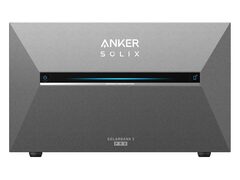
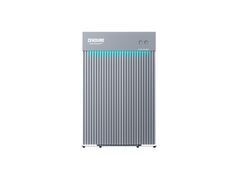
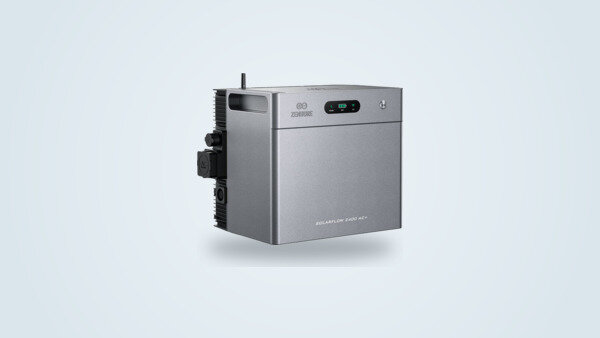
Against the Anker Solix Solarbank 4 Pro E5000 and the Bluetti Balco 500, two competitors with a comparable capacity around 5 kWh, the Venus E 3.0 stands out with a clear price-per-kWh advantage. It loses out on versatility, however: both Anker and Bluetti integrate their own MPPT solar input, letting them run without an existing installation, unlike the Venus E 3.0's purely AC coupling. Against the Zendure SolarFlow 3000 Mix AC+, which has more capacity (8 kWh) but cannot be expanded, the Venus E 3.0 keeps the advantage of modularity in 5.12 kWh steps.
Prices actually observed
The catalogue price of €1249 (struck through from €1349) is confirmed accurate on the product sheet's partner link as of this writing. Prices elsewhere run as high as €1499, depending on whether the CT002 metre is included in the bundle. The catalogue price therefore sits at the low end of the prices observed, a consistent and non-misleading configuration.