

A third inverter generator in a Güde range that now counts three
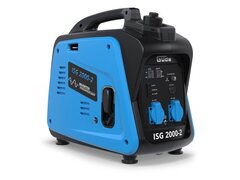
The Güde ISG 2000-2 sits in the middle of the German manufacturer's inverter generator range, between the smaller ISG 1200-1 and the more powerful ISG 3200-2. Like any inverter set, it does not produce 230V AC directly at engine speed: it generates DC first, then electronically rebuilds a stable waveform regardless of engine speed. That single technical difference changes what the unit can safely power, allowing a laptop, a home router or a fridge with a control board to be plugged in, uses best avoided on a conventional open-frame set.
The 99.2cc four-stroke OHV engine meets the Euro 5 emissions standard, a point the sales copy does not push but one that puts the unit on the right side of current small-engine regulation. Two Schuko 230V sockets and a 12V output with its own lead cover the core uses the brand targets: motorhome trips, light site work or backup power at home during a cut.
1700W continuous: real headroom for electronics and appliances, not for heating
The quoted power figures (2000W peak, 1700W continuous) are consistent across every source checked. That continuous rating is enough for a fridge, full lighting, a pump and several devices charging at once, exactly the use case the manufacturer targets. The ceiling is just as clear: 1700W continuous rules out heavy resistive loads outright, a fan heater, an immersion heater or a kettle, which often draw close to 2000W on their own at switch-on.
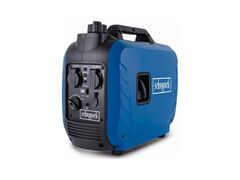
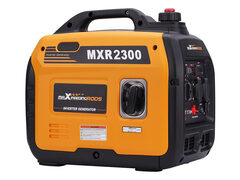
Against its two closest rivals on price, the Güde sits slightly behind on continuous output: the Scheppach SG2500i quotes 2000W and the maXpeedingrods 2300W quotes 1800W, against 1700W here. The gap barely matters for everyday use, but it is the one line on the spec sheet that separates the three.
A 4.1-litre tank: roughly three hours at full load, close to six on ECO mode
Güde quotes up to 5.9 hours of runtime, but that figure only holds at 50% load with ECO mode engaged, which drops engine speed as soon as real demand falls. Worked at full output, 1700W continuous, the 4.1-litre tank is good for roughly three hours, a figure the product sheet itself states plainly rather than leaving it in the shadow of the more flattering number.
No independent litres-per-hour figure at continuous output has turned up for this specific model: dividing the tank by the quoted runtime gives a rough order of magnitude, not a value checked on a bench at rated load. That is also why the cost-per-kWh indicator, which assumes consumption measured at rated continuous power, does not appear on this page: estimating it from a partial-load figure would have inflated real runtime artificially.
In practice, the small tank is an easy problem to work around: a 5-litre jerry can doubles the available day, a simpler fix than topping up a larger built-in tank without stopping the engine for longer.
93 dB LWA on the spec sheet, more like 60 to 66 dB(A) at seven metres in practice
The 93 dB figure on the spec sheet is a standardised sound-power rating (LWA), a regulatory measure used to compare units on paper, not what is actually heard from a neighbouring pitch. At seven metres, the real-world level sits closer to 60 to 66 dB(A) depending on load and engine mode, a range that several independent accounts converge on without ever settling on one single precise figure.
| Product | Level at 7 m | Condition |
|---|---|---|
| Güde ISG 2000-2 | 60 to 66 dB(A) | Variable load |
| maXpeedingrods 2300W | 58 dB(A) | ECO mode, quarter load |
| Scheppach SG2500i | ≈ 64 dB(A) | Distance not stated |
| Honda EU10i | 52 dB(A) | Reduced load |
On this axis the Güde sits mid-pack rather than leading it: the maXpeedingrods 2300W claims 58 dB(A) at seven metres in ECO mode at quarter load, and the Honda EU10i, a far pricier unit with lower output, drops to 52 dB(A) at reduced load. ECO mode genuinely cuts engine speed and noise as load falls, but it is not enough to put the ISG 2000-2 among the quietest units on the market.
Inverter power confirmed for electronics, but no published distortion figure
Inverter technology remains the product's real selling point: current is electronically rebuilt before being delivered, allowing a laptop, a television or a fridge with a control board to be plugged in without worry for the hardware. Nothing points to a problem of that kind on this model. Güde does not, however, publish a harmonic distortion (THD) figure for the ISG 2000-2, unlike the maXpeedingrods 2300W which claims under 3%: there is no way to compare the cleanliness of the two waveforms objectively beyond how each behaves with sensitive electronics in practice.
On starting, the auto-return recoil pull is usually enough in one or two pulls. In cold weather, or after the unit has sat unused for a while, it can take up to five, a variability worth knowing about rather than a sign of a fault. No recurring fuel leak specific to this model has turned up in this research; the generic risk on any small carburettor engine, a seal drying out after a winter left with a full tank, is routine maintenance rather than a documented defect of the ISG 2000-2 itself.
The engine meets the Euro 5 emissions standard, and the two built-in cut-outs, overload and low oil, protect the engine without the user having to intervene. No automatic cut-off for a build-up of carbon monoxide is documented for this model, though, a limitation common to most generators at this price point and one that calls for the same ventilation caution as with any petrol engine.
The lightest of its power class, but a single handle for 18.5 kg
At 18.5 kg, the Güde ISG 2000-2 is the lightest of the three 1700 to 2000W generators compared here: the maXpeedingrods 2300W weighs 18 kg (a negligible difference), and the Scheppach SG2500i around 21 kg. The enclosed case, 525 x 282 x 457 mm, fits a car boot without difficulty and can be set down with one hand next to a tent.
The catch is the handle: a single one, on top, when carrying 18.5 kg any real distance works better with two hands or a secondary side grip. On a driveway or a campsite pitch close to the vehicle, that is a minor niggle; it becomes more noticeable the moment the unit has to be carried a hundred metres or so, say to a remote site or worksite away from the parking spot.
A 3-year manufacturer warranty, a step ahead of Honda
Güde has made DIY and garden equipment since 1979 and distributes spare parts through a network of specialist dealers across Germany and several other European countries, with parts lookup by serial number available directly from the manufacturer's own site. The manufacturer warranty quoted on this engine range is 3 years, longer than the 2 years on the Honda EU10i, itself the segment's reference point for perceived longevity.
The enclosed plastic case, anti-vibration feet and the two built-in cut-outs (overload, low oil) are consistent with a correctly finished entry-to-mid-range product, with no recurring build fault identified in this research. Güde does not, however, carry the exceptional longevity reputation documented for some Honda engines, with units reported well past several thousand hours of use: this is a solid mainstream brand, comparable to an Einhell, rather than a premium reference on this specific point.
Against the Scheppach SG2500i and the maXpeedingrods 2300W
Between roughly £290 and £420 depending on the market, 1700 to 2000W inverter generators look alike on paper and separate on concrete details: fuel reserve, sockets and weight. The Güde ISG 2000-2 product page already sets the unit against three references; here is what this review takes from that comparison.
| Criterion | Güde ISG 2000-2 | Scheppach SG2500i | maXpeedingrods 2300W |
|---|---|---|---|
| Continuous output | 1700 W | 2000 W | 1800 W |
| Peak output | 2000 W | 2200 W | 2300 W |
| Outputs | 2 x 230V + 12V | 2 x 230V + 2 USB | 2 x 230V + USB |
| Weight | 18.5 kg | ≈ 21 kg | 18 kg |
| Manufacturer warranty | 3 years | Not stated | Not stated |
| Observed price | ≈ £290 | ≈ £325 | ≈ £315 |
The Güde remains the only one of the three with a 12V output and its own lead supplied, a genuine plus for anyone who also wants to revive a car or motorhome battery. The Scheppach SG2500i offers more continuous power and two USB ports, at the cost of a unit around two and a half kilos heavier. The maXpeedingrods 2300W claims the best documented power quality of the trio (THD under 3%) and the quietest ECO mode, but without the spare-parts network of a European manufacturer established for close to fifty years. A pricier fourth unit in the same class, the Könner & Söhnen KS2000i S, trades on finish and sound insulation but is limited to a single 230V socket.
For motorhome trips or occasional backup with a genuine need for a 12V output, the ISG 2000-2 remains the most versatile choice of the three. For anyone prioritising raw continuous power or a power-quality figure published by the manufacturer, the Scheppach or the maXpeedingrods better suit a specific need.