
Real-world efficiency: very good at full power, weak below 150W
DC-to-AC efficiency sits around 89% at an output power of 800W (a documented protocol). That is a good score, well above the 99% stated by the manufacturer, which actually refers only to MPPT conversion efficiency and not the complete chain. This efficiency drops sharply to around 79% at 150W output, and seems even lower at very low power, around 50W. This is an important point: low power is exactly the most common situation on a balcony, in cloudy weather or late in the day.
The two MPPT trackers, genuinely independent
The two MPPT controllers work well independently of each other and genuinely deliver the stated power, with around 900W measured per input, or about 1800W combined, consistent with the spec sheet. No artificial throttling was detected on the battery's charging. On the other hand, the effect of partial shading on one input on the other has not been measured precisely: this behavior remains unverified and should not be presented as tested.
The real weakness: WiFi and firmware
This is the best-documented topic on this product. Recurring WiFi connection drops are widely reported, with automatic reconnection sometimes failing. A specific firmware bug affects the device: charging stays locked even though solar voltage is present, with no official fix documented at the time of writing. Some automatic updates have also been reported as problematic, overwriting the existing configuration. This is not a systematic failure, stable operation over several months remains possible, but it is a recurring and well-identified friction point.
The multi-module extension, a real design flaw
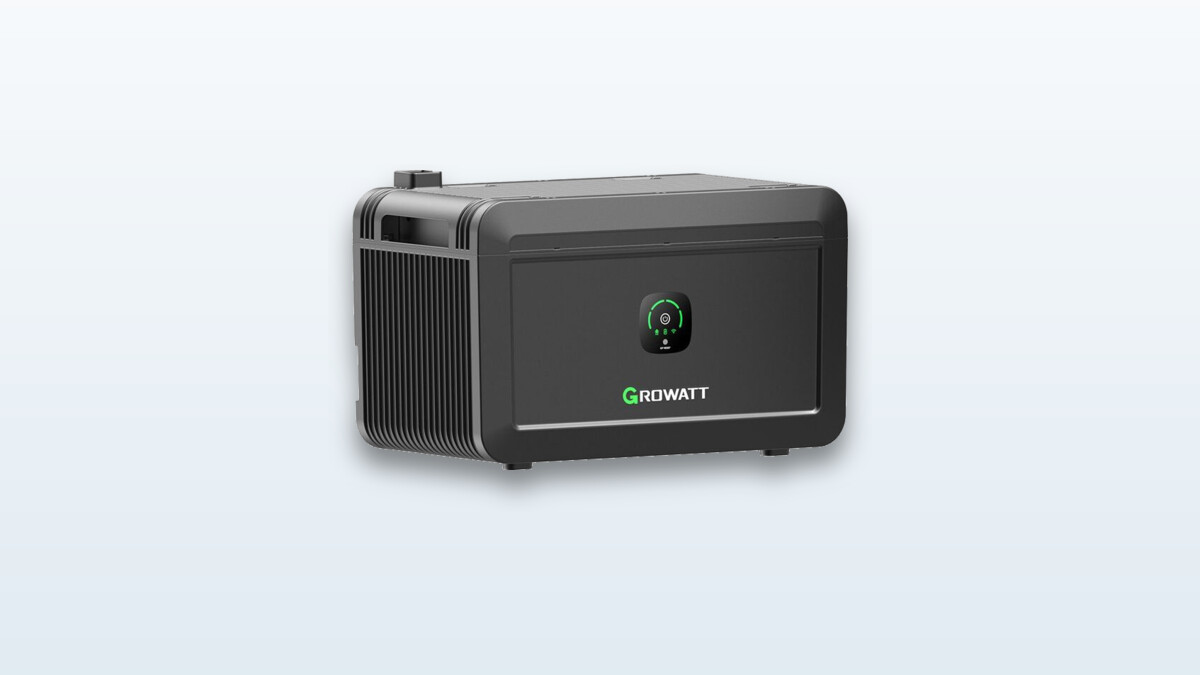
The NOAH 2000's central marketing argument is its expandability up to 8192Wh by stacking 4 modules. In practice, a significant charge imbalance between stacked units appears regularly, with a state-of-charge gap that can exceed 20 percentage points. In certain operating modes, the solar output of the bottom module in the stack simply goes unused, wasting a significant share of the available energy. The identified cause is structural: stacked modules communicate in series with no active charge balancing between them. The severity of the problem varies with the mode and firmware version used, but its existence is real.
DC coupling and compatibility with other micro-inverters
The NOAH 2000 couples in direct current, between the panels and a micro-inverter, rather than on the AC output side like most competitors. With the native Growatt micro-inverter, the installation is confirmed stable and practical. Compatibility also extends to third-party micro-inverters: the Hoymiles HMS-800W-2T works stably for zero-export, and the APsystems EZ1-M is also confirmed compatible after a fix to an earlier firmware limitation. An older model, the Hoymiles HM-1500, is documented as incompatible, however. An important point to know: with any non-Growatt micro-inverter, smart zero-export control is lost, and the device falls back to a fixed power output rather than one matched to the home's actual consumption.
Cold-weather performance, partially verified
The manufacturer states operation from -20 °C to 45 °C thanks to a built-in heating film. In the field, the heating proves active and effective at -5 °C, reaching its target temperature within minutes. However, the -20 °C claim remains an uncorroborated manufacturer figure. Several users also add supplementary manual insulation in winter, a sign of measured confidence in the built-in heating film alone.
Against the competition: more efficient, less equipped
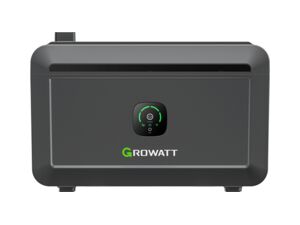
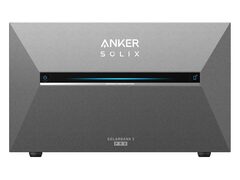
Measured using the same protocol as the Anker Solix Solarbank 3 Pro, the NOAH 2000 comes out about 7 efficiency points ahead at full power (89% versus 82%). In exchange, it offers less capacity (2048Wh versus 2688Wh), fewer MPPT trackers (2 versus 4), and no built-in inverter, unlike the Solarbank 3 Pro, which has its own. The NOAH 2000 is nonetheless cheaper to buy, though the gap depends heavily on the retailer chosen. It is a clear trade-off: more affordable and more efficient at full power, but less complete and less straightforward to install for anyone starting from scratch.
Real-world price and availability
The price listed by the retailer linked from this page runs around 745 euros including tax for a single module. That is noticeably above the prices commonly observed elsewhere on the market for this same product, more typically between 380 and 480 euros across the general comparison sites and retailers consulted. This gap between sales channels is real and significant: it's worth comparing several retailers before buying rather than relying on a single listed price. Distribution, initially concentrated in Germany, has expanded to France and Belgium through several retailers. Nearly all of the available independent content (reviews, forums, troubleshooting), however, remains German-language: a French buyer can obtain the product easily, but will find little French-language community or support in case of a problem.