
Ugreen 130W Car Charger Review: With or Without the 100W Port Holding Up

130 W advertised, three ports, a 100 W cable in the box: on paper, the Ugreen car charger has everything going for it. Three independent measurements tell a different story about its flagship port, the one meant to charge a laptop at full speed.

Our rating
3.8/5
Safety and protections: 4.1 out of 5 (weighting 20%)Safety4.1Build and endurance: 3.5 out of 5 (weighting 15%)Build3.5Actually delivered power: 3.4 out of 5 (weighting 25%)Power3.4Multi-port power sharing: 4.0 out of 5 (weighting 20%)Sharing4.0Protocol compatibility: 4.2 out of 5 (weighting 12%)Protocols4.2Size and technology: 3.8 out of 5 (weighting 8%)Size3.8

How is this rating calculated?

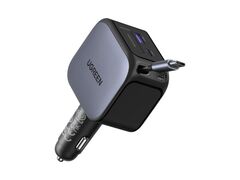
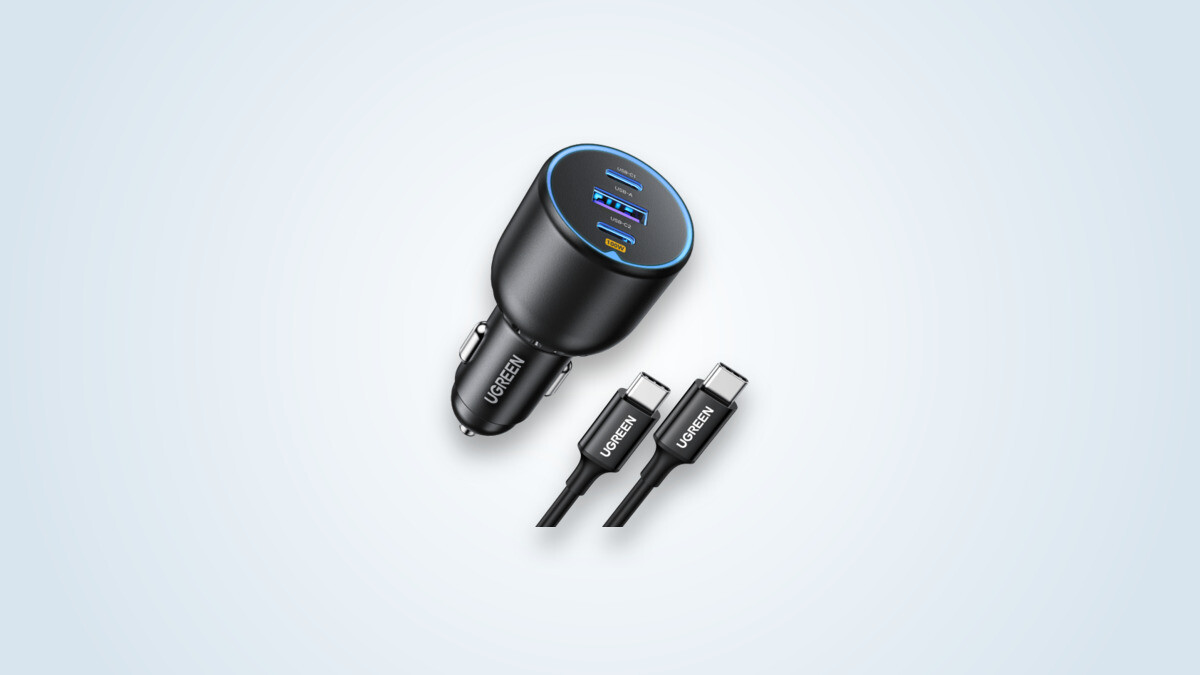
Ugreen 130W car charger with its braided USB-C cable

The essentials

The Ugreen 130W keeps one real promise, three ports usable at once with a 100 W cable included in the box, a rarity at this price point. It falls short on another: three independent measurements, in Germany and in the United States, show the 100 W port holding that power for only a few minutes before dropping to between 45 and 80 W depending on the unit and conditions. Build quality, praised for its clean metal finish, is undercut by several reports of the main port failing after just a few months of use. A solid charger for topping up several phones at once, less convincing as a sustained fast-charging solution for a laptop.

Strengths

  • Braided 100 W USB-C to USB-C cable included in the box, a rarity at this price point that avoids a separate purchase
  • Three ports usable at the same time (2x USB-C + 1x USB-A) with no perceptible slowdown in everyday multi-phone use
  • Wide, confirmed protocol compatibility: PD, PPS, QC 3.0/4+, including 45 W fast charging on a Samsung Galaxy S24 Ultra
  • Largely metal build, praised for its quality even in the sources most critical of the power it actually holds

Limitations

  • The 100 W port holds full power for only 4 to 5 minutes before dropping to 45 to 80 W depending on the measurement, a gap confirmed by three independent measurements that directly contradicts the promise of sustained fast charging for a laptop
  • Multiple independent reports of the 100 W port failing between 3 months and under a year of use, a pattern frequent enough to appear in the automated summary of online customer reviews
  • Uncomfortable heat at the cigarette-lighter contact point on some units, likely tied to the condition of the vehicle's socket rather than a uniform charger fault
  • Larger than a basic cigarette-lighter charger, which can be awkward depending on where the socket sits in the cabin
Ugreen 130W Car Charger: see the full details and price →

Does the 100 W port hold up? Three measurements say no

100 W
Advertised power
45-80 W
Power after 4-5 min
130 W
Total advertised, 3 ports

The figure that sells this charger is the main 100 W USB-C port, meant to charge a laptop at full speed straight from the cigarette-lighter socket. Three independent measurements tell a noticeably more nuanced story. A dedicated German measurement times the drop: full power holds for only five minutes, then falls back to around 45 W. A measurement carried out with a laptop plugged in continuously confirms the same mechanism, at a different level: 93 W at the start, 65 W after four minutes, with no improvement even when the vehicle's air conditioning is aimed directly at the unit. A third measurement places the drop at an intermediate level, 75 to 80 W once the housing has warmed up.

The three end values differ, which is expected (unit-to-unit variance, ambient temperature, prior charging duration), but the mechanism itself, a sharp drop after a few minutes, is confirmed three times independently. One isolated data point, without a precise protocol or timing, points the other way toward power held for longer: too weak a signal on its own to outweigh three consistent measurements.

Worth remembering: the Ugreen 130W's 100 W is a starting peak, not sustained power. For charging a laptop continuously on a long trip, plan a safety margin on the charging time actually achieved.

Three devices at once, without a hitch

Where the 100 W port disappoints over time, everyday multi-device use works as advertised: the two USB-C ports (100 and 30 W) and the USB-A port (22.5 W) charge three phones or tablets at once with no noticeable slowdown, including on trips with several passengers. The exact power split under simultaneous three-port use has not been confirmed by a reliable, independent measurement; absent that, the promise of smart sharing across the three ports gets the benefit of the doubt for this specific use, unlike the 100 W port on its own.

Heat that varies with the vehicle's socket

Contact-point heat at the cigarette-lighter socket runs uncomfortably high on some units, up to around 54 °C in one specific case, while the housing stays cool on other units even in strong external heat. This gap likely has less to do with a uniform charger fault than with the variable condition of cigarette-lighter sockets themselves, whose diameter and wear differ from one vehicle to another: an imperfect contact raises electrical resistance at the connection point, and therefore the heat given off there. A point worth watching at installation rather than a general alarm.

Reliability: the 100 W port, again, the most exposed

Beyond the power drop, a complete failure of the 100 W port after a period ranging from three months to under a year comes up more than once across the material available, while the rest of the charger keeps working. This failure pattern targets the component under the most thermal stress, consistent with the power-drop mechanism already covered: a port regularly pushed close to its limit, with frequent thermal throttling, is mechanically the most exposed to early wear. That is not the outcome for most buyers, but it is frequent enough to justify particular caution on this specific port, for example by avoiding continuous charges of more than a few minutes on power-hungry devices.

Build quality holds up, even under the harshest sources

A sign that the problem stays confined to the 100 W port rather than the product as a whole: perceived build quality remains good, a largely metal housing, well finished even according to the measurement most critical of the power it actually holds. One isolated case of front-panel cracking after a fall from a low height exists in the material available, but it stands as a single documented instance rather than a recurring pattern.

Against the rest of the Ugreen range: a deliberate mid-range choice

The 130W sits in the middle of Ugreen's cigarette-lighter charger range, between the two-port 63W with no included cable and the 145W with a built-in retractable cable. The detachable 100 W cable included remains its strongest argument against the 63W, and its price gap with the 145W comes down mainly to the missing built-in retractable cable, more convenient day to day but also more fragile over the long run on this type of accessory.

Who is this charger for?

The Ugreen 130W suits first and foremost anyone wanting to charge several phones or tablets at once without ever worrying about which port to use, with a 100 W cable already in the box. For anyone truly counting on charging a laptop at full speed over a long trip, the 100 W port's promise only holds up for the first few minutes: better to factor that limit into a battery-life calculation, or look at an alternative whose sustained power has been confirmed over time.
The rating in detail

Our rating
3.8/5
Actual charging current not measured
Battery compatibility not measured
Safety and protections 4.1
Build and endurance 3.5
Cables and connectors not measured
Actually delivered power 3.4
Multi-port power sharing 4.0
Protocol compatibility 4.2
Size and technology 3.8
Ugreen 130W Car Charger: see the full details and price →

The product and its alternatives

Ugreen 130W Car Charger

Ugreen 130W Car Charger

See price (41)

The 130W cigarette-lighter charger that charges 3 devices at once: one USB-C port reaches 100W, and the 100W USB-C cable is included, ready to use.

View product
Ugreen Car Charger 63W

Ugreen Car Charger 63W

See price (28)

A powerful 63W car charger: one 45W USB-C fast-charging port and one USB-A port, to charge two devices at once in the car, even a laptop.

View product
Ugreen 145W Car Charger

Ugreen 145W Car Charger

See price (18)

The all-in-one car charger: 145W to charge 4 devices at once, with a 70 cm retractable USB-C cable always to hand in the car.

View product
Anker 30W Car Charger

Anker 30W Car Charger

See price (40)

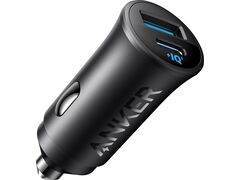
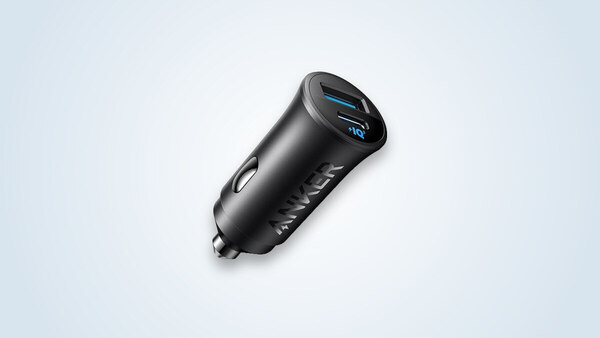
One USB-C port and one USB-A port in a tiny body: the Anker 30W car charger quickly charges two devices at once without sticking out of the 12V socket.

View product

Frequently asked questions

Only for the first few minutes. Three independent measurements, in Germany and in the United States, show power dropping from 100 W to somewhere between 45 and 80 W after 4 to 5 minutes of continuous charging, depending on the unit and the temperature. The port stays useful for a quick top-up, less so for sustained charging on the road.

Yes for everyday multi-phone use: the two USB-C ports (100 W and 30 W) and the USB-A port (22.5 W) run at the same time with no noticeable slowdown. The exact power split across all three ports charging at once has not been measured reliably.

A 100 W port failure between 3 months and under a year of use comes up more than once across the material available, a pattern frequent enough to surface in the automated summary of customer reviews. That is not the majority outcome, but it is a real point worth knowing before buying.

Yes, it is one of the product's genuine advantages: a braided USB-C to USB-C cable, certified for 100 W, comes in the box. Without it, a standard uncertified cable would limit the power actually delivered, even with a port capable of 100 W.

The included cable is USB-C to USB-C: an iPhone with a Lightning port (14 and earlier) needs its own Lightning to USB-C cable, not included in the box. iPhone 15 and later, with native USB-C, work directly with the cable supplied.