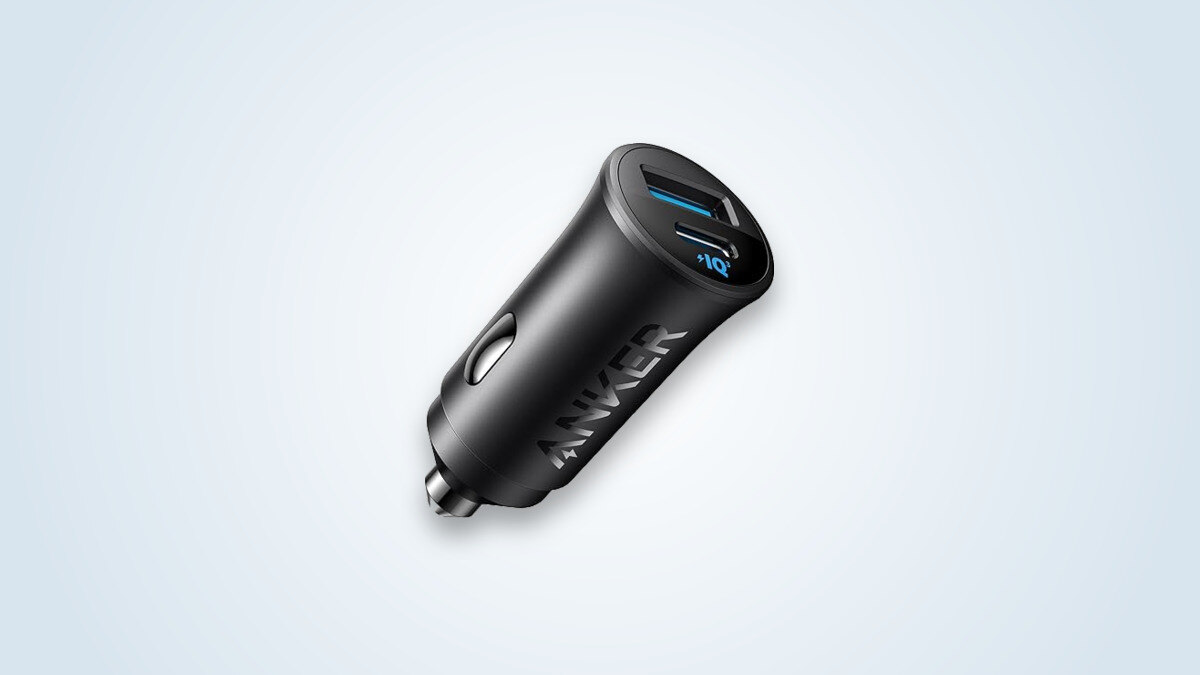
Anker 30W Car Charger Review: Port by Port

A tiny footprint, one USB-C port, one USB-A port: the Anker 30W cigarette-lighter charger keeps a real promise when only one device is plugged in. With two devices at once, the picture gets more complicated.

Our rating
3.9/5
Safety and protections: 4.2 out of 5 (weighting 20%)Safety4.2Build and endurance: 3.9 out of 5 (weighting 15%)Build3.9Actually delivered power: 3.7 out of 5 (weighting 25%)Power3.7Multi-port power sharing: 3.6 out of 5 (weighting 20%)Sharing3.6Protocol compatibility: 4.0 out of 5 (weighting 12%)Protocols4.0Size and technology: 4.3 out of 5 (weighting 8%)Size4.3

How is this rating calculated?

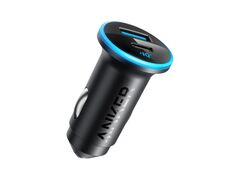
Anker 30W car charger showing a USB-C port and a USB-A port

The essentials

Used with a single device plugged in, the Anker 30W keeps its promise: an independent measurement puts it at 29.3 W out of the 30 W advertised, or 98% of the rated figure. As soon as a second device joins the first, total power stays capped at 30 W shared rather than adding up, and several independent data points describe cutoffs or reconnections when the second port is plugged in. The format remains one of the most compact on the market, a genuine everyday advantage, but a few reports of port failure after several months of use call for some caution over time. A good choice for charging one device at a time, less clear-cut once two people want to charge at once.

Strengths

  • Single-port power that almost matches the claim: 29.3 W measured against 30 W advertised, or 98% of the rated figure
  • One of the most compact formats on the market (15 g, about 55 mm long), which generally clears the gear lever
  • Working PPS compatibility for Samsung fast charging up to 25 W
  • No current leakage outside of active charging on this model, a point that is sometimes weak on this type of small accessory

Limitations

  • In dual charging, total power stays capped at 30 W shared (around 20 W on USB-C and 10 W on USB-A) rather than adding up, unlike what the product's marketing suggests
  • Several independent data points describe cutoffs or reconnections when a second device is plugged in, a more disruptive issue than a simple reduced split
  • The measured PPS window (up to 11 V) does not reach the 45 W fast-charging tier of a Samsung Galaxy Ultra, even though it covers most other Samsung devices
  • A few reports of port degradation or failure after several months to a year of use, a minority pattern but a real one
Anker 30W Car Charger: see the full details and price →

Alone on the port, it keeps its promise

29.3 W
Measured against 30 W advertised
98 %
Of the rated figure reached
15 g
Weight

Used with a single device plugged in, the Anker 30W keeps a promise that is rare for this type of accessory: an independent measurement, carried out across five different voltage profiles, puts it at 29.3 W at 13.8 V and 29.7 W at 24 V, or 98% of the advertised power. The measured PPS window spans 3.3 to 11 V for around 29.7 W, enough for Samsung fast charging up to 25 W, but not for the 45 W of an Ultra model, which needs a higher voltage.

A ninety-minute drive in traffic, phone plugged in under heavy GPS use, took a battery from 42 to 76%, a 34-point gain in 90 minutes for a single device charging. On this one port, the marketing claim holds up in practice.

With two devices, the split gets complicated

Where single-port use is convincing, two-device use reveals the product's real limit. An independent measurement confirms that total power stays capped at 30 W shared between the two ports, split at around 20 W for USB-C and 10 W for USB-A, rather than the 30 W plus 22.5 W that would add up if the ports worked fully independently.

This reduced split is not the only issue, though. Three separate, independently timed data points go further than a simple power split: they point to full cutoffs or repeated reconnections as soon as a second device is plugged in, including across several different cables tested to rule out a cable fault. One of these cases shows a disconnect-and-reconnect cycle every seven to ten seconds during a trip with several passengers. This cutoff behavior goes beyond a simple power split: it suggests a charging renegotiation that fails in certain device or cable combinations, rather than a stable, predictable ceiling.

Worth remembering: for two people charging at the same time, expect each device's speed to drop, and an occasional cutoff remains possible depending on which devices are plugged in.

Heat that depends heavily on sun exposure

Under continuous charging at a moderate ambient temperature (around 28 °C), the housing reaches around 47 °C at its hottest, a reasonable figure for this type of product. Exposed to direct sun on a dashboard, the temperature climbs noticeably higher, to around 61 °C, with thermal protection pulling available power down from around 30 to 22 W. This behavior is expected and, in a way, reassuring (the product protects itself rather than risking overheating), but it explains why the power actually available can vary widely depending on where the charger sits in the cabin.

Another limit worth knowing: the charger disconnects below 11.8 V DC, a threshold that can be reached at engine start or at low idle on a tired battery.

A format that stays among the most unobtrusive

At 15 grams for 54.6 x 23.9 x 24.1 mm, the Anker 30W remains one of the most compact cigarette-lighter chargers on the market, barely protruding from the socket in most cases. Once inserted, it still sticks out by about 30 mm, enough to clear the gear lever on most vehicles checked (2018 Toyota Corolla, 2020 Hyundai Elantra), even though the exact socket position can shift that impression from one vehicle to another.

Reliability: a minority pattern worth knowing

Beyond dual-charging behavior, extended use over close to a year shows charging power falling under 2 W in one case, checked across several cables to rule out a cable fault, a degradation signal worth taking seriously even though it does not represent the majority of the material available. One warranty case also involved a long wait before replacement, with the unit needing to be shipped back rather than swapped on the spot.

Against the Ugreen 130W: two opposite philosophies

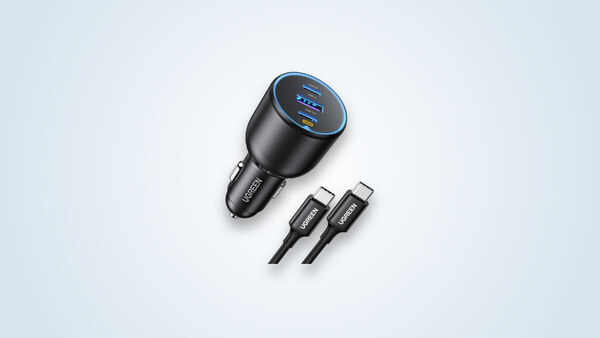
Compared with the Ugreen 130W, also reviewed on this site, the Anker 30W plays a completely opposite card: simplicity and extreme compactness against three-port versatility and a 100 W peak. Where the Ugreen 130W struggles to hold its advertised power over time, the Anker 30W holds its own very well in single-port use, at the cost of a much more modest total power and less predictable behavior once two devices share the charger. The choice mainly comes down to real need: a single phone to charge quickly favors the Anker, several devices with potentially a laptop favor the Ugreen, with its own reservations about sustained power.

Who is this charger for?

The Anker 30W suits first and foremost anyone wanting a discreet charger for one phone at a time, with power that genuinely matches the claim and a format that disappears in the cabin. For regular use by two people charging at once, better to factor in the reduced power and the occasional risk of a cutoff, or look at a multi-port charger designed for that use from the start.
The rating in detail

Our rating
3.9/5
Actual charging current not measured
Battery compatibility not measured
Safety and protections 4.2
Build and endurance 3.9
Cables and connectors not measured
Actually delivered power 3.7
Multi-port power sharing 3.6
Protocol compatibility 4.0
Size and technology 4.3
Anker 30W Car Charger: see the full details and price →

The product and its alternatives

Anker 30W Car Charger

Anker 30W Car Charger

See price (40)

One USB-C port and one USB-A port in a tiny body: the Anker 30W car charger quickly charges two devices at once without sticking out of the 12V socket.

View product
Ugreen 130W Car Charger

Ugreen 130W Car Charger

See price (41)

The 130W cigarette-lighter charger that charges 3 devices at once: one USB-C port reaches 100W, and the 100W USB-C cable is included, ready to use.

View product
Anker 323 Car Charger 52.5W

Anker 323 Car Charger 52.5W

See price (12)

Two ports at once: the Anker 323 car charger pairs a 30W USB-C port with a 22.5W USB-A port to charge a phone and a tablet at the same time.

View product

Frequently asked questions

With a single device plugged in, yes: an independent measurement puts it at 29.3 W at 13.8 V and 29.7 W at 24 V, or 98% of the advertised figure across five different voltage profiles. That is one of the smallest gaps between marketing and measurement found on this type of product.

No. Total power stays capped at 30 W shared between the two ports (around 20 W on USB-C and 10 W on USB-A) rather than adding up. Several data points go further and describe cutoffs or reconnections when the second device is plugged in, a more disruptive behavior than a simple reduced split.

For most PPS-compatible Samsung models up to 25 W, yes. The measured voltage window (up to 11 V) does not, however, cover the 45 W fast charging of Ultra models, which need a higher voltage.

In lab conditions at a moderate ambient temperature, the housing reaches around 47 °C. In direct sun on a dashboard, the temperature climbs further and power can drop from around 30 to 22 W under thermal protection, an expected behavior for this type of small housing exposed directly to sunlight.

Yes for most of the housing, but it still protrudes about 30 mm once inserted, which can interfere with the gear lever depending on where the socket sits on certain vehicle models.