
Real efficiency: 83 to 85%, a good score for pure AC coupling
Round-trip efficiency sits between 83% at 800W and 83.7% at 2500W, with a figure close to 85% across several separate independent measurements, a convergence across four sources that makes this result solid. That's a good score given the architecture: pure AC coupling adds an extra conversion step compared with a system with direct MPPT, which makes a raw comparison with DC-coupled batteries not very meaningful. To give a sense of scale, a DC system from the same brand shows a slightly lower measured efficiency in one comparison, a counterintuitive result that suggests differing test methodologies rather than a fact to generalize as-is.
Backup switchover: fast and confirmed in real-world use
The 3680W backup port switches over in under 10 milliseconds, a value that also holds up in real-world use: during a 3.5-hour outage, 1.8kWh were discharged with no perceptible interruption. An important nuance to know: this backup port powers a dedicated circuit, not the home's entire electrical panel. Another structural limit, not a marketing one: during an extended grid outage, the device cannot recharge from the sun even if the panels are producing, because this is a pure AC coupling with no dedicated solar input of its own, and the existing rooftop inverter generally shuts itself down once it no longer detects the grid.
A 5-minute installation... for storage only
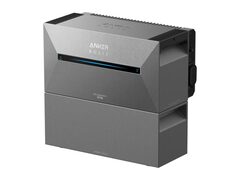
The storage part genuinely installs in a few minutes in plug-and-play mode, stacking and app pairing included. But this simplicity only covers the connection through a simple outlet, capped at 800W. To unlock the full 3500W, a connection through a Wieland outlet or dedicated circuit is required, installed by an electrician: this adds roughly 500 to 1000 euros before tax in extra work, not included in the device's listed price. In France, the manufacturer itself states that a qualified electrician must be involved to obtain the Consuel certificate and submit the connection request to the grid operator, a standard process for this power level.
Expandability: up to 42kWh, a real strength
The base capacity of 7000Wh extends up to 42kWh on a single unit with additional BP7000 modules, and up to 126kWh by networking three units together, an expandability that sits well above the category average. The claim of 100% usable capacity, with no hidden technical reserve, could not be confirmed by an independent calibrated measurement to date, on the other hand: for now it rests on the manufacturer's documentation, to be taken as such rather than as an independently verified fact.
The AI assistant: not very useful rather than broken
The optimisation assistant, called "Anka" on the manufacturer's site and "AnkerIntelligence" on other channels, a naming inconsistency that remains unresolved to date, doesn't add much in practice: it changes nothing significant compared with manual control through the app. This isn't a dealbreaker, more a marketing claim that doesn't fully hold up in use. Local control via Modbus TCP, on the other hand, works well once set up, with a response time of 5 to 10 seconds for commands, useful for anyone who wants to control the device without depending on the cloud day to day.
Customer reviews: real frictions, but not yet French
On the Amazon.fr listing, the device shows 3.7 out of 5 across 6 reviews, lower than other products in the Anker Solix lineup. An important point to know: none of these reviews come from France to date; they are aggregated from Germany and the Netherlands, for lack of French feedback still available. The content of these reviews splits into two clear profiles: easy installation and good production tracking come up repeatedly in several positive reviews, while an account activation problem remains unresolved at the time of writing in the most negative one, and imperfect interoperability between several Anker Solix devices sharing the same smart metre appears in another, with energy data that does not yet aggregate correctly in the app. By contrast, no software bug appears over several weeks of use in French field testing, where the app is judged reliable: a fairly classic contrast between press units and the real-world buyer base on a just-launched product.
Price: 2199 euros today, on a rate that has stayed stable at 2499 euros
The price recorded today on the manufacturer's official store and on Amazon.fr is 2199 euros including tax, identical to the cent on both channels. This figure corresponds to a 300-euro discount off a reference price of 2499 euros that has stayed stable for several months: the prices recorded in April, at roughly 2229-2499 euros depending on the source, then in July, at 2499 euros, place this discount as a one-off rather than as a lasting drop in the list price. The claimed annual savings also vary from one channel to another, between 1696 and 2274 euros a year, a gap that calls for caution around this rather marketing-driven figure.
Against the competition: Solarbank 4 E5000 Pro and Zendure SuperBase V
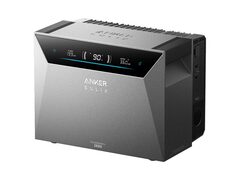
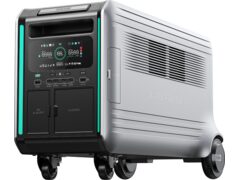
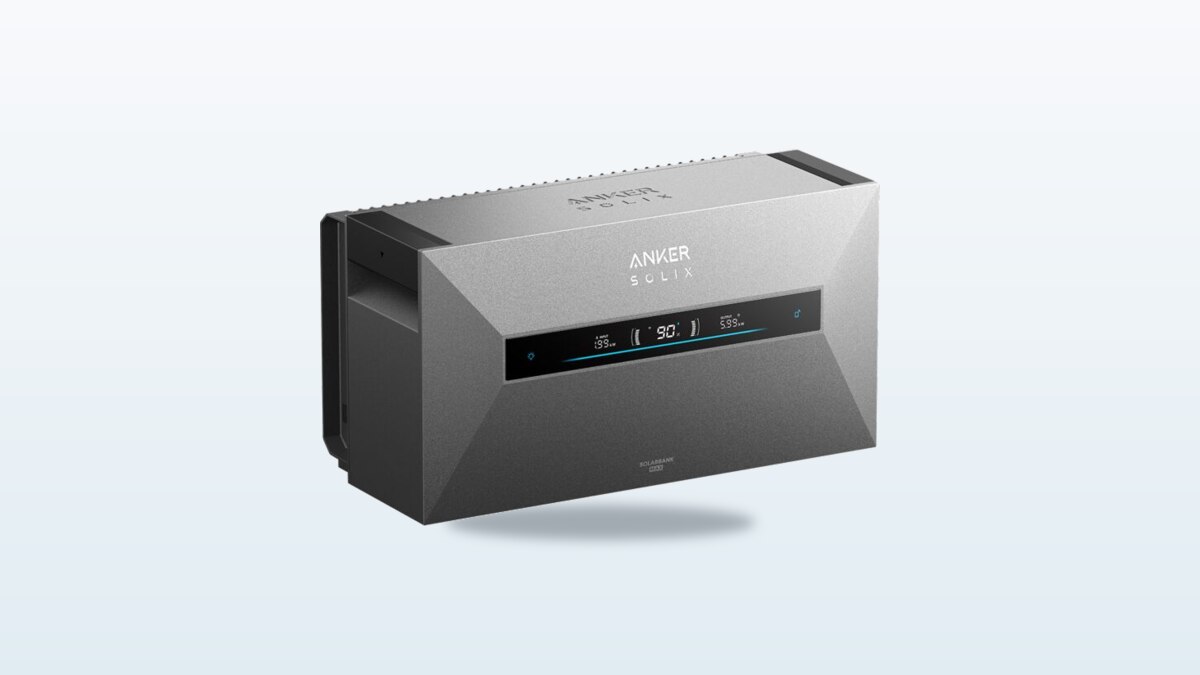
Compared with the Anker Solix Solarbank 4 E5000 Pro, which integrates 4 MPPT trackers to drive panels directly, the Max AC targets a different use case: adding to an already-installed rooftop solar setup rather than a new installation. Its more generous base capacity (7000Wh versus 5024Wh) and superior expandability come at the cost of having no direct solar input. No direct independent comparison with the Zendure SuperBase V has been found to date: the latter remains first and foremost a portable power station, a fairly different use case from the Max AC's fixed storage.
Who the Solarbank Max AC is for
The Max AC suits anyone who already has solar panels and a rooftop inverter in place and wants to add a large storage capacity without rethinking the entire electrical setup. It suits less well anyone looking for a fully predictable installation price: the real budget depends on the target power (800W on a simple outlet, or 3500W with electrician work), and the list price itself has already varied by several hundred euros within a few months. Given the still near-total absence of French feedback, it's also worth accepting some uncertainty around medium-term software reliability.