
87 W as a shared power budget, not a sum
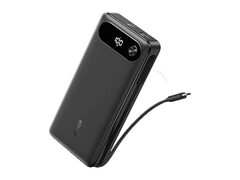
The built-in USB-C cable and the additional USB-C port each deliver up to 65 W, whichever is used, and the USB-A port delivers up to 22 W. Anker itself describes the 87 W as a total power budget shared between the active outputs, not a sum of 65 + 65 + 22 W used at the same time. No precise breakdown for multi-port use (for example two USB-C ports active at once) is published by the manufacturer.
Advertised capacity and the energy actually delivered
The rated 20000 mAh works out to about 72 Wh, a standard calculation consistent with the usual voltage of the internal cells.
Recharging really depends on the charger used
Anker states a full charge in about 1.5 hours with a suitable charger. This is a concrete point to watch: that time assumes a 65 W (or higher) Power Delivery charger. With an undersized charger, such as a common 18 or 20 W smartphone charger, charging time can stretch to 6 or 7 hours.
This is not a fault of the device, but a point often poorly anticipated at purchase: without a powerful enough charger included in the box, an abnormally long charge can wrongly give the impression of a defective product.
The built-in cable: practical, durability still unconfirmed
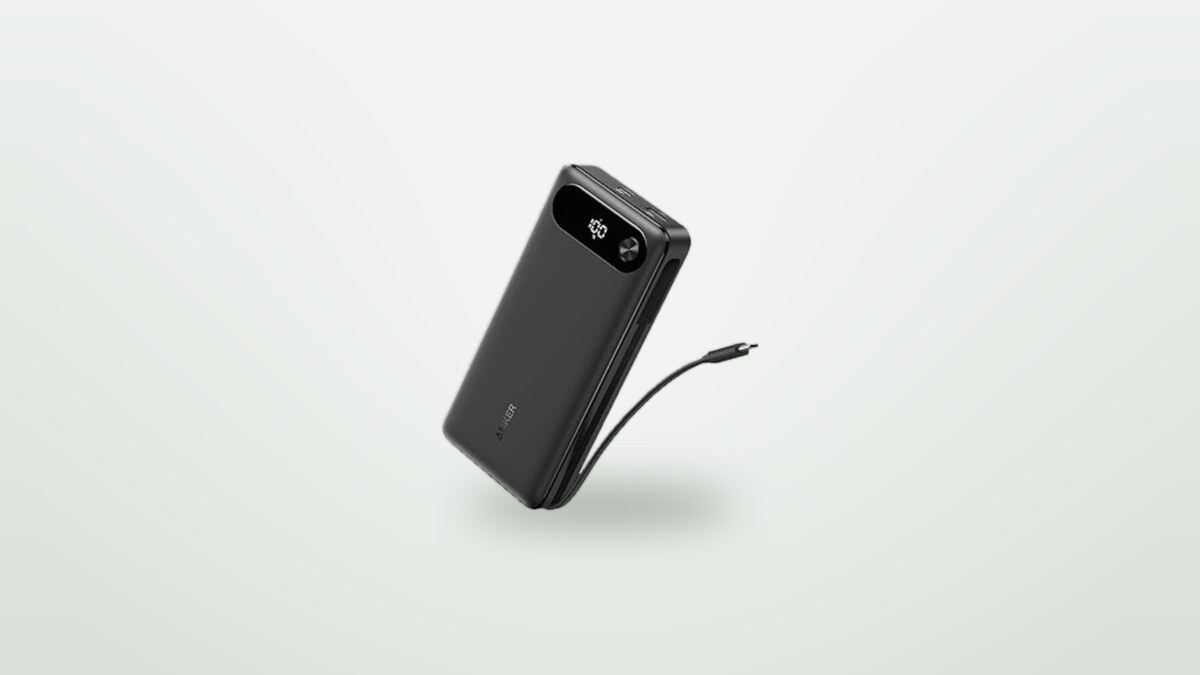
The built-in USB-C cable saves you from having to find one, and tucks into a groove on the casing. Anker states a resistance of over 10000 bends, 5000 twists, and a tensile strength of about 5 kg.
Safety: this model is not part of the Anker recalls
In 2025, several Anker external batteries with a built-in cable were affected by safety recalls, over an overheating risk linked to defective lithium-ion cells. The A1383 model covered in this review does not appear on any of the affected-reference lists published by Anker.
Build quality: a large volume of feedback, and a warranty worth clarifying
This model carries a substantial and consistent volume of customer feedback across two markets: perceived build quality and charging speed stand out as strengths, and weight is the most frequent drawback. A 2-year legal warranty of conformity applies to any purchase made in France either way, independently of the manufacturer's own commercial warranty, which Anker sets at 18 months for this model: the two should not be confused.
Against the competition
| Criterion | Anker A1383 | Ugreen Nexode 20000 165W | Anker Prime 20100 220W |
|---|---|---|---|
| Capacity | 20000 mAh | 20000 mAh | 20100 mAh |
| Power | 87 W | 165 W (100 W on a single port) | 220 W |
| Built-in cable | Yes (USB-C) | Yes (retractable) | No |
| Price observed | ≈ 46 € | ≈ $100 (US, list price) | ≈ 105-110 € |
Against the Ugreen Nexode 165W, the Anker A1383 remains noticeably less powerful, but also cheaper, with a fixed built-in cable rather than a retractable one. Against the Anker Prime 20100 220W, which succeeds this model in the brand's catalogue, the A1383 keeps the advantage of the built-in cable, while the Prime bets on raw power without that convenience.
Who this battery suits
This product suits anyone who wants a generous 20000 mAh reserve without ever having to hunt for a cable, for everyday charging of a smartphone, tablet, or small USB-C laptop.
It suits less well anyone who needs high, dependable power for a large laptop: in that case, it is worth checking the power actually required by the device in question, and in any case planning for a 65 W charger or higher to get the advertised charging speed.