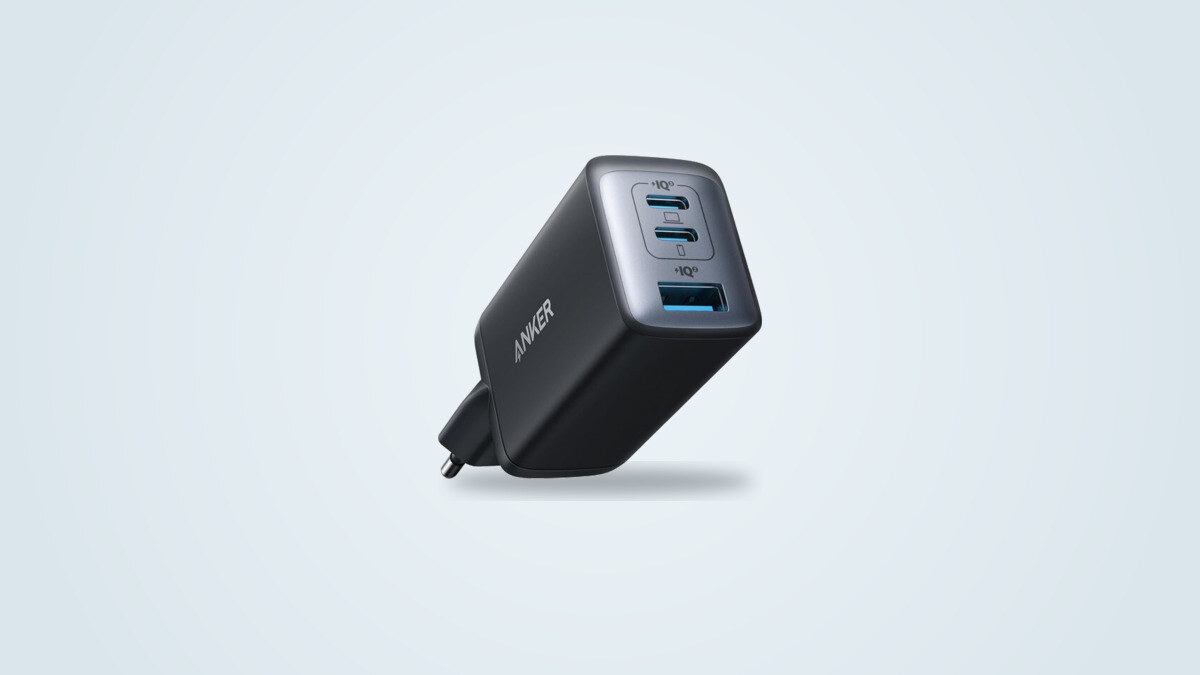
The 65W held on the main port, with two caveats
On its main USB-C port, the Anker Nano II 65W does deliver the advertised 65W. On a Samsung Galaxy S24+, the power negotiated in Super Fast Charging 2.0 reaches 9.7V at 4.9A, around 48W, with a current above 3A sustained up to roughly 60% charge.
One technical nuance is worth knowing: PPS mode (Programmable Power Supply, used by Samsung fast charging and some Android smartphones) caps at 11V on this charger, while classic fixed PD mode goes up to 20V. This limit does not stop fast charging from working, but it puts the Nano II 65W a step behind chargers that use a wider PPS range.
Another real limit: the 65W, well held on the main port, remains insufficient for the most demanding laptops (16-inch MacBook Pro, some Windows ultrabooks requiring 100W or more). A MacBook Air or a 13-inch MacBook Pro, on the other hand, charges at full speed.
Sharing power between devices: fixed, and modest with three
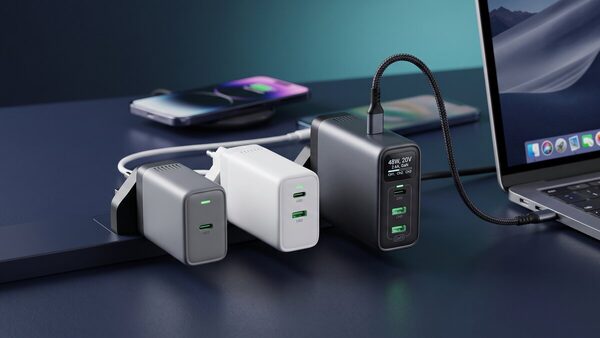
Anker documents a fixed power split across the three ports (2 USB-C and 1 USB-A), with no claim of intelligent or adaptive allocation based on what each device needs. With two USB-C ports active, power splits as 45W and 20W, or 40W and 22.5W depending on the combination; with all three ports active at once, the official scale drops to 40W on the main port and 12W on each of the other two.
This fixed scale holds up in practice: plugging a demanding laptop into the main port, then a smartphone over USB-C into the second one, drops the power available to the laptop to around 30W, in line with this official scale. Combining the second USB-C port with the USB-A port is the least generous setup: each port then caps at 12W, not enough to fast-charge a smartphone and a tablet at the same time.
Against the Ugreen Nexode 65W, the Quick Charge edge
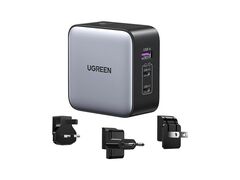
Against the Ugreen Nexode 65W, a rival GaN charger of similar power and format, the Anker Nano II 65W takes the edge on dynamic Quick Charge fast charging: its range climbs to 20V, where the Ugreen caps at 12V.
The two chargers stay close on everything else: a comparably compact format, broad protocol compatibility (Power Delivery, PPS, Quick Charge, and depending on the device Huawei FCP/SCP or MediaTek PE+), and pricing that stays broadly comparable between the two. The Ugreen keeps one advantage of its own: interchangeable wall plugs (US/UK/EU) that the Nano II 65W lacks.
Compact size and thermal management
Size remains the most consistently confirmed strength: around 140g for a footprint close to 3.8 x 2.9 x 6.6cm, notably more compact than a classic wall charger of comparable power. GaN (gallium nitride) technology allows this smaller format without sacrificing thermal management: surface temperature stays under 55 °C at its hottest point after an hour of continuous charging at full power, averaging around 45 °C. No report of worrying overheating was found either.
Reliability, warranty and user feedback
The manufacturer warranty stated for this model is 18 months. No product recall was found for this charger, neither with the US consumer product safety body nor its Canadian equivalent, unlike other Anker product categories (notably some power banks) that have had documented recalls.
Overall sentiment stays very positive on nearly every criterion: charging speed, compactness, versatility, value for money. Only the perceived long-term solidity of the case fails to reach consensus, though no report of a wider pattern of failures was found.
Who this charger suits, and who it suits less
This format particularly suits nomadic or desk use, for anyone after a single, compact charger: backpack, suitcase, or a desk with several devices to charge without piling up wall bricks. It comfortably covers a smartphone, a tablet and a standard laptop (MacBook Air, 13-inch MacBook Pro, most Windows ultrabooks), charged one after another or together at lower power.
It suits less well anyone with a very demanding laptop (16-inch MacBook Pro, mobile workstation) wanting full charging power on that device alone, or anyone who travels frequently outside Europe and needs built-in interchangeable wall plugs.
Price and availability
The Anker Nano II 65W is sold through Amazon, at around £25 at the time of writing. As with most GaN chargers on Amazon, the price can move with ongoing promotions, so it is worth checking the current listing before buying.