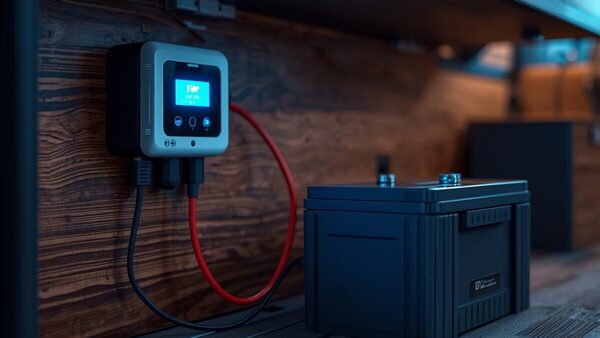

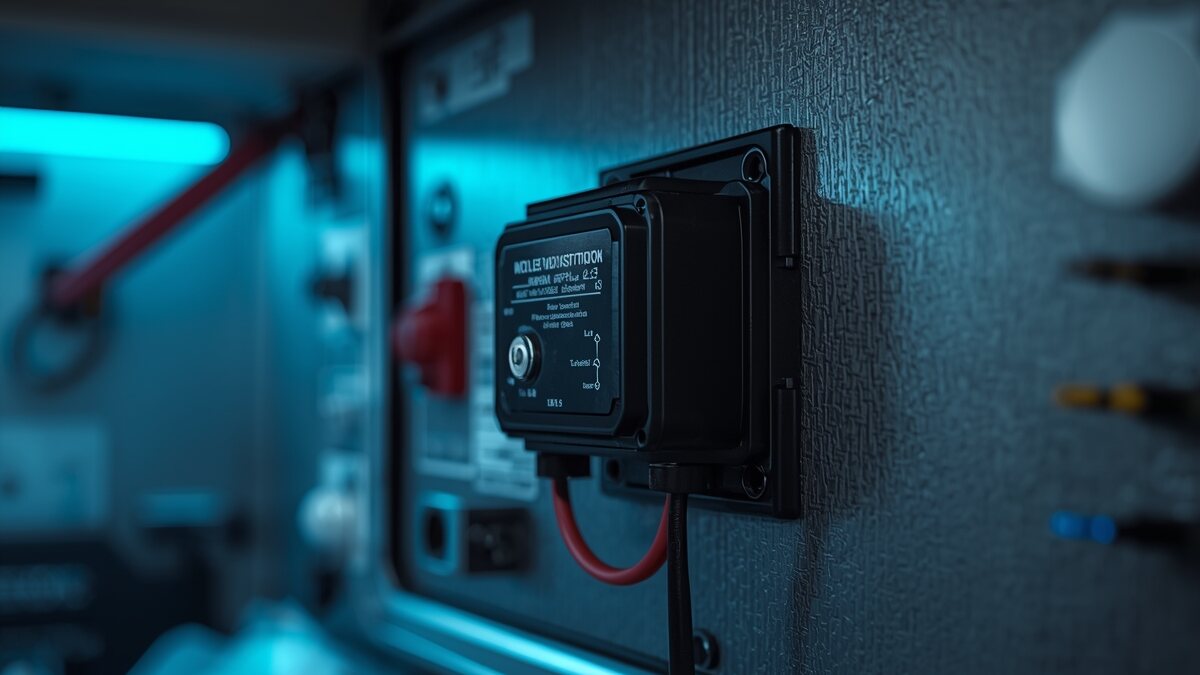
Why an auxiliary battery needs an automatic cutoff
An auxiliary battery in a van, boat or motorhome rarely waits for its owner's convenience: a compressor fridge, a water pump, an auxiliary heater or standby electronics keep drawing current even once nobody is watching the gauge any more. Without an automatic cutoff, this silent draw can push the voltage well past any sensible limit, with two quite different consequences depending on the battery's chemistry.
On a lead, AGM or Gel battery, repeated deep discharge speeds up plate sulfation and permanently reduces the real capacity, sometimes beyond recovery after several such episodes, a well documented issue in the technical literature on the subject. On a LiFePO4 lithium battery, the internal BMS does cut off before a damaging discharge, but that safety net is not always adjustable from the outside or flagged in advance, and above all it only protects the battery itself, never the appliances left wired to it.
A low voltage disconnect (LVD) prevents exactly this scenario: it monitors the voltage continuously and cuts power to the appliances as soon as it drops below a set threshold, before the battery or the connected equipment actually suffers for it.
How a low voltage disconnect actually works
An LVD is wired in series on the positive feed of the circuit to protect (the appliances, not the charging source), between the battery and the loads. It measures the voltage continuously and, as soon as it drops below the set disconnect threshold, starts a short confirmation delay (12 seconds of alarm, then the actual disconnect 90 seconds later on Victron units) so it doesn't react to a brief dip caused by a large momentary current draw.
Once the load is disconnected, the LVD doesn't reconnect it the moment the voltage ticks up a tenth of a volt: a genuine hysteresis requires reaching a reconnect threshold noticeably higher (often 1 to 1.5V above the disconnect point) before the appliances are powered again. Without that margin, the reconnected load would immediately pull the voltage back down, triggering a loop of disconnects and reconnects that wears out the relay or switching MOSFET just as much as the appliances involved.
LVD, BMS and a shunt monitor: three protections that don't replace one another
These three pieces of kit are easy to mix up, even though they often sit on the same system without overlapping:
- The LVD cuts power to the appliances once the battery voltage drops too far. It acts on the outputs, never on the charging input.
- The BMS inside a lithium battery protects the battery itself from a dangerous discharge or charge, but it's built in, often not adjustable from the outside, and has no effect on downstream appliances once it has tripped.
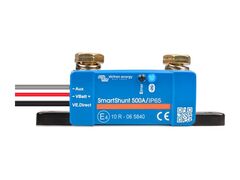
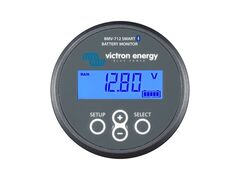
- The shunt monitor (see our comparison of the best shunt battery monitors) measures and displays the state of charge, but never disconnects anything by itself: it's a measuring instrument, not a protection.
An LVD still earns its place even on a lithium system already protected by its own BMS: it adds a further, usage-adjustable safety margin, and above all it protects sensitive appliances (fridge, pump, onboard electronics) from running for too long at an abnormally low voltage, something the BMS alone doesn't guarantee.
Our comparison
| Model | Price | Max current | Thresholds | Control | Best for |
|---|---|---|---|---|---|
| REUK Programmable LVD | £22.99 | 16A | User programmable, single threshold | None, DIP/trimmer set once | Small loads, lights or a single pump, on a tight budget |
| Victron BatteryProtect 12/24V 65A | £43.50 | 65A | 9 factory presets (disconnect 9.5 to 12.0V) | Programming loop, no app | A one-off setting at install time, no Bluetooth needed |
| Victron Smart BatteryProtect 12/24V 65A | £53.00 | 65A | Same presets, plus free adjustment to the mV | VictronConnect app (Bluetooth) | Fine tuning and remote monitoring for little extra cost |
| Blue Sea m-LVD 7635 | £131.07 | 65A continuous | Adjustable 11.3 to 12.1V disconnect | Onboard dial, no app | A marine installation, rated for damp and vibration (IP67) |
The two Victron units share the same relay and the same nine base thresholds: the Smart version mainly adds Bluetooth and free adjustment to the millivolt from the app, for roughly £10 more. The REUK stays the cheapest and simplest of the four, but its 16A rating only suits light loads, not a whole fridge and pump circuit. The Blue Sea m-LVD, a long-standing marine reference, costs noticeably more but is built for a damp, vibration-prone environment and ships with a genuinely adjustable threshold dial, no app required.
Which protector to choose for your setup
Small loads, on a tight budget: the REUK Programmable LVD covers lights, a single water pump or small electronics at 16A, with a threshold you set once with a screwdriver. Its clear limit is current: it's not rated for a whole fridge-and-pump circuit on its own.
Precise adjustment without overspending: the standard Victron BatteryProtect offers nine factory-set threshold pairs, from the most cautious (disconnect at 11.25V) to the most permissive (disconnect at 9.5V, better suited to lithium), chosen through a simple programming loop with no Bluetooth or app involved.
The same adjustment, more convenient: the Victron Smart BatteryProtect keeps exactly the same factory presets but adds the ability to set any value to the millivolt from the VictronConnect app, and to check the relay's state remotely without opening up the technical locker.
A marine or heavy-duty installation: the Blue Sea m-LVD 7635 is built to the IP67 standard for a damp battery compartment, with a disconnect threshold adjustable directly on the unit between 11.3 and 12.1V, no smartphone required.
To recharge the battery this protector is guarding from the vehicle's alternator, our comparison of the best DC-DC charging kits for vans and 4x4s pairs naturally with this choice of protection.
Installing and setting up your LVD correctly
A few points worth checking, common to every model in this comparison:
- An LVD always wires into the output side (the positive feed powering the appliances), never into the solar or alternator charging input: the goal is to protect the loads, not to block the battery from charging.
- A dedicated fuse, sized to the LVD's maximum current and placed as close to the battery as possible, protects the wiring in case of a fault downstream.
- Match the disconnect threshold to the battery's actual chemistry: a value set for lead-acid (disconnect around 11 to 11.5V) would leave a lithium battery badly underused, while a value set for lithium applied to lead-acid would speed up its sulfation.
- Test under a real load after installation, simulating a voltage drop if the unit allows it, to confirm the disconnect and reconnect actually happen at the expected thresholds before heading off grid.
To better understand what a battery's state of charge actually measures, and why a displayed percentage is never perfectly exact, our guide on why battery percentage is never exact covers the limits of every estimation method.