
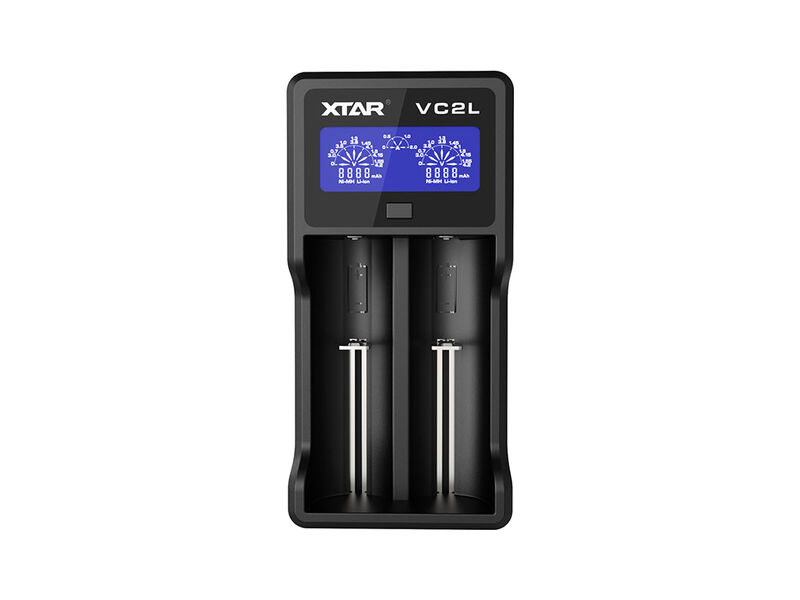
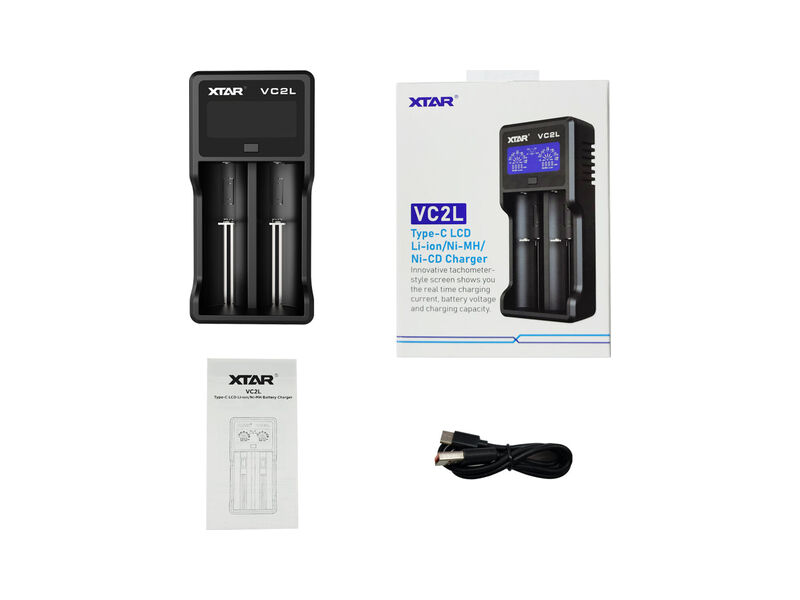
Xtar VC2L Charger
(8 reviews)
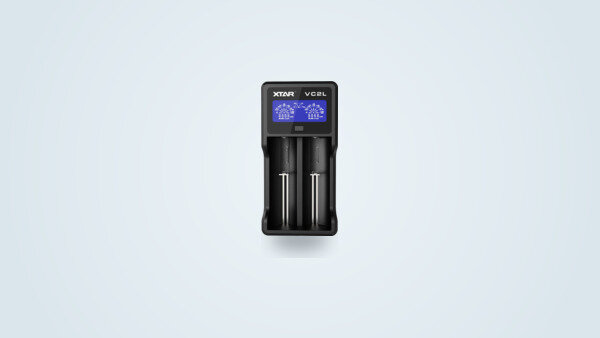
Two bays, a tachometer-style LCD screen, USB-C input: the Xtar VC2L charges and monitors your Li-ion and NiMH cells with precision, in a compact 120 g body.
Buy at AmazonAs an Amazon Associate I earn from qualifying purchases.
Characteristics
- Bays: 2 independent bays
- Charging: USB-C, up to 2A (1 cell)
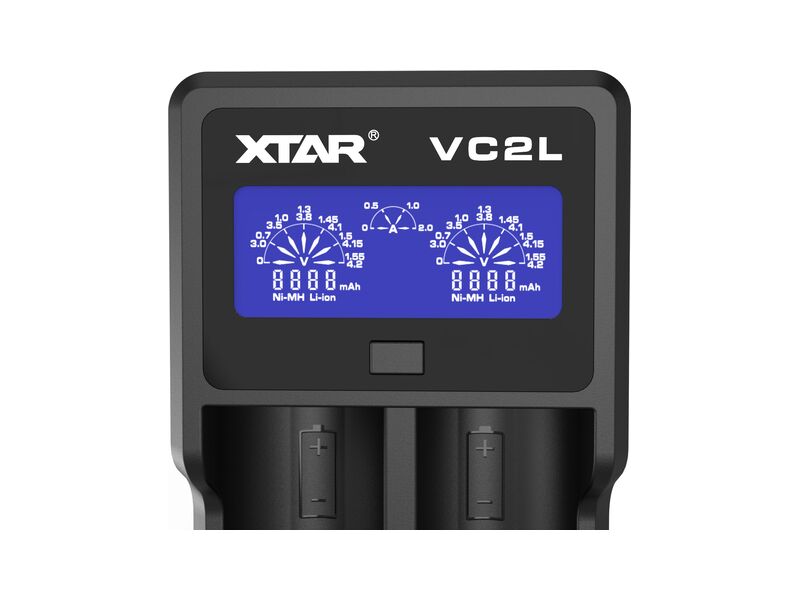
- Display: Tachometer-style LCD: voltage, current, capacity
- Compatibility: Li-ion 10440 to 26650 + NiMH/NiCd AAAA to D
- Compact and light (120 g) with OV activation
Detailed overview: Xtar VC2L 2-bay battery charger
The Xtar VC2L is a smart two-bay charger built to accompany everyday users of rechargeable cells: torch enthusiasts, vapers, photographers or simply anyone charging household batteries. Its strength lies in its versatility and compactness: at just 120 g on the scale, it is one of the lightest chargers in the Xtar range, easy to slip into a bag or a travel kit.
On the compatibility side, the VC2L covers a very wide range of 3.6/3.7V Lithium-ion cells, from the small 10440 up to the 26650, including the ever-popular 14500, 16340, 18650, 20700 and 21700 (protected cells included), as well as 1.2V NiMH/NiCd batteries in AAAA, AAA, AA, A, SC, C and D formats. The charger automatically detects the chemistry of each cell inserted and applies the appropriate TC-CC-CV charging method.
Its LCD screen, with an unusual tachometer-style design, shows voltage, charging current and charged capacity of each bay in real time, a more visual read-out than a plain number. The charging current is set manually with a button press: 2A, 1A or 0.5A with a single cell charging, 1A or 0.5A when both bays are occupied. A feature unique to Xtar, OV activation, automatically detects and revives cells that have dropped below the minimum voltage, cells that many rival chargers simply refuse to recognise.
Power comes through an upgraded USB-C port (5V 2.1A input), which accepts most wall adapters, power banks or car sockets already lying around the house. The charger automatically stops charging once a cell is full (cut-off current ≤150mA), to prevent overcharging.
With only two bays, the VC2L is not built for topping up a large stash of cells at once, unlike the 4 or 8-bay models in the Xtar range: it is better suited to travel or occasional use, where light weight and a small footprint matter more than simultaneous charging capacity. For that use case, it remains a solid, precise and well-thought-out choice.
Full specifications
Detailed characteristics
Charging capacity
| Number of slots?Number of batteries that can be charged at the same time. | 2 |
|---|---|
| Compatible formats?Accepted battery formats (AA, AAA, 18650, 21700...). | 10440, 14500, 14650, 16340, 17350, 17500, 17670, 18350, 18490, 18500, 18650, 18700, 20700, 21700, 22650, 25500, 26650, AAAA, AAA, AA, C |
| Compatible chemistries?Recognised battery chemistries (Li-ion, LiFePO4, NiMH, NiCd...). | Li-ion, NiMH, NiCd |
| Max charging current?Maximum charging current per slot, in milliamps. | 2000 mA |
| Adjustable charging current?The user can manually pick the charging current. | Yes |
| Independent charging per slot?Each slot manages its own charge, independent of the other cells (different formats and chemistries can be mixed). | Yes |
Power input
| Power source?Built-in mains plug, USB port (Micro-USB or USB-C) or 12 V car socket. | USB-C |
|---|
Output and features
| USB output (device charging)?The charger can also act as a power bank: it uses the inserted cells to charge another device. | No |
|---|
Display and diagnostics
| Display?Type of visual feedback on charging status. | Detailed LCD screen |
|---|---|
| Automatic chemistry detection?The charger automatically adapts its charging profile to the inserted cell, with no manual setting. | Yes |
| Test / repair functions?Advanced functions beyond plain charging: real capacity measurement, internal resistance, reconditioning of worn cells, discharge cycles. | Real capacity test, Reconditioning / revival |
Size
| Dimensions (L × W × H)?Length × width × height, in millimetres. | 135 × 65 × 35 mm |
|---|
Warranty
| Warranty?Length of the manufacturer's warranty. | 2 years |
|---|
User manual / Instructions for use
Comparison
The Xtar VC2L shares its DNA with the other chargers in the Xtar range, but stands out clearly for its compactness, a point that comes up often in searches like "Xtar VC2L vs VC4" or "which Xtar charger to choose". Here is how it compares against three larger models from the catalogue: the Xtar VC4, its four-bay cousin with a standard screen; the Xtar VC4SL, a more advanced version with an internal-resistance test; and the Xtar VC8, the go-to for large stashes of cells with eight bays.
| Criterion | Xtar VC2L | Xtar VC4 | Xtar VC4SL | Xtar VC8 |
|---|---|---|---|---|
| Bays | 2 | 4 | 4 | 8 |
| Weight | 120 g | ≈ 210 g | ≈ 212 g | ≈ 350 g |
| Max current per bay | 2A (1 cell) | 1A | 3A (1 cell) | 3A (1 cell) |
| Display | Tachometer-style LCD | Standard LCD | LCD + internal resistance | LCD + capacity + resistance |
| Power | USB-C | USB | USB-C QC3.0 | USB-C QC3.0 |
| Observed price | £18.99 | £34.20 | £29.41 | £32.93 |
In short, the Xtar VC2L remains the most sensible choice for anyone after a light, discreet charger to slip into a bag: barely 120 g, against double or triple that for its 4 and 8-bay cousins. The VC4SL and VC8 win out on simultaneous charging capacity and maximum current per bay, useful for a large volume of cells, but at the cost of noticeably more bulk and weight. For travel use or a quick top-up on one or two cells, the VC2L remains unbeatable.
Related video
Video: XTAR VC2L review - Published on 04/12/2021
Our tester's review: Christophe Delpuech
The Xtar VC2L quickly earned a spot on our desk as a grab-and-go charger: slot in a tired 18650 or two AA NiMH cells before heading out, and the tachometer-style screen shows voltage and real current at a glance, far more useful than a single LED. The OV activation function genuinely revived an 18650 that had dropped below 2V and that other chargers refused to even recognise. With only two bays and a USB-C input capped at 2.1A, it cannot match a 4 or 8-bay charger for topping up a large stash of cells: with both bays occupied, current caps at 1A each, so a hefty 21700 takes a little patience. On the D format, some users report needing an adapter, so the advertised compatibility is a touch optimistic. But for everyday or travel use, its compactness (barely 120 g) and versatile USB-C cable make it a pocket companion that is hard to beat.
In-depth review Xtar VC2L: our full review 4.0/5 Read our full review → Actual charging current not measured Battery compatibility not measured Safety and protections 3.9 Build and endurance 3.7 Cables and connectors not measured Actually delivered power not measured Multi-port power sharing not measured Protocol compatibility not measured Size and technology not measured Format and chemistry compatibility 4.2 Charging precision 4.0 Display and control 4.0Frequently asked questions: Xtar VC2L 2-bay battery charger
Two, with each bay charging and monitoring its cell independently. For higher-volume charging, the Xtar VC4, VC4SL or VC8 offer 4 and 8 bays respectively.
A feature unique to Xtar that automatically detects and revives a cell that has dropped below the minimum voltage (over-discharged), which many chargers simply reject as faulty.
Yes, it accepts 1.2V NiMH/NiCd batteries in AAAA, AAA, AA, A, SC, C and D formats, alongside 3.6/3.7V Lithium-ion cells from 10440 to 26650.
2A with a single bay occupied. With both bays in use, current is capped at 1A per cell, as the USB-C input is limited to 5V 2.1A.
Just 120 g, making it one of the lightest and most compact chargers in the Xtar range, handy to carry while travelling or hiking.
Other products in the "Battery chargers (AA/AAA/18650)" category
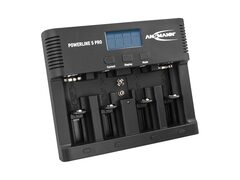
Ansmann Powerline 5 Pro charger
See price (17)
The charging and reconditioning station for enthusiasts: all formats (AA to D, 9V), LCD screen and test, discharge and refresh programmes to maintain your batteries.
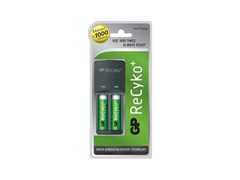
GP ReCyko AR02 charger
£8.54 (11)
The clever entry-level charger: simple, compact and affordable, supplied with 2 ReCyko AA cells ready to use. Perfect to start with rechargeables.
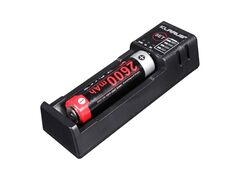
Klarus K1 Charger
See price (6)
The Klarus K1 charges your Li-ion cells and NiMH or NiCd batteries over USB from a single bay, with a clear LED indicator you can trust.
MiBoxer C4 Charger
See price (27)
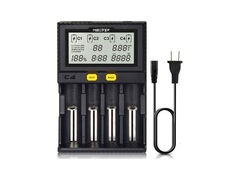
The MiBoxer C4 charges 4 cells at once, shows voltage, current and capacity on its LCD screen, and even handles LiFePO4: the clever universal charger.
Published on 01/09/2026