
Solid-state: what are we talking about?
A conventional lithium battery contains a liquid electrolyte: the medium in which ions travel between the two electrodes during charge and discharge. This liquid is effective, but it has two flaws: it is flammable and it limits the electrode materials you can use.
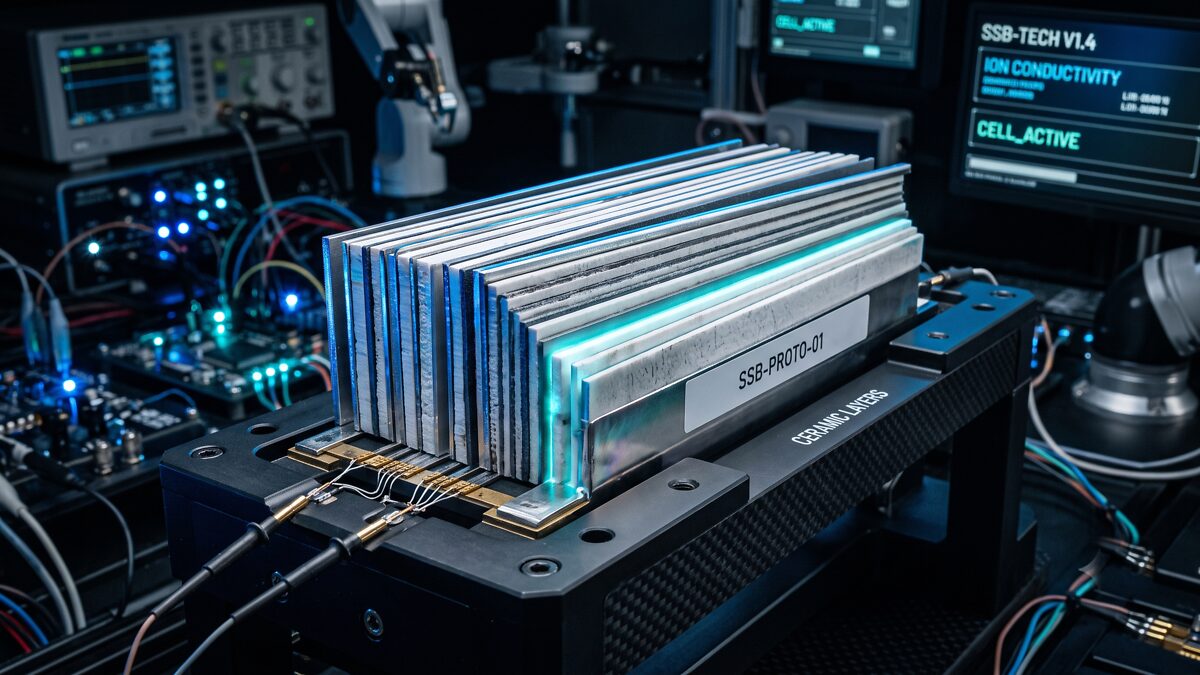
The solid-electrolyte battery, or solid-state, replaces that liquid with a solid material (ceramic, glass or polymer). This single change opens the door to higher-performance electrodes, in particular a lithium metal anode, far denser in energy than the graphite used today.
To grasp the stakes of battery chemistry, our feature Li-ion versus LiFePO4 lays the useful groundwork: solid-state is the generation after.
Why everyone dreams of it
If this technology draws billions in research, it is for three concrete promises.
More range. Thanks to the lithium metal anode, a solid-state cell could store far more energy in the same volume. Translation: a smartphone that lasts two days, an electric car well beyond 800 km, or a power station half as bulky for the same capacity.
More safety. With no flammable liquid electrolyte, the risk of thermal runaway drops sharply. This is a major argument, especially for cars and aviation. We detail that phenomenon in our feature on thermal runaway in lithium batteries.
Faster charging and longer life. Prototypes promise very fast charging and a higher cycle count. On paper, solid-state ticks every box. The problem is precisely moving from paper to the factory.
Where do we really stand in 2026?
This is where two worlds must be told apart. On one side, semi-solid batteries (a partly gelled electrolyte) are already a reality: several makers, notably in China, fit them to high-end electric cars for extra range. That is a real step forward, on sale today.
On the other side, true solid-state (100 % solid, with a lithium metal anode) is still at the industrialisation stage. The big car names and several specialist start-ups announce first series production toward the end of the decade, with a gradual volume ramp afterward. Samples exist and work, but the mass production lines are not there yet.
In other words: in 2026, solid-state has moved from fantasy to engineering, but it is not yet in your pocket or your garage at an affordable price.
What it will change for your devices
When the technology matures, the effect will come in waves. Electric cars will be served first, because they can absorb the extra cost and fully exploit the gain in density and safety.
Then will come small devices: smartphones, laptops, then power banks and power stations. A solid-state power bank could offer the same capacity as today in a case twice as thin, or double the runtime for the same size, while coping better with heat.
For mobile and outdoor use, the safety argument is especially appealing: less risk from a knock, a puncture or strong heat in full sun. But all of that is ahead of us, not behind.
The obstacles still to clear
If it were simple, it would already be done. Several technical and economic locks explain the slow pace.
Cost. Making a homogeneous, defect-free solid electrolyte across millions of cells still costs a great deal. Until volumes rise, prices stay prohibitive for the general public.
Interface durability. The contact between the solid electrolyte and the electrodes degrades with cycling, and lithium microstructures (the notorious dendrites) can form and short the cell. Mastering that ageing over thousands of cycles is the real challenge.
Mass production. Going from a perfect lab prototype to millions of identical, reliable units is a colossal industrial leap. It is that wall, more than the science, that pushes the timeline back year after year.
Our verdict: should you wait?
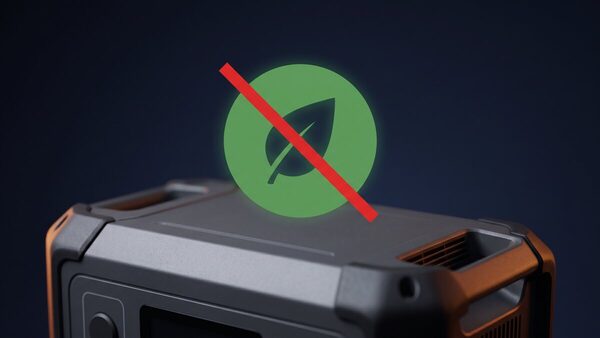
Solid-state is not a scam: it is a genuine breakthrough that will eventually take hold, first in cars, then in our devices. But in 2026 it is not a buying criterion for a power bank or a power station: the models on sale do not have it, and those that claim to deserve a close look.
Our advice: do not wait for a hypothetical solid-state battery to equip yourself. Today's technologies are mature, reliable and affordable. A good LiFePO4 model or a quality lithium-ion power bank perfectly meets your needs now. Solid-state, for its part, will be worth it when it is truly here, at a reasonable price and with the necessary hindsight on its reliability.