

One charger for (almost) everything
It is a small everyday revolution. After years of debate, the European Union has settled the matter: most portable electronic devices sold in the EU must now charge via a USB-C port. The goal is twofold: simplify life for consumers and cut electronic waste.
The principle is simple. Whether you buy a smartphone, a tablet or a pair of headphones, the same USB-C cable and charger should do the job. No more different charger for each device, no more buying an adapter with every new product.
Since when, and for which devices?
The rule applies in two stages:
- Since 28 December 2024 for the vast majority of devices: smartphones, tablets, cameras, headphones and earbuds, portable speakers, handheld game consoles, e-readers, rechargeable keyboards and mice, GPS units and more.
- From 28 April 2026 for laptops, which join the requirement in turn.
Another important change: manufacturers must also harmonise fast charging and allow you to buy a device without a charger, to avoid piling up useless bricks.
USB-C yes, but not just any USB-C
Watch out for one trap: not all USB-C ports are equal. The connector is the same, but the power it delivers can vary tenfold. It is the USB Power Delivery (USB-C PD) standard that manages this ramp-up.
A basic USB-C port may be limited to a few watts, while a modern USB-C PD port goes up to 100 W, or even 240 W on the latest generations, enough to charge a demanding laptop. The single connector alone therefore does not guarantee fast charging: you also have to check the stated power.
What it changes for your chargers
Great news: investing in a good USB-C charger is now the most future-proof choice there is. A single quality charger, with one or two USB-C PD ports, can power your phone, your tablet and your laptop, at home and on the road.
Our advice: favour a multi-port charger (to charge several devices at once) and look at its total power. Gallium nitride (GaN) models are particularly compact and efficient for a given power. A good USB-C cable completes the kit.
What it changes for your power banks
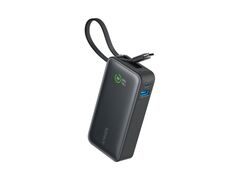
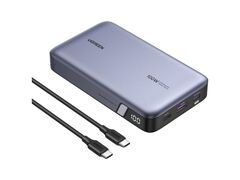
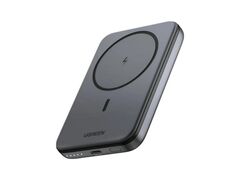
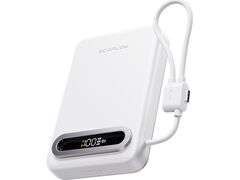
Power banks fully benefit from this standardisation. Most already use USB-C, both to recharge (input) and to charge your devices (output). The result: a single USB-C cable often covers the whole journey, from the wall outlet to your smartphone.
Here again, the logic is the same as for chargers: the USB-C port guarantees compatibility, but it is the power (in watts) that determines speed. To choose the right power bank for your devices, follow our complete guide how to choose a power bank.